
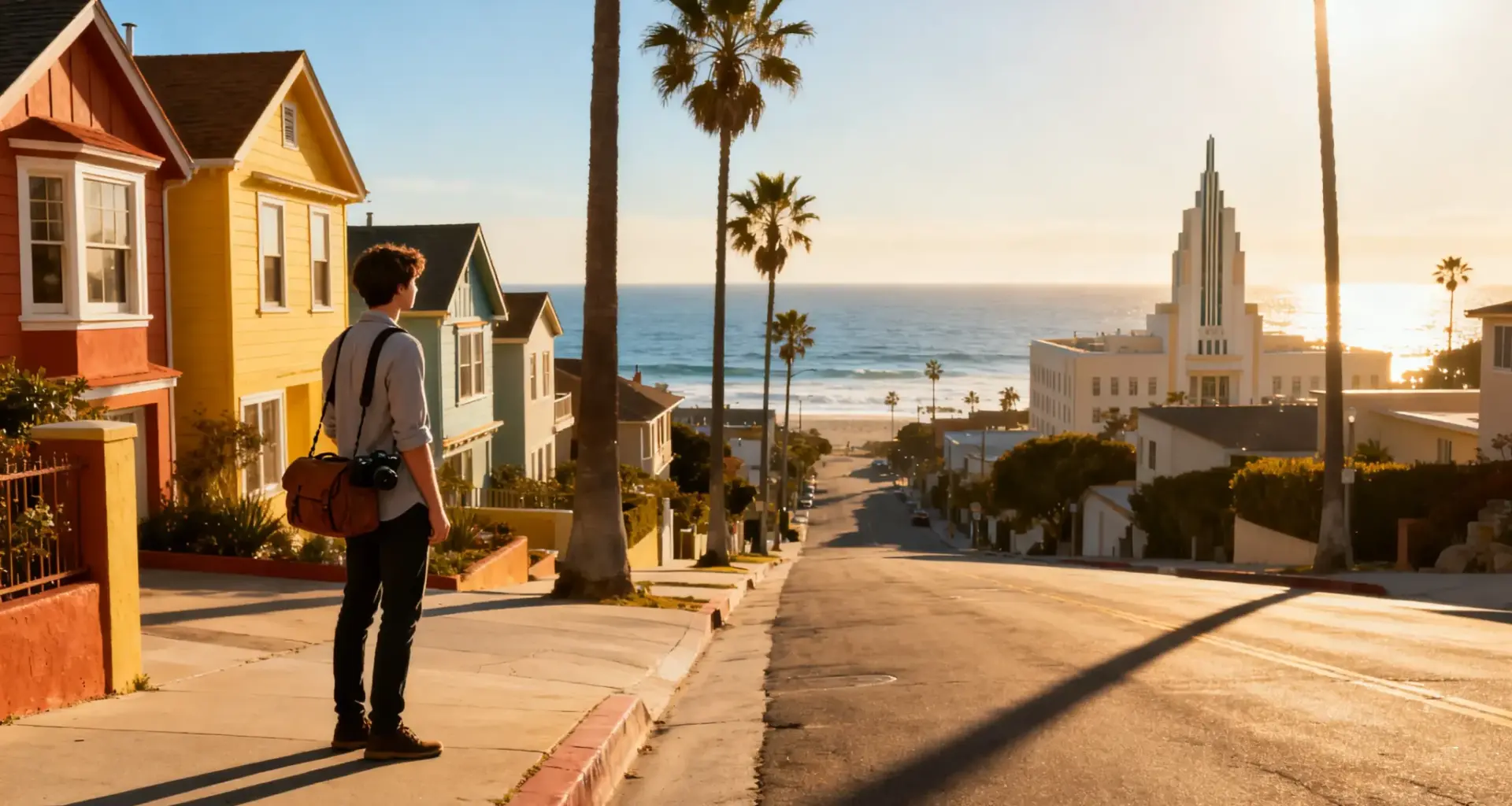
Los Angeles did not lose its creative class in one day. It happened one rent increase at a time, one studio closure at a time, one insurance bill at a time. Between July 1, 2024, and July 1, 2025, LA County lost 53,934 residents, the largest numeric decline of any county in the entire United States.
The writers, musicians, photographers, and directors who gave this city its character packed up and left. Where most of them landed is not Austin. Not Las Vegas. It is 20 miles down the coast. When the creative class leaves, a city does not just lose people. It loses the thing that made it worth living in.
How Hollywood Was Deprived of 42,000 Jobs
According to the Bureau of Labor Statistics, motion picture employment in Los Angeles County fell from 142,000 to around 100,000 between 2022 and late 2024. That is 42,000 jobs gone in two years.
The work did not stop. It just moved.
Netflix broke ground on a $1 billion production facility at Fort Monmouth in New Jersey. Paramount and Lionsgate signed deals to build or lease new production bases in the state. Total shoot days across Los Angeles in 2025 came in at 19,694, a 16.1% drop from 2024 and the lowest figure recorded since 2020. Scoring stage bookings collapsed from 127 days in 2022 to just 11 days in 2025. Catering companies, prop houses, and post-production shops that ran on that steady volume are gone.
For a junior sound engineer or set designer trying to build a career here, the math between rent and available work stopped adding up a long time ago.
LA Lost Its Working Creatives, Not Its Famous Faces
Realtors on the Eastside, where mid-level film and TV workers have always clustered, say 2025 was the year many of them finally stopped waiting. After the January 2025 wildfires, insurance premiums jumped sharply. For people already out of runway, that was the last bill.
The people who left were not celebrities. They were writers earning $85,000 a year who could not qualify for a mortgage. Musicians who needed a small studio space and could not find one under $2,500 a month. Editors, photographers, and graphic designers with real careers and nowhere to put down roots. Austin, Phoenix, and Las Vegas absorbed some of them. But many wanted to stay in California. They just needed a city that still had room. Only one fits.
Long Beach: The One City That Never Ran Them Out
Long Beach is located 20 miles south of downtown Los Angeles. It has the Pacific, the weather, and a cultural scene that did not need to be manufactured. It also has what Los Angeles gave up years ago: a housing market where someone with a real salary, not a celebrity income, can still buy a home.
According to Houzeo data report, the median sale price in Long Beach was $879,474 in May 2026, up 2.3% year over year. That same budget buys you a small condo in Silver Lake or Echo Park. In Long Beach, it buys a waterfront house with a yard. In fall 2025, 37% of Long Beach homes sold above asking price.
Anyone looking atLong Beach real estate right now is stepping into a market with real momentum. That gap between Long Beach and Los Angeles prices will not stay this wide forever.
East Village: The Arts District of Long Beach That Built Itself
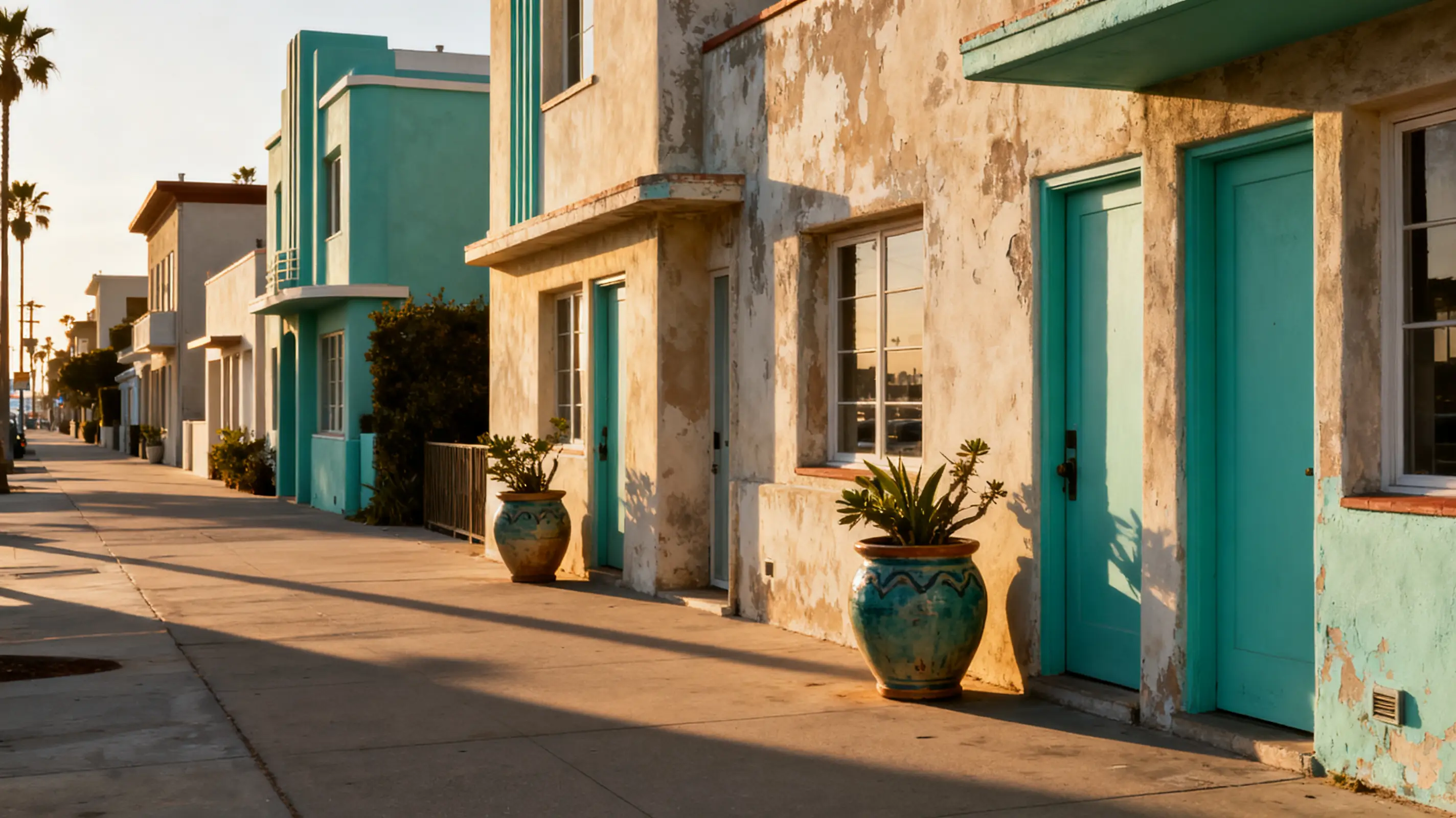
The East Village Arts District is one of the things that make Long Beach what it is. Walkable, independently built, anchored by small galleries, record stores, ceramic studios, and music venues sharing blocks with Art Deco buildings and a free Art Walk every second Saturday.
Nobody developed this from the top down. It grew because artists and musicians needed a city affordable enough to take a risk in. That kind of energy takes years to build. The people now leaving Los Angeles are exactly the kind of people who built East Village in the first place.
What Changes When You Leave Los Angeles
Long Beach is not a perfect trade. According to Duckworth homes, the cost of living is ~50% above the national average, and unemployment is 5.9%, above the national rate of 4.3%. Worth knowing before you move.
But the right comparison would be Long Beach versus Los Angeles, not Long Beach versus the nation. Home prices, arts institutions, and a community that hasn’t priced its inhabitants out of existence yet. Remote work changed the equation too. A lot of people kept their LA clients and LA salaries while paying Long Beach prices.
A designer or director based there can sit in a Los Angeles meeting room in under 30 minutes. For anyone running that math right now, what they make, what they pay, what they would get back—searching the Long Beach market against the LA one on Houzeo is faster than using spreadsheets.
Los Angeles still has the studios and the labels. But the people who filled its cheap apartments, built its neighborhoods, and made it feel like a place worth living in are gone. They did not get pushed to Long Beach.
Long Beach just never pushed them out.