
A deeper look into The Broad’s newest exhibit highlighting the Japanese countercultural artist
While most recognize Yoko Ono as an attachment of the four-person worldwide phenomenon of The Beatles, the Japanese creative was a well-accomplished artist in her own right. The Broad’s new exhibit “Yoko Ono: Music of the Mind,” curated by Juliet Bingham, is just the testament to that. The museum opened its doors for Ono’s exhibit on May 11, being Ono’s first solo museum exhibition in Southern California.
The most enticing and unique aspect of the exhibit is its interactive nature between art and audience, especially in an age where museum staff generally enforce a strict rule of viewing distance. Ever the countercultural revolutionary, Ono challenges the way we, as audiences, see art, supporting the idea that art is meant to be touched, seen from different perspectives and even destroyed.
The exhibit highlights the iconic 1964 artwork “Cut Piece,” a performance by Ono where she kneels on the stage motionless, inviting the audience to cut her clothes with scissors and keep a piece. The conceptual art was first performed in Yamaichi Concert Hall in Kyoto, Japan. It symbolizes an act of giving, taking and trust, according to Bingham, and the participatory element is important in subverting the relationship between artist and audience. Ono would often choose her best clothes for this performance.
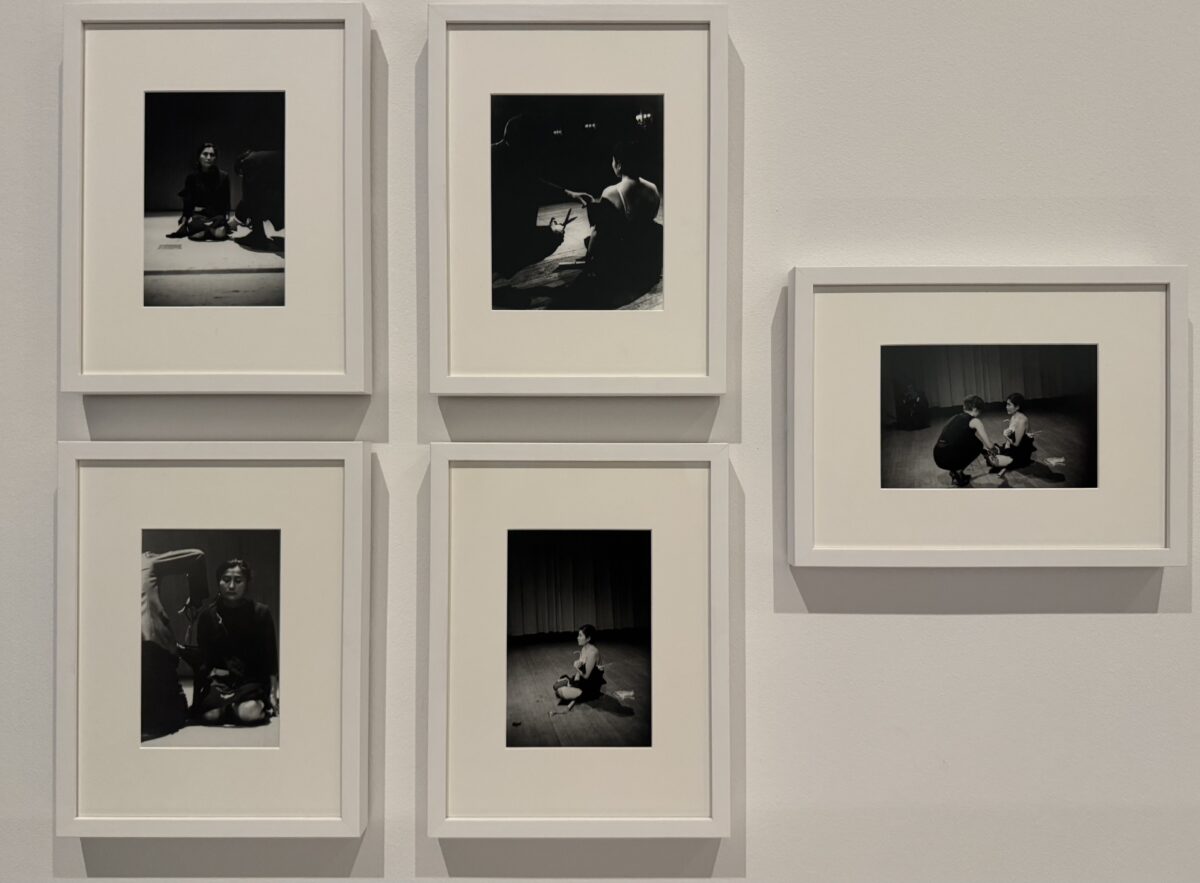 Images of Yoko Ono’s “Cut Piece” PerformanceCredit: Stephanie Ahn
Consequently, in 1966, Ono was the only woman invited to an international symposium in London that featured these same elements of destruction in art and society. Unlike her male counterparts who destroyed art aggressively, Ono performed this piece in a poignant fashion to display the ebb and flow of impermanence.
Other participatory installations that viewers can recreate in the exhibit include hammering nails into a communal board, drawing your shadow in pen and stepping on artwork.
Her 1964 “Bag Piece” was another interactive artwork that had viewers chuckling in almost disbelief at the absurdity of the performance. Ono invites one or two participants to drape themselves in a cotton fabric bag and perform any activity that can include dancing, meditating or flailing around.
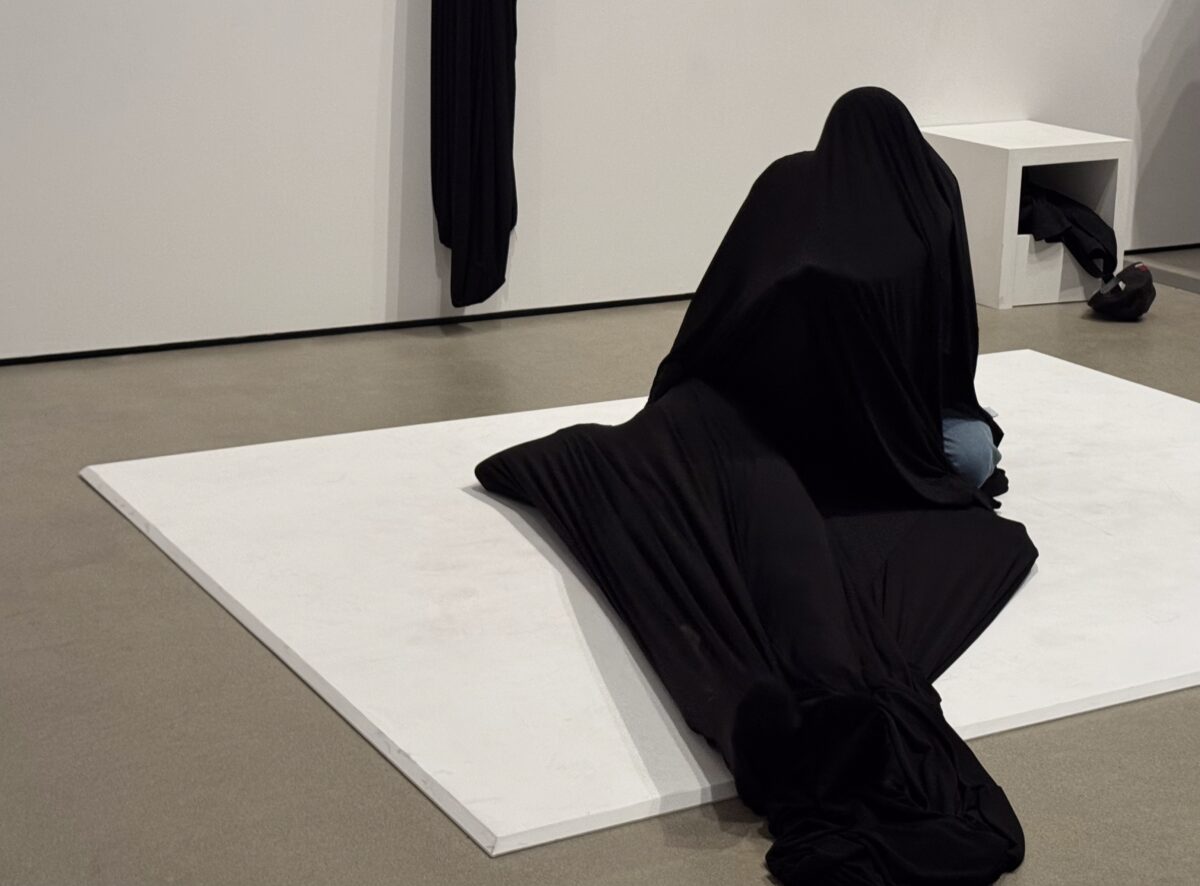 Audiences are encouraged to enact Yoko Ono “Bag Piece”Credit: Stephanie Ahn
Scroll to continue reading
“By being in a bag, you show the other side of you, which has nothing to do with race, nothing to do with sex, nothing to do with age. [Y]ou become just a spirit or soul,” Ono said, “I like that idea. To become something totally different.”
A defining component of Ono’s art was her upbringing, which she often showcased in her art. As a child, Ono was forced to leave her home during World War II. “SKY TV” (1966) is a live broadcast on a television screen of the sky above the work’s location, representing the escapism and limitless freedom she and her brother imagined during childhood. Ono described this as “maybe my first piece of art.”
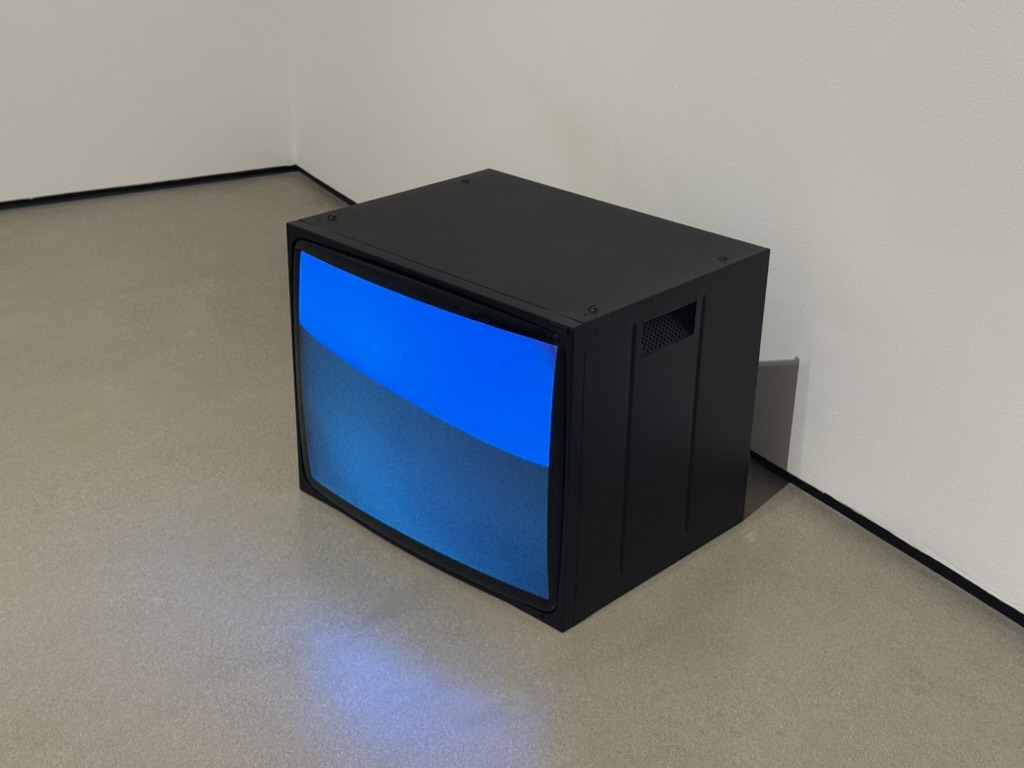 Yoko Ono’s “SKY TV” pieceCredit: Stephanie Ahn
Ono’s childhood would go on to define her future calls for peace and protests against the Vietnam War.
Alongside former husband John Lennon, Ono staged Bed-Ins for Peace in 1969, where they used publicity from their marriage to promote an end to the war. Lennon and Ono also sent acorns to 96 world leaders, asking them to plant the nuts for peace.
The exhibit also showcases “Add Colour (Refugee Boat),” a famous interactive piece that also resides in London’s Tate Modern. Paired with the simple description “Just blue like the ocean y.o.,” a boat sits in the middle of a white room waiting for an audience to fill it in with blue ink. Ono asks the audience to express their feelings on an immigration crisis that plagues the world.
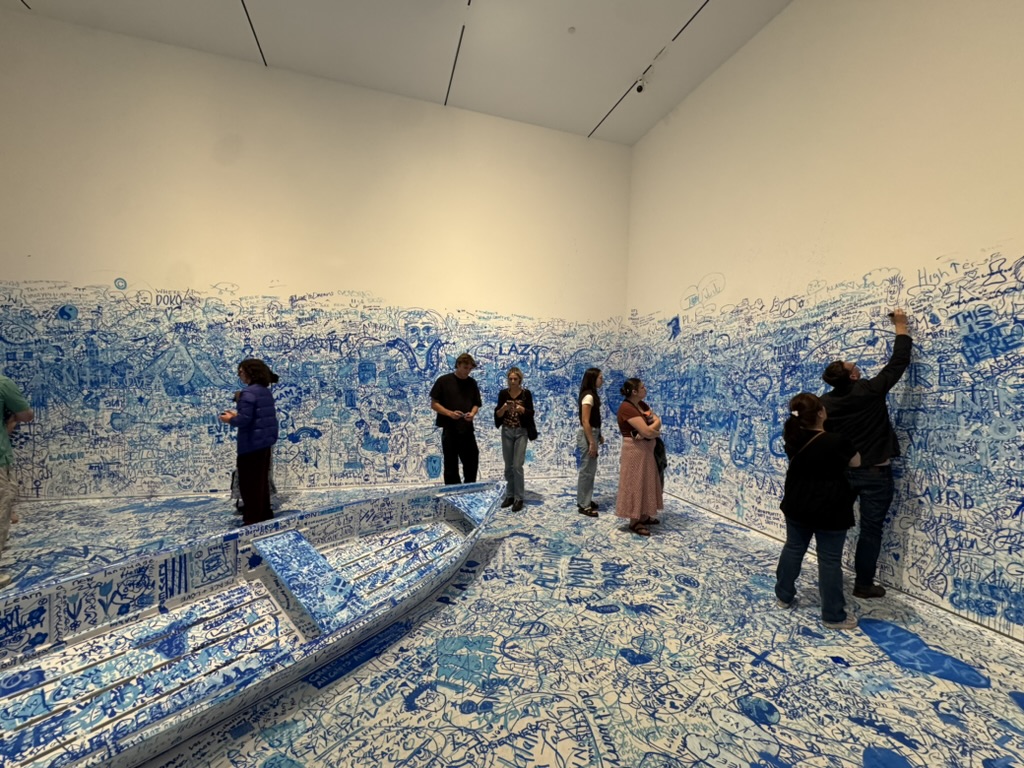 Yoko Ono’s “Add Colour (Refugee Boat)” interactive exhibitCredit: Stephanie Ahn
Ono’s art, showcased by “Music of the Mind,” is vast, taking forms of performance art, scores, music, films and photographs. She emphasized the significance of art as a vessel to understand broader human issues, which she consistently advocated for.
“The only sound that exists to me is the sound of the mind. My works are only to induce music of the mind in people,” Ono said.
The Broad will display “Yoko Ono: Music of the Mind” until Oct. 11. The exhibition is free every Thursday from 5 to 8 p.m. and is free all day on June 19 and July 4.