
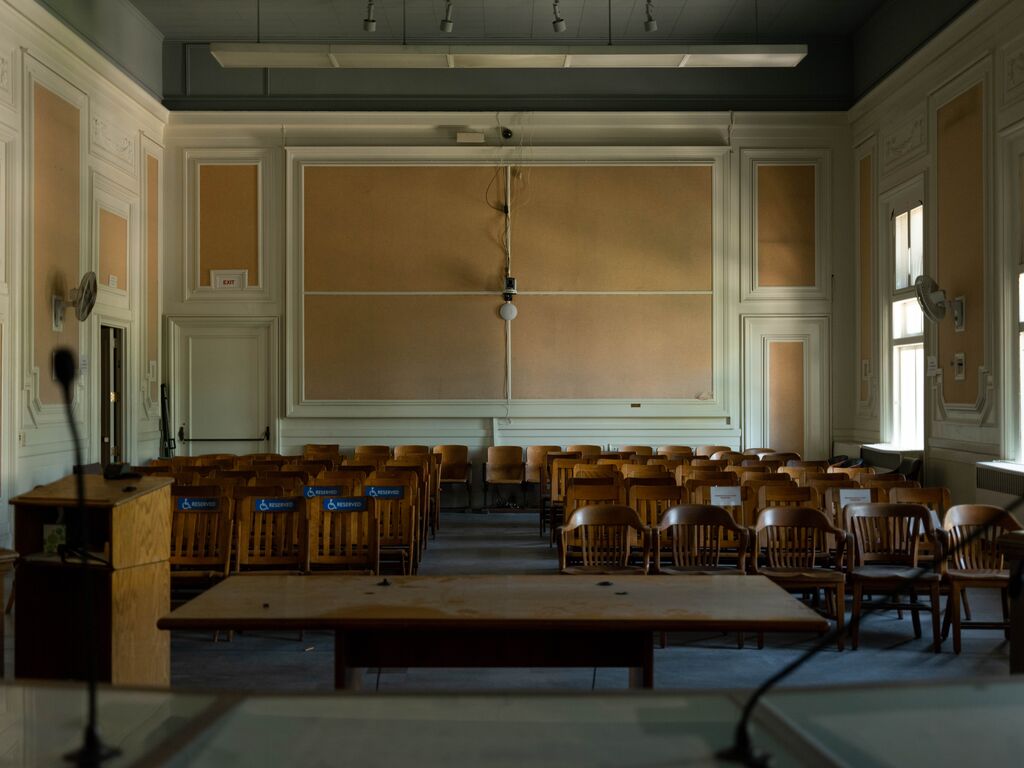
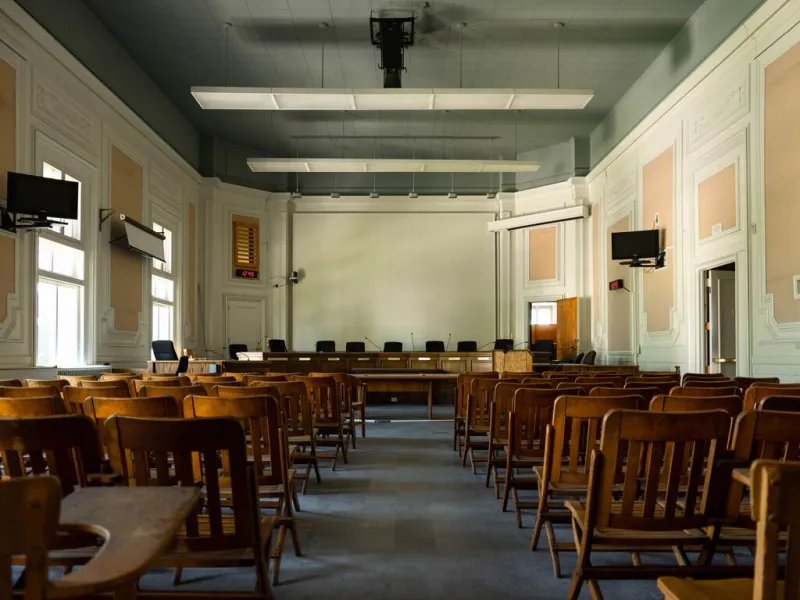
 Berkeley’s old city hall, which needs a seismic retrofit, is one of the projects that could be funded through a proposed $300 million infrastructure bond. Credit: Ximena Natera, Berkeleyside/CatchLight Local
Berkeley leaders will ask voters this November to approve a sales tax increase to bridge a budget deficit without deeper service cuts, and hike property taxes to raise money for local infrastructure.
The City Council voted unanimously Tuesday night to add those tax measures to the fall ballot.
The proposed sales tax measure would add 0.5% to Berkeley’s tax rate, which now stands at 10.25%, raising more than $9 million per year of new revenue, according to city estimates. As they look to close a nearly $30 million structural deficit, Berkeley officials have said they might close a fire station, lay off police and fire department employees, and slash enrollment in popular summer and after-school programs — on top of other planned job and service cuts — if the tax measure is not approved.
The council is expected to adopt the city’s budget for the next two fiscal years at a meeting next week. Some council members have said they would not vote to close the fire station — North Berkeley’s Fire Station 4 on Marin Avenue — even if the sales tax fails at the ballot box.
The infrastructure measure would increase annual property taxes by $44 for every $100,000 of a home’s assessed value to raise $300 million in bond funding. Officials last year identified 34 projects that could be funded by the bond, including renovations of the city’s 911 dispatch center, projects to prepare the Berkeley waterfront for rising sea levels and seismic renovations that could spur a revival of the Civic Center complex.
For a home with the city’s median assessed value of $550,000 — a figure well below the market rate for Berkeley properties, as a result of California’s Proposition 13 — the bond measure would increase annual property taxes by $242 per year. Someone with a property valued at Berkeley’s current median home sale price, which stands at nearly $1.5 million according to Zillow, would be looking at an increase of about $660 per year.
The sales tax can pass with support from a simple majority of voters, while the bond measure must win “yes” votes from two-thirds.
A handful of public speakers at Tuesday’s meeting criticized the proposed measures, arguing the sales tax increase would drive shoppers away from Berkeley and land harder on low-income households at a time of rising inflation, while the bond may not deliver as many improvements as officials hope because of increasing costs.
“A sales tax is regressive, we all know that,” said Isabelle Gaston, a longtime critic of tax increases. “This is not a good time to do this — in fact, I actually think it’s quite cruel.”
City officials contend Berkeley needs the bond funding to address crumbling infrastructure that will only become more expensive to repair over time. Council members on Tuesday argued the sales tax increase would bring Berkeley’s rate even with those in Oakland and Albany, and would allow the city to avoid painful cuts.
“This is our proposal to the voters to try to mitigate some of the worst of those reductions,” Councilmember Rashi Kesarwani said. “Given the importance of the services that we’re trying to fund, and the reality that this is simply going to put us on parity with our neighboring cities, I think this is very much the right approach.”
City-commissioned polling earlier this year found there was enough support among likely voters for both measures to clear the thresholds they need to pass — though the share inclined to vote “yes” was within the survey’s margin of error. The measures will land on a November ballot that is likely to have a slew of other proposed new taxes, including another 0.5% sales tax increase to support Bay Area transit agencies, a parcel tax to boost Berkeley’s performing arts organizations and another parcel tax to create a public bank.
A $600 million infrastructure and affordable housing bond put before Berkeley voters in 2022 failed with support from 59%, short of the two-thirds majority. Two years later, voters embraced the larger of two proposed parcel tax increases to fund street paving work; that measure, which only needed to win a simple majority, had support from 61% of voters.
Related stories
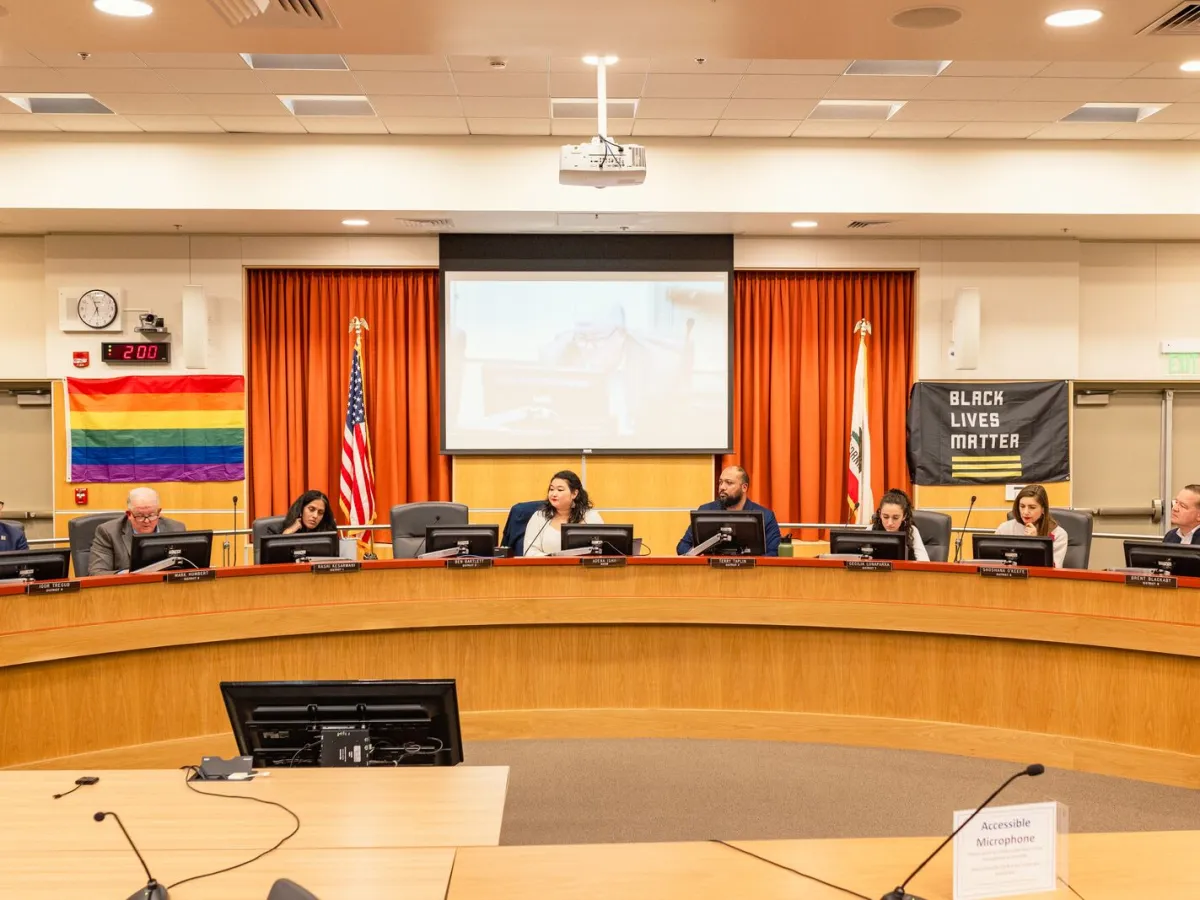
Berkeley’s budget plan includes ‘really tough’ cuts, but City Council signals support
May 20, 2026May 20, 2026, 9:24 p.m.
Layoffs, service cuts, sales tax hike: How Berkeley plans to close a nearly $30M budget deficit
April 15, 2026April 15, 2026, 10:29 a.m.
Berkeley eyes another big infrastructure bond. Will this one pass?
December 4, 2025
“*” indicates required fields