
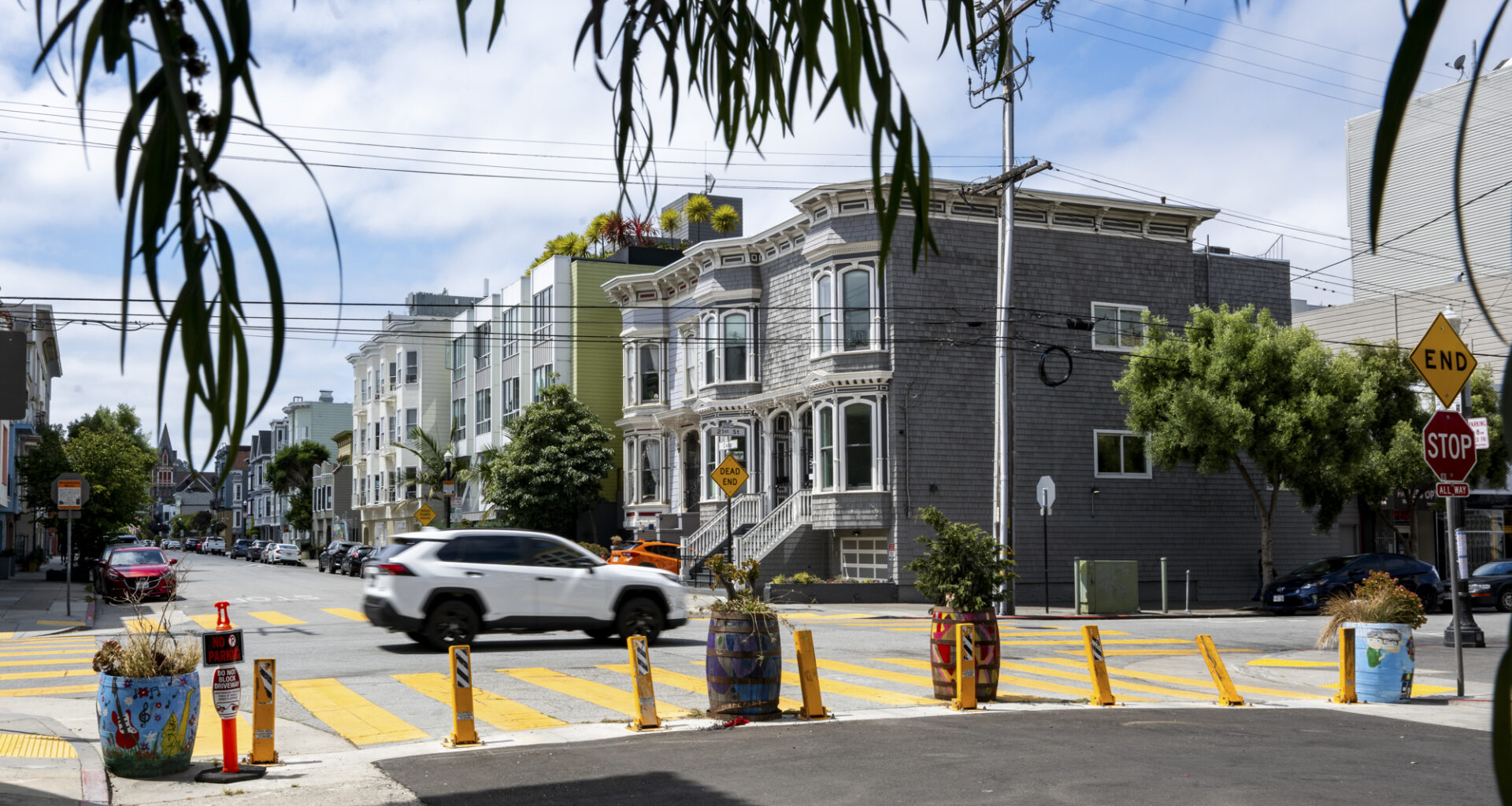
“Before the bollards were installed, living on Capp Street was a nightmare,” one San Francisco resident said.
Jun 17, 2026
Updated 2:12 pm PT
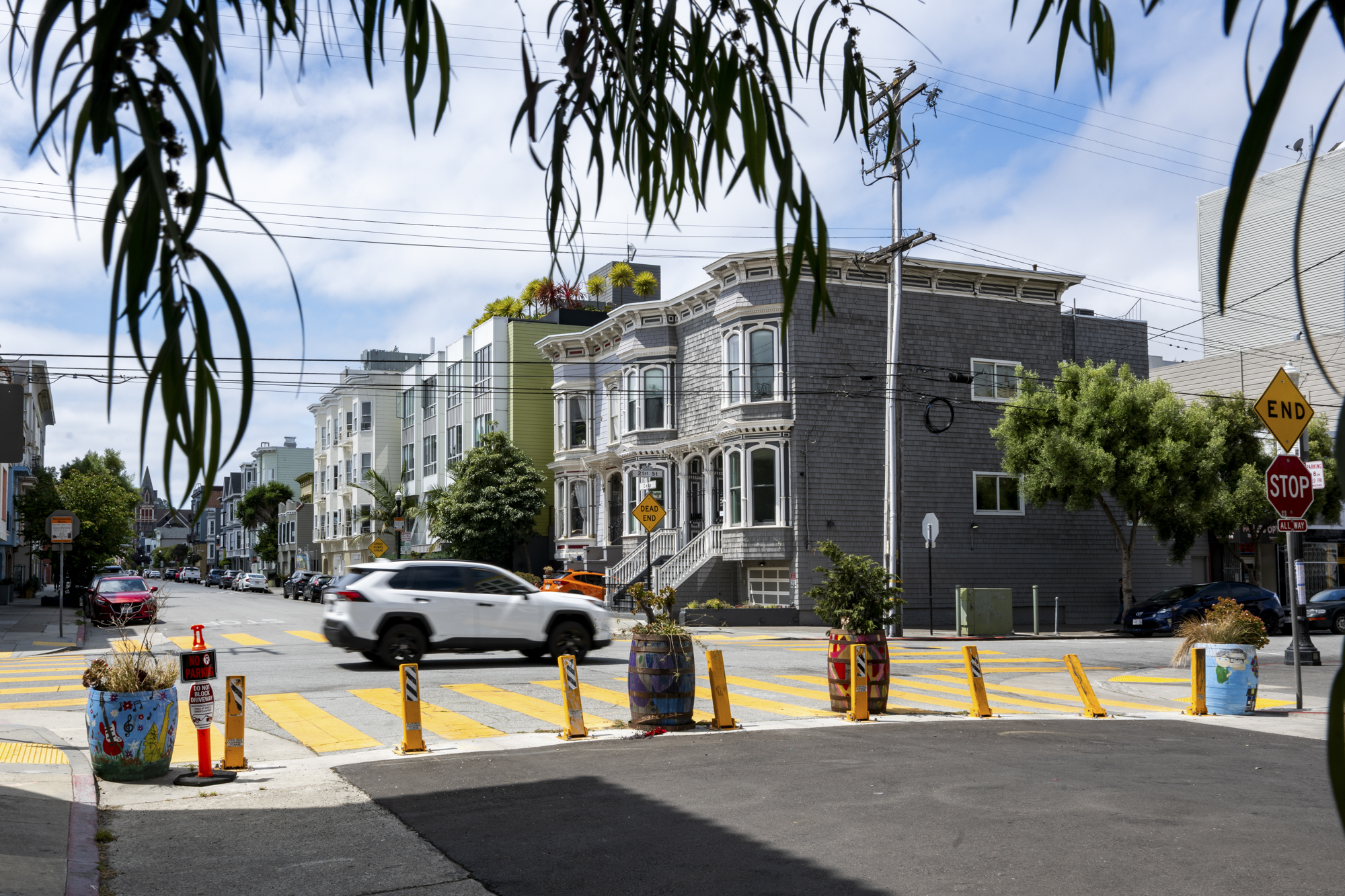
A barricade on Capp Street in the Mission District in San Francisco on June 17, 2026. Some San Francisco residents implored the city to maintain the barriers, which they say made their streets residential again.
(Beth LaBerge/KQED)
“Before the bollards were installed, living on Capp Street was a nightmare,” said Jason Schlachet, a resident since 2008.
Schlachet described “being woken up in the middle of the night to the sound of women screaming for their lives, bumper-to-bumper traffic, a dozen women per block walking in the middle of the road, stepping over discarded used condoms and intimidation from pimps.”
Schlachet urged directors to continue the closures. He said they made an immediate and effective change.
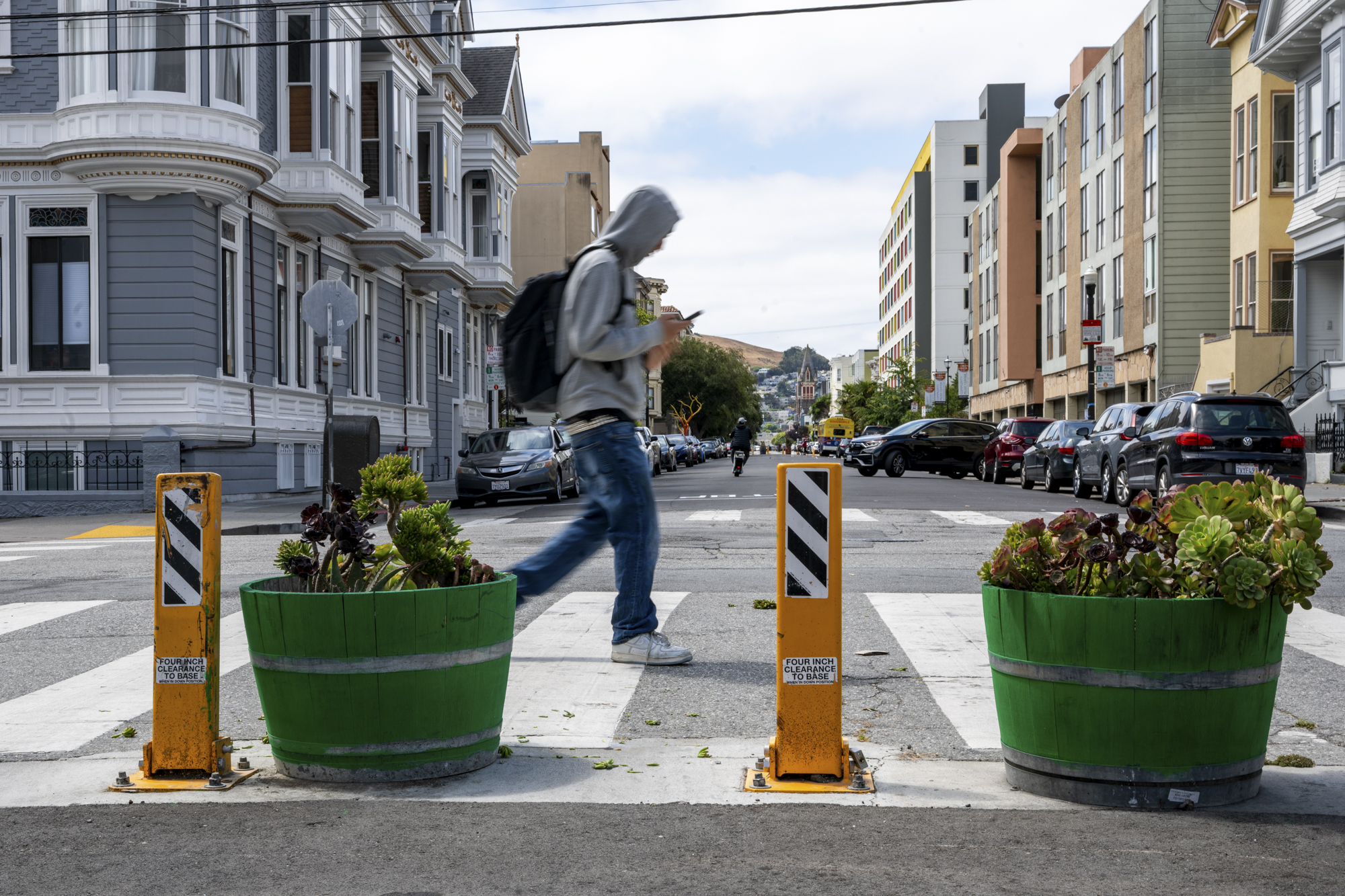 A barricade on Capp Street in the Mission District in San Francisco on June 17, 2026. (Beth LaBerge/KQED)
“Capp Street instantly became a residential street again,” Schlachet said.
But for Laurel Coco, who lives at 18th and Shotwell streets, just a block away from Capp, the closures have merely moved the red light district to her street.
“It is heartbreaking to witness the exploitation of women and underage girls outside my window. But SFMTA must take responsibility for the displacement that your infrastructure has created,” Coco said, adding that she is routinely solicited while walking home, and that her husband was physically assaulted outside their front door by several sex workers and their pimp this week.
Coco asked for “comparable traffic interventions on our block.”
“City engineering should not protect one block by sacrificing another. Rather than blindly extending this pilot, we demand equity,” Coco said.
Board member Janet Tarlov said that the board has “endeavored to be of assistance to the police department in maintaining the closures,” but that many of the residents’ concerns “ touch on very serious criminal matters which are under the purview of the San Francisco Police Department.”
Antonio Flores, acting lieutenant with the Special Victims Unit at the San Francisco Police Department, told directors that the barriers have been effective in reducing activity in the immediate area, but the market moving was a predictable outcome of the closures.
“ We knew that it was going to get pushed to a different direction,” Flores said.
Flores said recent changes to California law, including a state bill that makes it illegal to loiter in a public place with the intent to purchase commercial sex, are aiding the police department’s enforcement efforts.
Shotwell Street resident Matthew Blackshaw said before the barricades, he and his wife considered leaving the neighborhood to raise a family, but now are considering staying. However, he said, they are not a long-term solution.
“I strongly encourage you to renew the barricades for the sake of our neighborhoods, while at the same time exploring longer-term solutions that can create a profession that is safe for not just the residents here, but also for the people who engage in this kind of work,” Blackshaw said.
In approving the extension, the board said that the program has continued since 2023 without metrics to quantify the success of the program or a process for gathering community input.
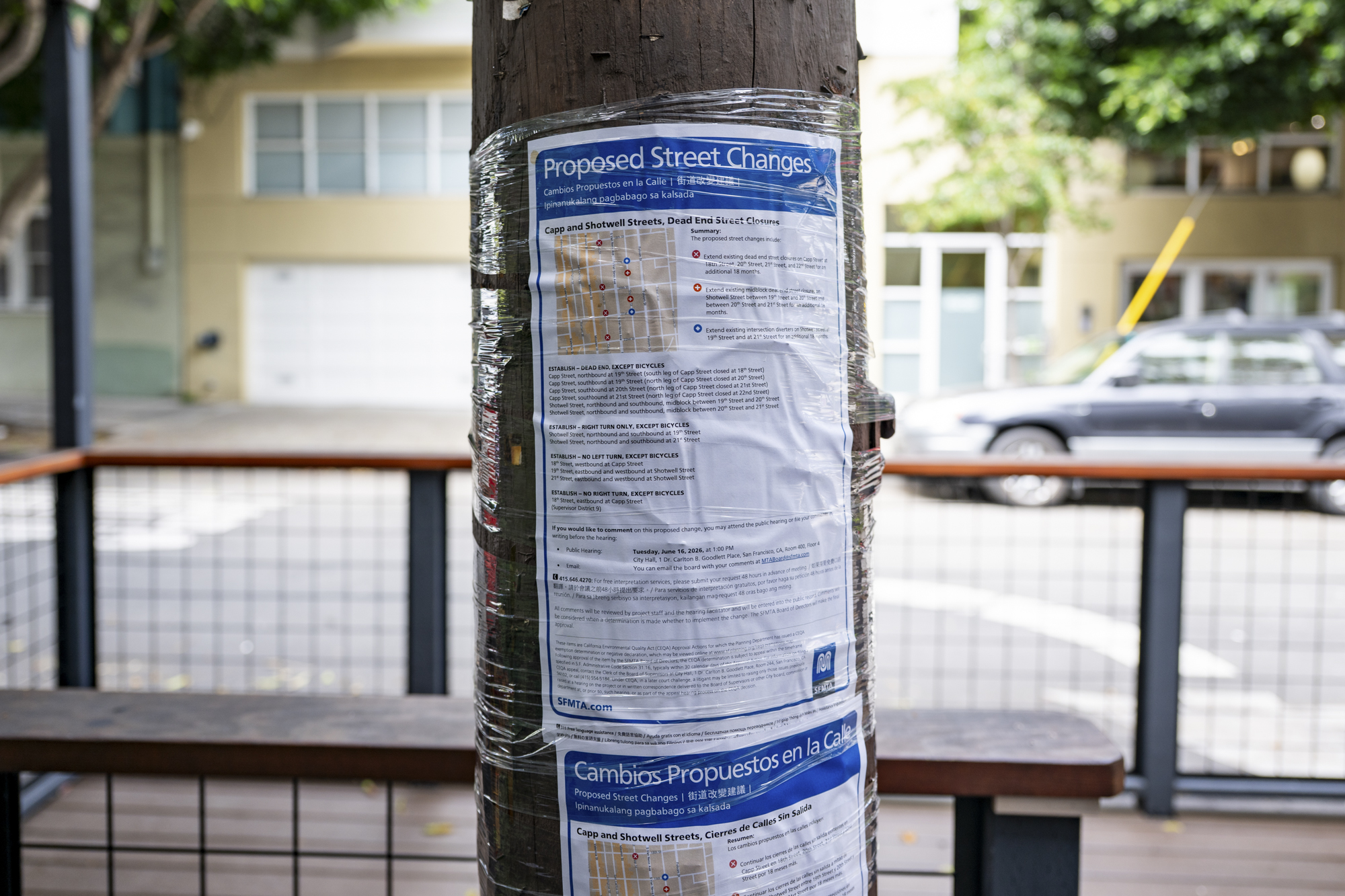 A sign about proposed street changes hangs on Shotwell Street in the Mission District in San Francisco on June 17, 2026. (Beth LaBerge/KQED)
Vice Chair Stephanie Cajina said the board requested a six-month evaluation of the program when it was last extended in 2024, but it never happened.
“ The feedback loop from the community is not there, and the way for us to evaluate success is not there,” Cajina said.
The unanimously approved, amended resolution included a request for SFMTA staff to evaluate transportation-related metrics for the program, and to urge SFPD to develop measures to quantify the success of the closures.
SFMTA Streets Division Director Viktoriya Wise apologized for the previous planned six-month evaluation never happening.
“I think we can be back in six months,” she said.