
Photos contributed
published on June 17, 2026 – 3:08 PM
Written by Ben Hensley
For years, the American shopping mall has been rumored to be on its last legs, treated as a symbol of decline — a casualty of online shopping and the last ripple effects of the pandemic.
Headlines chronicle shuttered department stores and declining foot traffic. In some cities, once-thriving malls have been converted into mixed-use developments, medical campuses and warehouses, with some filled by temporary pop-up stores such as Spirit Halloween.
Others have sat vacant for years.
Not so fast
But in the Central Valley, mall leaders say the idea that shopping centers are disappearing misses the bigger picture.
“The death of the mall? No,” said Joey Elliott, general manager of Fashion Fair in Fresno. “Brick and mortar is always going to be there.”
Rather than vanishing, local mall operators say retail is evolving.
At both Fashion Fair and Visalia Mall, managers describe a future less dependent on traditional department stores and more centered around experiences — places where people can shop, eat, socialize and spend time in ways that online retailers simply cannot replicate.
“Malls are still relevant,” said Richard Feder, senior general manager of Visalia Mall. “Those malls that are doing well today are the ones that are going to survive.”
Feder said struggling malls nationally tend to be properties that have lost anchor tenants and failed to adapt, while stronger centers have continued to reinvent themselves to reflect changing consumer habits.
“We live in a very touchy-feely society,” Feder said. “People want to meet and go places.”
More than shopping
The modern mall, operators say, is increasingly about creating a reason to visit beyond making a purchase.
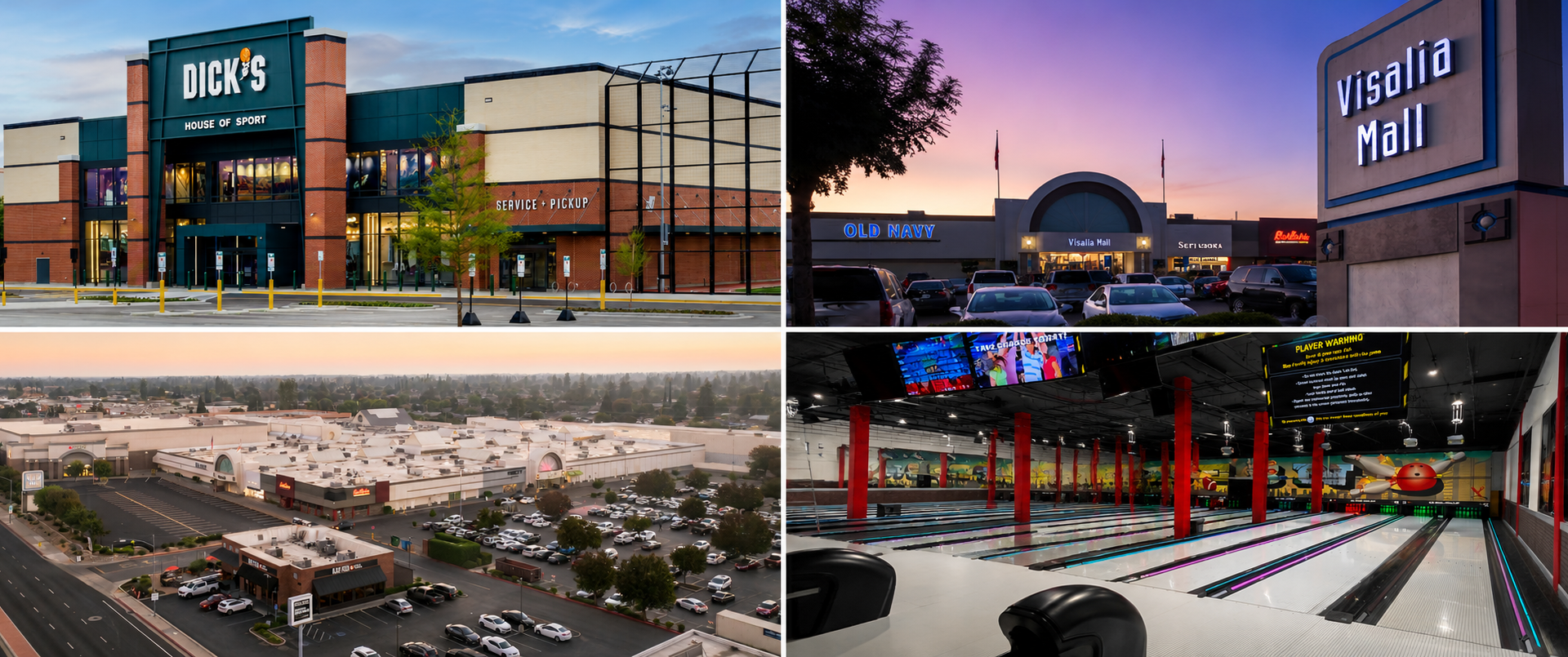
At Fashion Fair, entertainment-focused tenants such as X Lanes Family Fun Center have joined a growing mix of retailers aimed at extending visitors’ time on site. Additional concepts, including Sandbox VR and an escape room venue, are also expanding the center’s entertainment offerings.
Fashion Fair’s ambitions extend further still. Macerich, the mall’s owner, and Dick’s Sporting Goods told Fresno’s Historic Preservation Commission earlier this year that they plan to bring a House of Sport location to the property — a large-format concept typically running 120,000 to 150,000 square feet with outdoor turf fields, batting cages, climbing walls and digital golf ranges that could be built by 2027.
“We really are a community center,” Elliott said. “The more experiences that people can have at a shopping center, I think the better off the community is.”
The mall has also heavily invested in upgrades, including lighting, common areas, outdoor gathering spaces, tenant improvements and security upgrades. The improvements aim at maintaining and boosting appeal as customer expectations shift.
Adapting in the South Valley
Visalia Mall is taking a similar approach.
A former Forever 21 storefront is being converted into Candeeland, an indoor children’s play venue. The mall has also increasingly leaned into community events such as its seasonal Food Truck Corral, featuring a rotating lineup of food vendors in the mall’s north parking lot.
“It’s all about those types of experiences,” Feder said. “Something different to do.”
The shift reflects broader changes in retail behavior.
Certain categories — luxury items, fragrances, jewelry and apparel — still benefit heavily from in-person shopping, both mall operators said. Customers often want to see, touch or try products before purchasing, something online retailers struggle to offer.
“You can’t sell a fragrance online,” Elliott said. “People want to experience.”
Many major retailers have shifted their behavior as well, embracing an “omnichannel” model blending online shopping with physical storefronts and offering options like in-store pickups or returns.
The next generation of mallgoers
One of the biggest surprises for mall operators has been the emergence of younger generations and their impact in driving retail’s momentum.
According to Elliott, Gen Z shoppers are increasingly returning to in-person shopping, valuing social experiences alongside convenience.
“We’ve been doing a lot of research on Gen Z,” Elliott said. “Gen Z wants to touch things, they want to experience things, they want to be out and about in public and shopping.”
Fashion Fair’s traffic has increased significantly over the past two years. Elliott said the center now draws more than 10 million visitors annually.
Feder said Visalia Mall has noticed a similar shift over the past year, with younger visitors increasingly using shopping centers as gathering spaces.
“They want to put their phones down,” Feder said. “They want to socialize.”
That doesn’t mean online shopping is going away. Rather, online and storefront retailers are adapting to work more closely than many see at a surface level.
For Valley malls, that cohesiveness may lead to less competition with e-commerce and more understanding of strengths and weaknesses — the mall as a gathering place as much as a shopping destination, rather than the home of this season’s Spirit Halloween pop-up.
“The industry is always evolving,” Feder said. “That’s why you will not see malls going away.”