
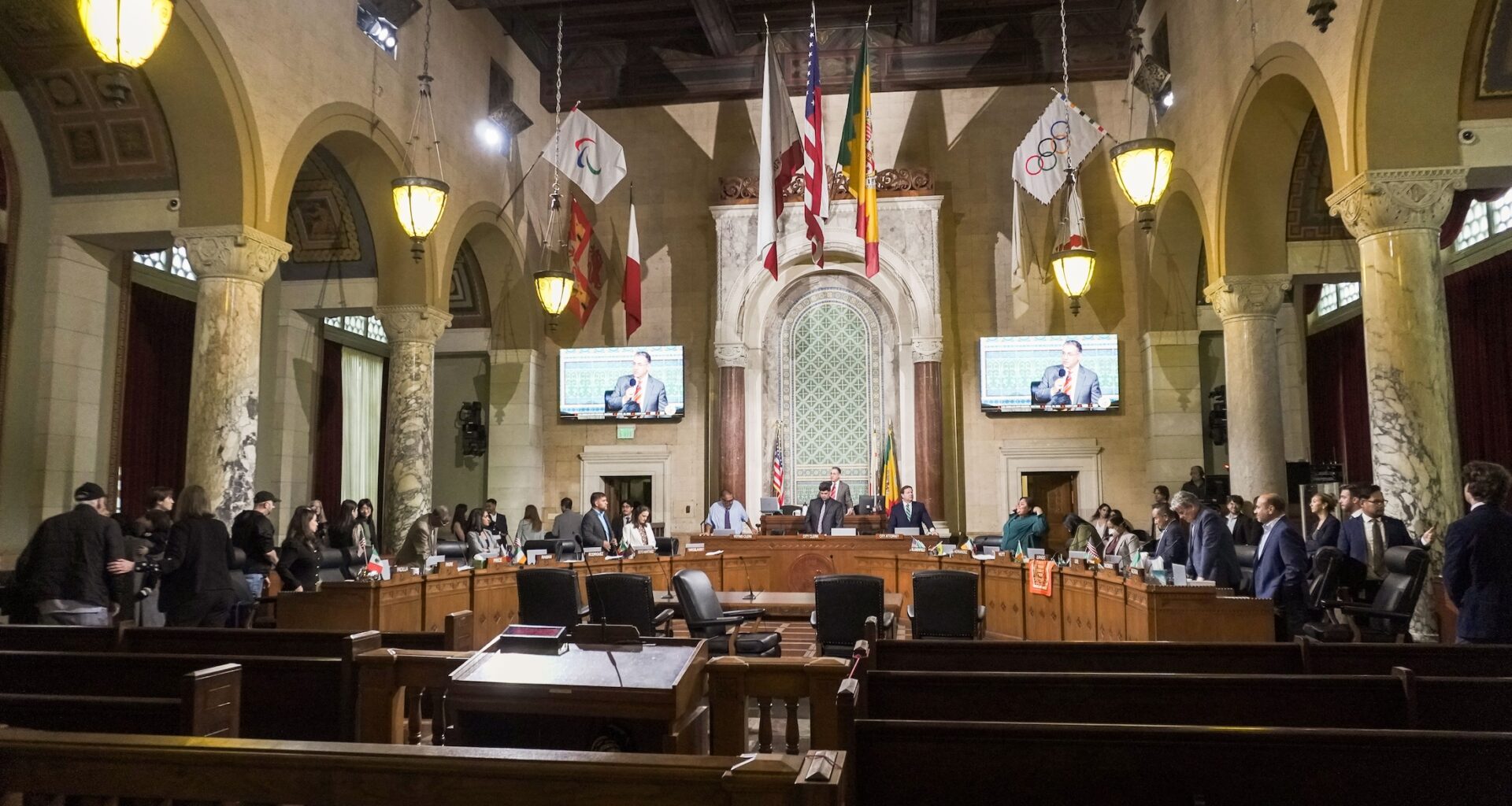
In a 9-5 vote Wednesday, the LA City Council passed to potentially include the ‘mansion tax’ measure in the November election.
After months of contention between housing reform advocates and the luxury developers, the LA City Council passed the first step in drafting a reformed ‘mansion tax’ that would bring affordable housing funds back into the City. The measure would only affect properties within the City of LA, not LA County.
Some have argued that the United to House LA ballot measure made the housing crisis worse by slowing down the construction of real estate due to high taxes. To mediate this issue, the City Council voted to ask City Attorney Hydee Feldstein Soto to draft the proposal exempting apartment buildings and multi-family homes from the tax.
The ULA measure went into effect in 2023 with the intention of streamlining funds from properties worth $5.3 million or more. While having good intentions of building affordable housing in the City, the tax applied to apartment buildings, pushing real estate developers to slowly back out of construction.
The California Community Foundation has advocated for a ULA reform in order to bring back real estate developments to the City, restructuring the measure to its original intention.
“Every home built — affordable or market-rate — eases market pressure, creates jobs and strengthens neighborhoods. Yet multifamily development in Los Angeles has slowed, leaving projects stalled and investment uncertain even as surrounding communities continue building,” President of the CCF Miguel A. Santana said in a press release. “When production slows, the effects ripple outward: fewer homes, fewer jobs and reduced revenues that support schools, counties and essential services.”
The ULA estimated that the original measure would generate $1.1 billion annually. Since 2023, it has generated $1.2 billion total.
“This reduction in sales is disquieting, and not only because the lost sales represent lost revenue for Measure
ULA. The high-value transactions that ULA targets are only a small share of total sales in the city, but they
account for a disproportionate share of growth in the city’s property tax base, and a disproportionate share of
the sales that lead to new housing starts and new local jobs,” a 2025 report from the UCLA Lewis Center for Regional Policy Studies found. “When these transactions are made more difficult, housing and revenue growth is impeded.”
Despite the City Council’s vote to move forward, there is still a chance that the reform will not be on the ballot come November. The proposal will have to be voted on once more by the Council before any concrete measures can be voted on by residents.
Scroll to continue reading
Additionally, the ‘mansion tax’ reform may not be the only ULA-related measure on the ballot. Instead of excluding taxing Palisades Fire victims selling their properties post-2025, as done in previous reform proposals, the Council voted separately to whether they would be exempt or not.