
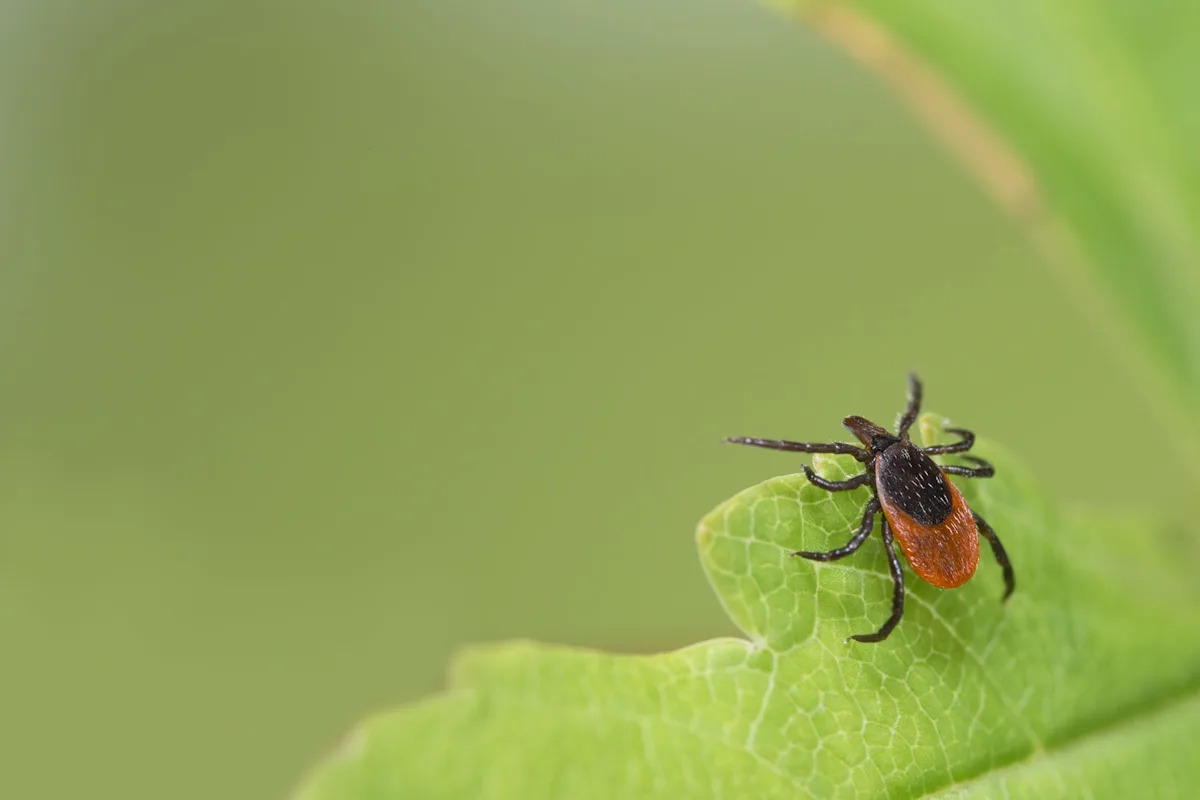
An extremely rare tick-borne illness was detected in a person while in California, resulting in their hospitalization in April, according to the California Department of Public Health.
The bacterium Rickettsia lanei was detected in a person who was likely infected while traveling in Northern California and was hospitalized for an undisclosed period before being released, according to the CDPH.
The department first confirmed the news to SFGATE on June 12, and did not release any additional information about the patient, their symptoms or where they were exposed.
The bacterium belongs to the spotted fever group of Rickettsia and was first identified in Sonoma County in 2018, after a patient was initially misdiagnosed with the clinically similar and deadly Rocky Mountain spotted fever.
Since then, the bacterium has been detected and documented in only four human cases — two in California, one in Oregon and the newest announced case, according to the California Department of Public Health in an email to USA TODAY.
A spokesperson for the California Department of Public Health noted that “it is difficult to make generalizations” about how the bacterium Rickettsia lanei may affect people and how to raise awareness of the disease, as there have been only four documented cases.
The California Department of Public Health noted that once someone becomes sick with the bacterium, the infection is difficult to detect because it has “common symptoms typical of spotted fever Rickettsia infection,” including those of Rocky Mountain spotted fever.
The spotted fever Rickettsia infection is transmitted by ticks and often causes fever, headache, muscle soreness, altered mental status, hypothermia, and elevated liver enzymes. A rash that often starts on the hands and feet and may spread as the disease progression develops, according to the California Department of Public Health.
“Rash was seen in three of the patients. While no cases died, all were hospitalized due to the severity of their medical condition, including time in intensive care,” a CDPH spokesperson said.
Symptoms of spotted fever Rickettsia lanei tend to appear two to 14 days after a tick bite and can become more severe if not treated, with the fever lasting for two to three weeks, according to the California Health and Human Services Agency.
The Centers for Disease Control and Prevention notes that about 1,000 cases of Rocky Mountain spotted fever are recorded annually, primarily in the southeastern and south-central United States, with only a few cases reported in California.
Normally, doctors can detect spotted fever Rickettsia lanei by performing specialized laboratory tests on skin or blood samples. If a person is diagnosed with Rocky Mountain spotted fever, a doctor will prescribe the patient an antibiotic, usually doxycycline.
“It is important that health care providers begin treatment with doxycycline as soon as a spotted fever group Rickettsia infection is suspected, and not to wait for the result of a blood test for treatment,” the California Department of Public Health said in an email to USA TODAY.
“A blood test can detect antibodies to spotted fever group rickettsioses, but antibody increase may be delayed in face of rapid disease onset.”
Although there has been limited research on the disease due to its rarity, scientists conduct ongoing tick surveillance that monitors ticks in Northern California and along the Pacific Coast.
Notably, the California Department of Public Health identified one infected Pacific Coast tick and two infected rabbit ticks that were recovered from Contra Costa and San Mateo counties.
“In general, rabbit ticks are found closely associated with rabbits in areas with brush and grass and do not often bite people; Pacific Coast ticks, are found in rural, natural areas throughout California, such as along hiking trails, in shady areas with grasses and shrubs,” the California Department of Public Health said in an email to USA TODAY.
Health officials recommend that people hiking or visiting outdoor areas apply tick repellent before they go outdoors and check for ticks before they return indoors.
Noe Padilla is a Northern California Reporter for USA Today. Contact him at npadilla@usatodayco.com, follow him on X @1NoePadilla or on Bluesky @noepadilla.bsky.social. Sign up for the TODAY Californian newsletter or follow us on Facebook at TODAY Californian.
This article originally appeared on USA TODAY: Fourth known person infected with Rickettsia lanei in California