
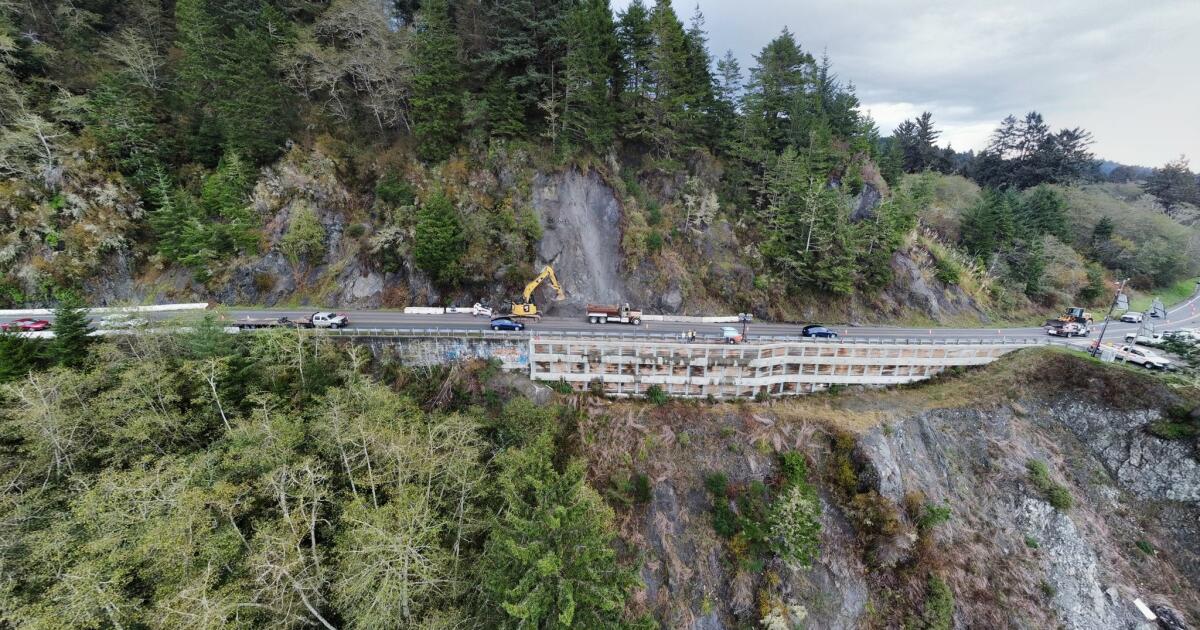
There’s an eroding three-mile stretch of Highway 101 in California’s remote northwest corner that hugs fog-shrouded cliffs between the redwood forest and the Pacific Ocean.
It is ominously named Last Chance Grade. And it is steadily sliding toward the sea. For decades, residents of rural Del Norte County have pleaded for government officials to do something about it.
You’re reading the Essential California newsletter
L.A. Times reporters guide you through the most important news, features and recommendations of the morning.
By continuing, you agree to our Terms of Service, which include arbitration and a class action waiver. You agree that we and our third-party vendors may collect and use your information, including through cookies, pixels and similar technologies, for the purposes set forth in our Privacy Policy such as personalizing your experience and ads.
After many years of patching holes and building retaining walls, the California Department of Transportation is pursuing a long-term solution: a $2.5 billion tunnel through the redwood forest that would bypass the highway’s fast-eroding cliffs.
The project recently achieved a major milestone: In late May, state officials issued the final environmental impact report on the 1.1-mile tunnel — a 712-page, $55-million study that comes after more than a decade of public outreach and coordination with government agencies, Indigenous tribes, businesses and environmental groups.
“It’s a proud moment,” said Jaime Matteoli, the Last Chance Grade project manager for Caltrans. “It’s a huge quality-of-life issue for people, feeling safe on that road. It’s universally recognized that this project is needed.”
The alternative? A 449-mile detour
Highway 101 is the only viable route linking Crescent City, a tsunami-prone town of 6,000 people, with neighboring Humboldt County and the rest of the state.
When Last Chance Grade is closed, the only alternative route between Crescent City and the little town of Klamath 20 miles south — aside from steep, unpaved logging roads — is a circuitous 449-mile, eight-hour detour through Redding and southern Oregon.

A motorcycle cruises Highway 101 over a retaining wall propping up Last Chance Grade south of Crescent City.
(Mike Zacchino / For The Times)
Del Norte County Supervisor Valerie Starkey told me last year that many Klamath children attend school in Crescent City and rely on the campus’ free meals. When rocks and mud buried Last Chance Grade in early 2021, she said, school employees hauled lunches to the base of the landslide and handed them to Caltrans workers to take to kids on the other side.
Klamath residents also travel to the small hospital in Crescent City. And Crescent City residents use the road to access specialized medical care, including chemotherapy, more than 80 miles south in Humboldt County.
Engineers always knew the cliffs were unstable
Last Chance Grade was first built as a wagon trail through the dense redwood forest in 1894. It was constructed in its current alignment in the 1930s, but before the work began, an engineer noted that it would be expensive to maintain because of constant land movement.
During construction, “many slipouts and slides occurred, delaying construction,” according to a 2015 project feasibility study commissioned by Caltrans.
The warped, cracked roadway is perched atop four active landslides. It is so unstable that it was reduced to one-way traffic for nine years straight, reopening in October 2023 — only to be repeatedly reduced since then.
Portions of the highway have shifted 40 feet horizontally and 30 feet vertically since the 1930s, according to Matteoli. The movement has accelerated over the last decade, with some sections now slipping several feet a year toward the Pacific.
Crews have built more than two dozen retaining walls to prop up the roadway. But those, too, have shifted, cracked and broken. In 1972, Last Chance Grade crumbled in the predawn darkness, and a married couple died after their Ford sedan went over the cliff.
The tunnel would run through an ancient Redwood forest
The proposed underground tunnel, east of the existing highway, would bypass the areas with the most intense geologic instability, according to the environmental impact report.
At 6,000 feet, it would become the longest highway tunnel in California, far surpassing the 4,233-foot Wawona Tunnel in Yosemite National Park.

An artist’s rendering shows the proposed tunnel that would bypass a hazardous section of Highway 101 known as Last Chance Grade south of Crescent City.
(California Department of Transportation)
The highway runs through Redwood National and State Parks, a designated UNESCO World Heritage Site. Tunnel construction would result in the loss of 16 old-growth redwood trees wider than 4 feet, in addition to other trees, according to the environmental impact report.
The timeline
Caltrans is expected to ask the California Transportation Commission for $225 million later this summer to fund the tunnel’s design phase, which involves international experts in tunnel design and construction in seismically active zones, Matteoli said.
Matteoli said the project is on track to begin construction by about 2031, with the tunnel potentially opening by 2038.
Locals have told me they’re not thrilled about the long timeline. But, they said, at least there is finally a plan.
Today’s top stories  B-52 crash victimsMilitary officials identified the eight crew members killed Monday when a B-52 Stratofortress crashed at Edwards Air Force Base.“They were friends, mentors, teammates and valued members of our Edwards and Air Force family.”November electionPlot to attack White House UFC fightTwo men from the Inland Empire have been arrested and charged in what federal officials described as a plot to kill government officials at the UFC cage-fighting show staged at the White House last weekend.Here’s what we know so far about the men and the plot.L.A. Metro on the risePassengers ‘Ride the D’ — and other Metro lines — in droves as World Cup mania sweeps SoCal.As for the experience of taking public transit in L.A. amid the crush, the reviews are mixed.Renewable energyThe Trump administration is paying $765 million to have a company abandon four offshore wind leases, including one off California. The deal is the latest in a series of multimillion dollar payouts to dismantle the U.S. offshore wind program.What else is going on
Commentary and opinions
This morning’s must readOther must readsFor your downtime 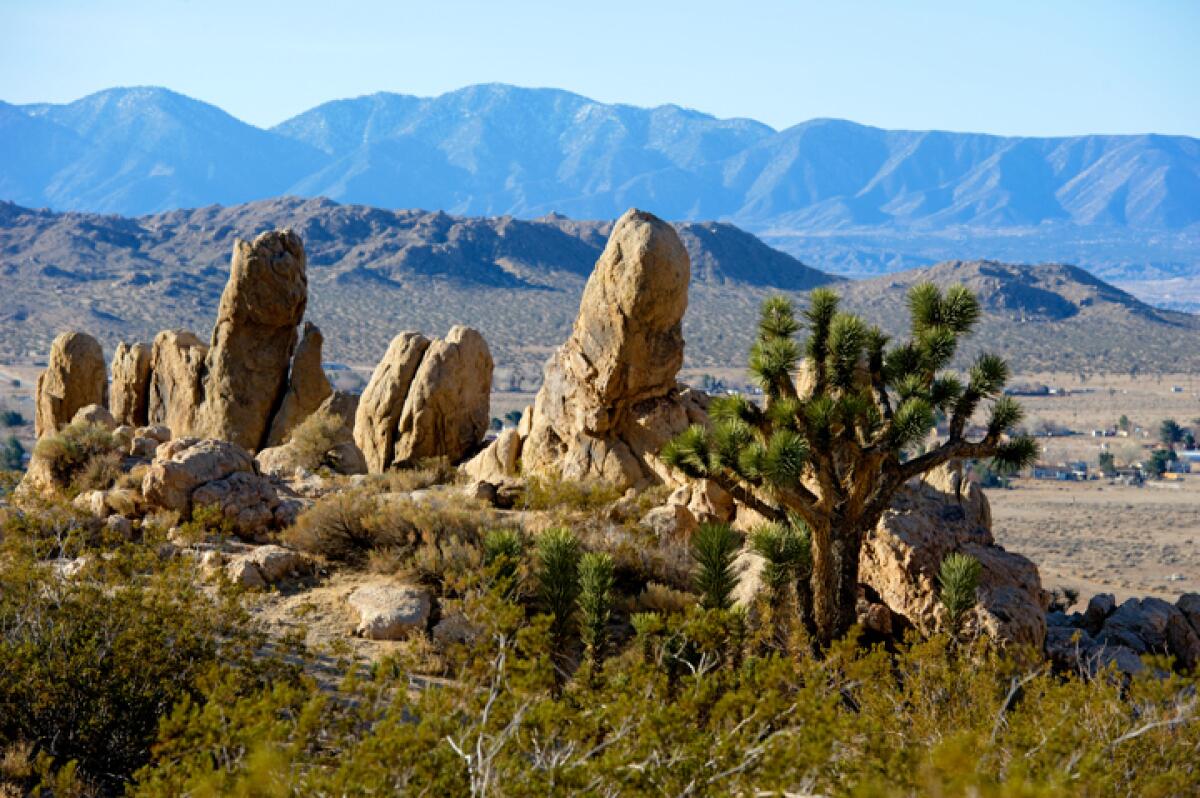
At the Antelope Valley Indian Museum State Historic Park in Lancaster, you’ll find artifacts dating back 1,200 years.
(Courtesy of California State Parks, 2026)
Going outStaying inQuestion of the day: What’s your favorite beach read?
Email us at essentialcalifornia@latimes.com, and your response might appear in the newsletter this week.
And finally … the photo of the day 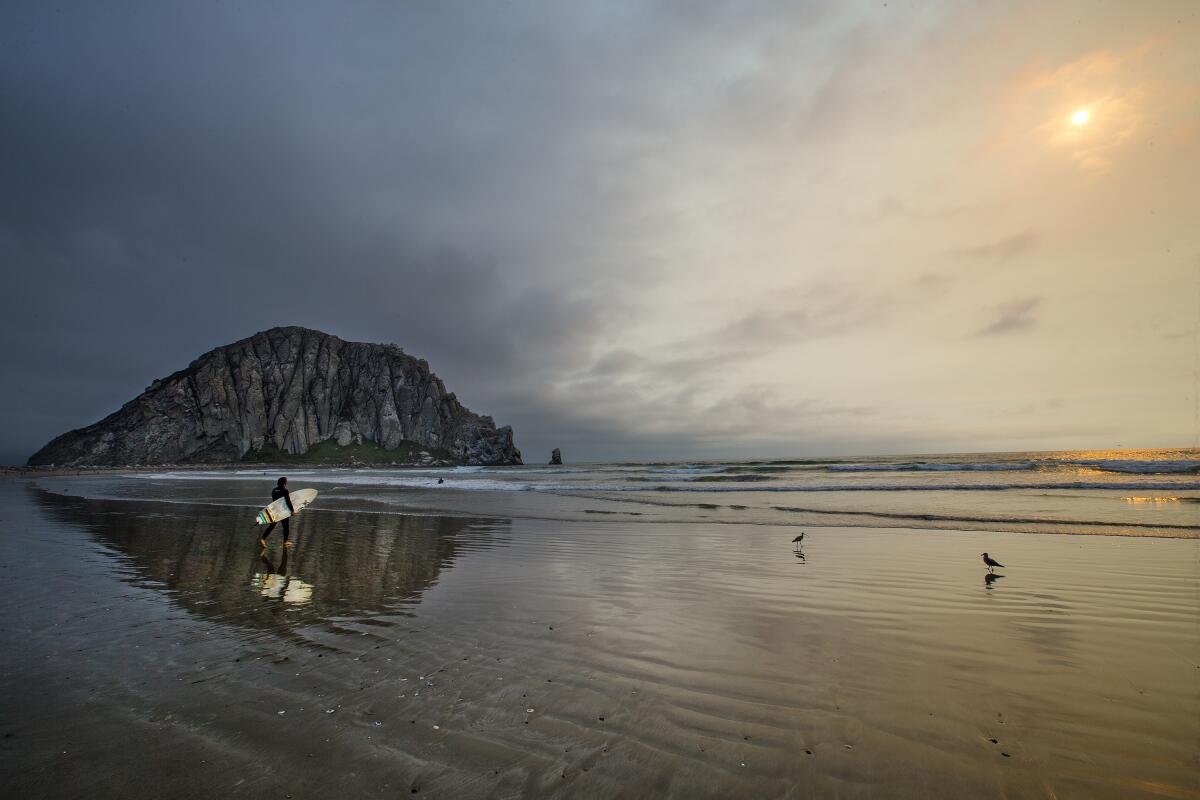
A surfer and Morro Rock are reflected in the water at low tide as the sun goes down with ash visible from a forest fire in Morro Bay. From 2016.
(Allen J. Schaben/Los Angeles Times)
Today’s great photo is from L.A. Times photographer Allen J. Schaben of Morro Rock with ash visible from a 2016 fire.
Have a great day, from the Essential California team
Hailey Branson-Potts, staff reporter
Hugo Martín, assistant editor, Fast Break desk
Kevinisha Walker, multiplatform editor
Andrew J. Campa, weekend writer
Karim Doumar, head of newsletters
How can we make this newsletter more useful? Send comments to essentialcalifornia@latimes.com.