
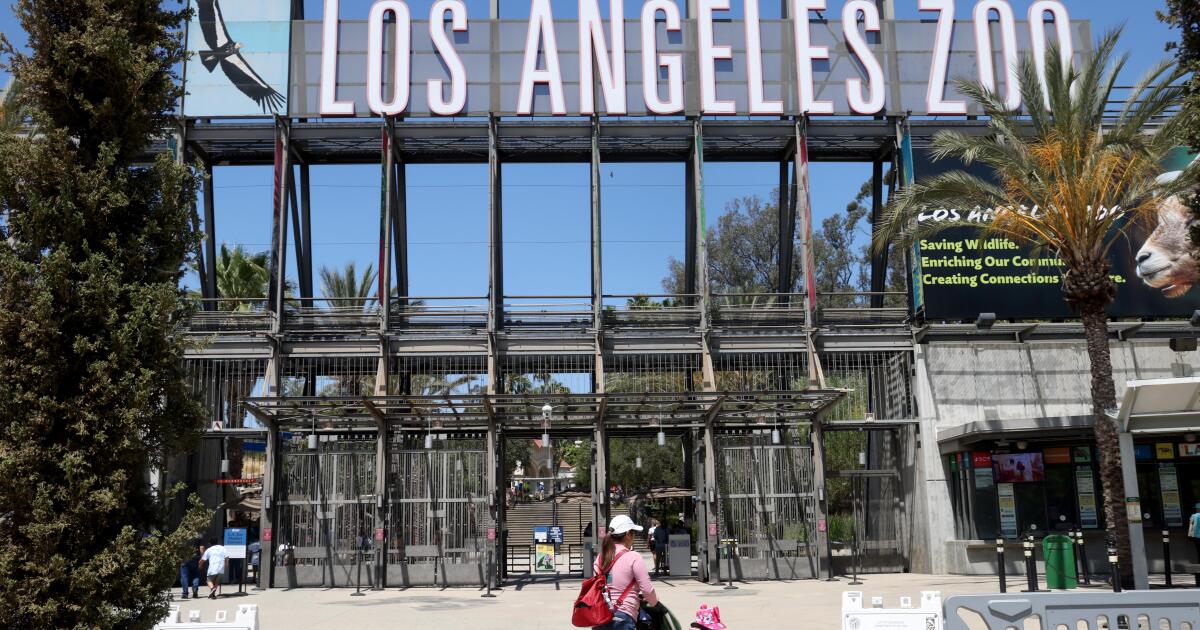
In the 1950s, Los Angeles’ population was exploding. The decade brought a development boom as well as good fortune for the automobile and aerospace industries and the arrival of the Los Angeles (née Brooklyn) Dodgers.
Los Angeles residents, believing their burgeoning city was worthy of a world-class zoo, approved in 1957 more than $6.6 million — equal to nearly $79 million today — to build one.
You’re reading the Essential California newsletter
L.A. Times reporters guide you through the most important news, features and recommendations of the morning.
By continuing, you agree to our Terms of Service, which include arbitration and a class action waiver. You agree that we and our third-party vendors may collect and use your information, including through cookies, pixels and similar technologies, for the purposes set forth in our Privacy Policy such as personalizing your experience and ads.
Bickering over whether the zoo should be operated by the city government or a nonprofit organization began almost immediately — and continues seven decades later.
Today, the L.A. Zoo is the last major American zoo governed by a city department, and it is struggling with deteriorating facilities, rapidly declining membership, and a critical lack of funding, my colleague Ruben Vives reported.
A Los Angeles County civil grand jury now is urging city officials to partner with a nonprofit organization to run the zoo, saying in a new report that the financially strapped local government cannot afford to keep it afloat.
The elephant situation and other woes
The newly released grand jury report says that from April 2025 to February 2026, the number of membership households — which make up more than a quarter of visits — dropped 23%, from 36,914 to 28,440. Attendance isn’t the only problem, according to Vives’ reporting:
The zoo, which houses more than 1,600 animals, “has become dilapidated over the years,” with exhibits for lions, bears, sea lions and pelicans having been closed because they needed major renovations, Vives reported.
The last two elephants, Billy and Tina, were transferred last year to the Tulsa Zoo after years of campaigning by animal rights advocates over cramped living conditions, health problems and the recent deaths of two other elephants.
The grand jury wrote that much of the zoo’s signage is old and “seriously worn, sometimes identifying animals that are no longer in the Zoo.”
“The Zoo lacks sufficient funding for deferred maintenance and capital projects, with no foreseeable major revenue stream in the immediate future,” the report says, adding that “without sufficient funding, ordinary maintenance is deferred until a crisis occurs.”
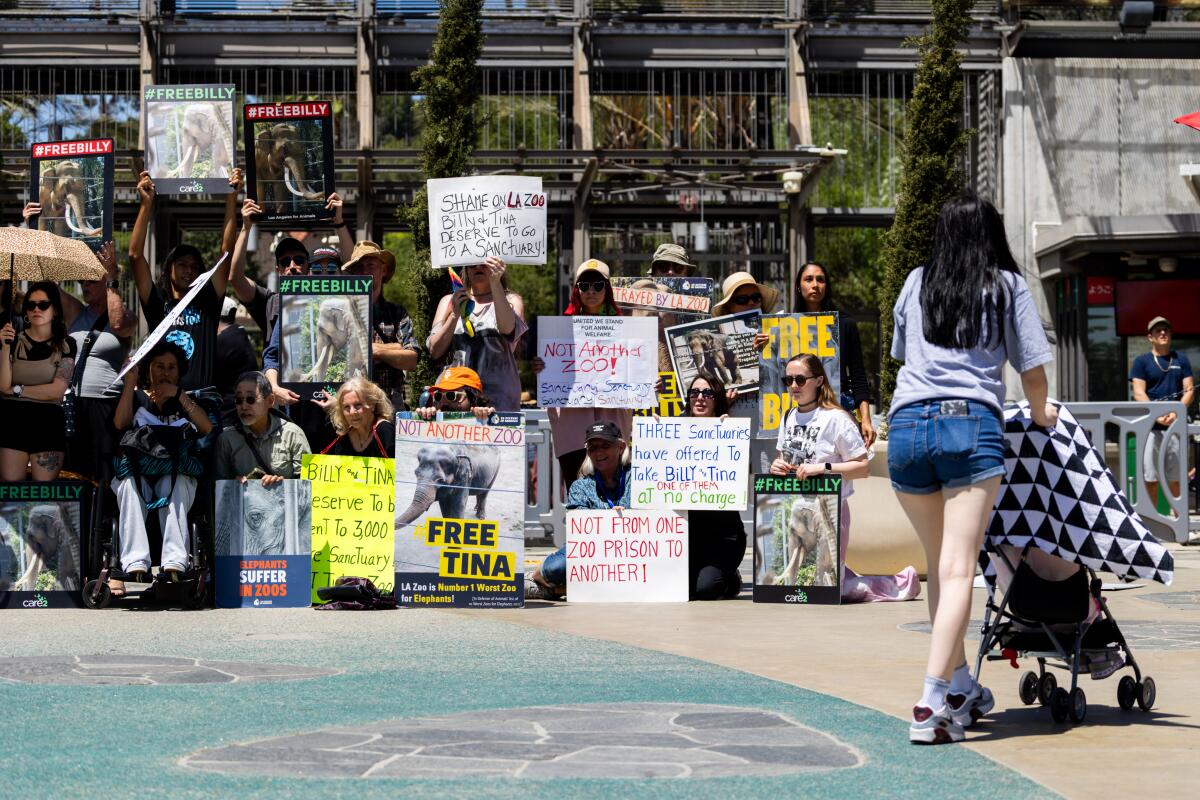
Outside the L.A. Zoo, a woman with a stroller passes by a protest by animal rights activists decrying the living conditions and captivity of elephants Billy and Tina on May 11, 2025.
(Juliana Yamada / Los Angeles Times)
What the zoo needs, per the grand jury, is private funding. But since it is run by a city department, it is “not attractive to major donors who generally do not contribute to government entities.”
The grand jury wrote that “virtually every well-known municipal zoo in the country” is run by a public-private partnership, including the San Diego Zoo and the Bronx Zoo in New York City.
The jury suggested the city emulate other successful private-public partnerships, such as the L.A. County Museum of Art and the Natural History Museum, each of which is run by a nonprofit.
New drama, meet old drama
The grand jury recommendation comes as the city remains in a messy legal dispute with the nonprofit Greater Los Angeles Zoo Assn., the zoo’s main fundraising partner, which handles special events, membership, publications, volunteers and sponsorship.
At stake is a nearly $50 million endowment that each side claims is theirs.
The grand jury report says the zoo’s relationship with GLAZA “now lies in ruins, crashed on the rocky shore of a major lawsuit in the Los Angeles Superior Court.”
In the 1950s, the city planned to partner with a nonprofit called Friends of the Los Angeles Zoo, which would run the yet-to-be-built zoo. The nonprofit’s founding members included Walt Disney, broadcasting pioneer Art Linkletter, and Jean Delacour, director of the L.A. County Museum.
The city and a group of taxpayers for years squabbled in court over whether the government had the right to enter into a contract with the Friends, which ultimately disbanded before the zoo opened in Griffith Park in 1966.
An April 1959 editorial in The Times chastised residents who implied the Friends were trying to enrich themselves.
“Taxpayers, of course, have every right to ask: Why turn over operation of the new zoo to any group of private citizens, however prominent and well-intentioned?” the editorial reads. “Part of the answer can be found in virtually every well-run zoo in the country. The San Diego … Bronx and Philadelphia Zoos are all publicly opened but operated by independent, nonprofit groups.”
The editorial noted that then-Mayor Norris Poulson had just written to the city’s Board of Recreation and Park Commissioners: “We cannot now, or in the foreseeable future, expect to have sufficient public funds to provide the world’s finest zoo.”
Sound familiar?
Today’s top stories 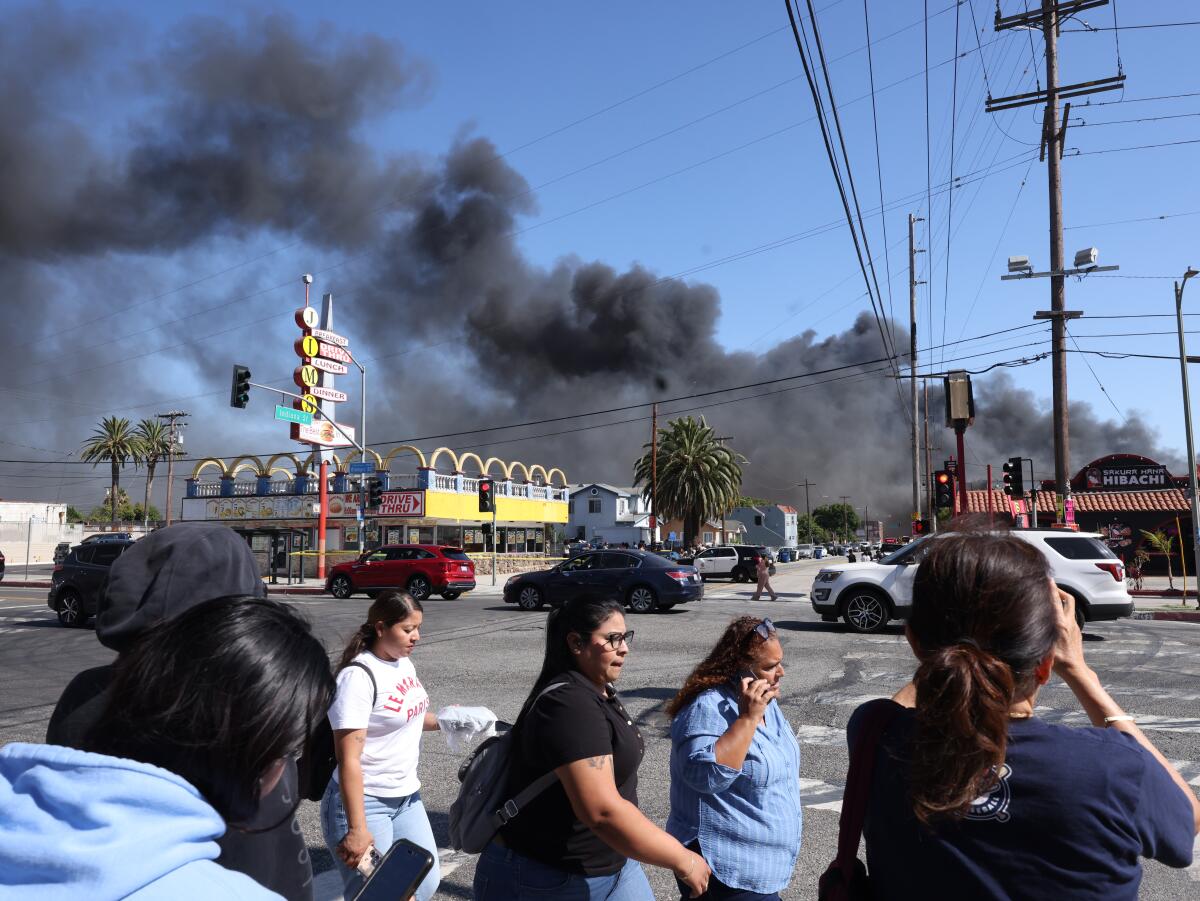
People cross the street at South Indiana Ave as black smoke rises from a blaze inside a massive cold storage facility in Boyle Heights in Los Angele on Wednesday.
(Genaro Molina / Los Angeles Times)
Boyle Heights fire and chemical leakHuntington Beach affordable housingAfter years of battling with the state of California over its mandates and eventually being hit with hundreds of thousands of dollars in fines, Huntington Beach officials voted this week to pass an affordable housing plan update. “Reluctantly yes,” said one council member. Off-roadingPresident Trump recently took action that could pave the way for opening many more federal lands to recreational off-road enthusiasts.Earlier this year, a judge ordered the closure of roughly 2,000 miles of off highway vehicle trails in the western Mojave to protect the endangered desert tortoise. What else is going onCommentary and opinionsGustavo Arellano wrote a column about the murals that still honor Cesar Chavez. This morning’s must readOther must readsHere are the 6 best moments from the Las Culturistas Culture Awards.Beer, with a twist? SoCal dads find solidarity through an unexpected activity.For your downtime 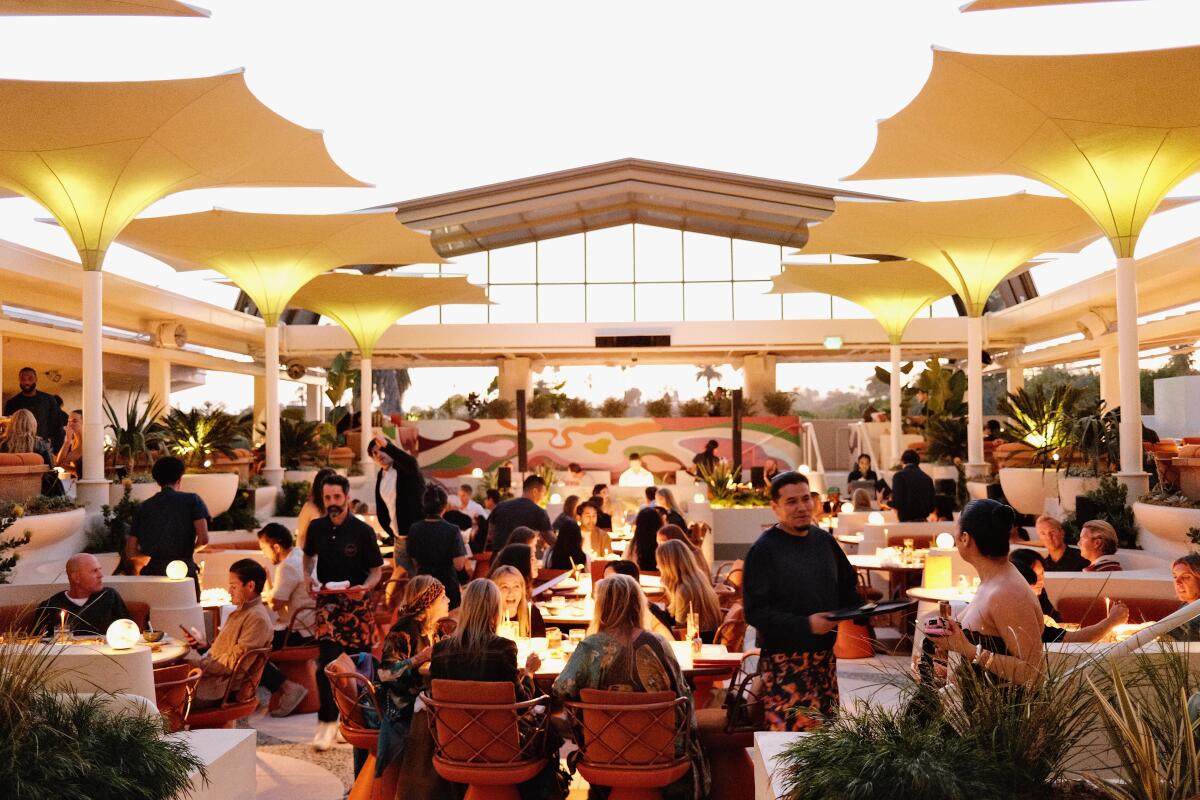
Rooftop bar and restaurant Sushi Samba in West Hollywood pictured Tuesday, April 7, 2026.
(Stephanie Breijo / Los Angeles Times)
Going outStaying inQuestion of the day: What are your family’s Juneteenth traditions?
Email us at essentialcalifornia@latimes.com, and your response might appear in the newsletter this week.
And finally … the photo of the day 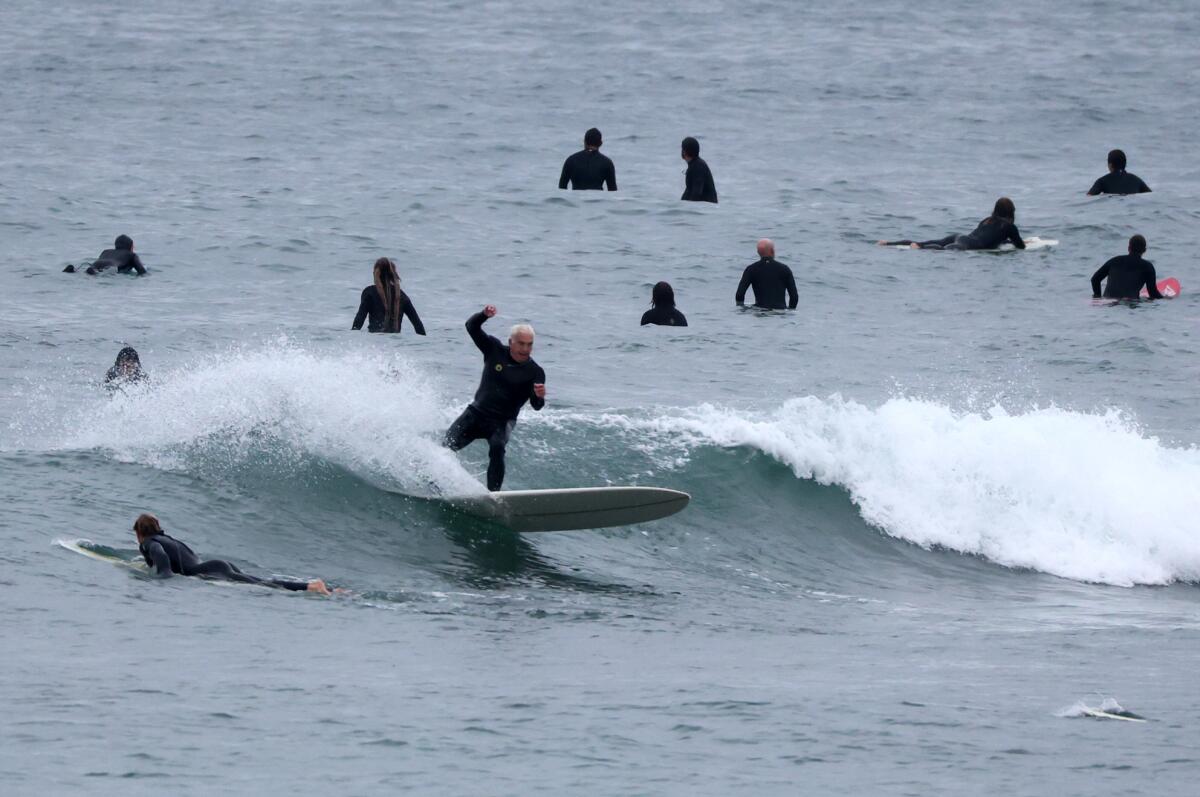
(Myung J Chun / Los Angeles Times)
Today’s great photo is from L.A. Times staff photographer Myung J Chun of surfers at Surfrider Beach in Malibu.
Have a great day, from the Essential California team
Hailey Branson-Potts, staff reporter
Hugo Martín, assistant editor, Fast Break desk
Kevinisha Walker, multiplatform editor
Andrew J. Campa, weekend writer
Karim Doumar, head of newsletters
How can we make this newsletter more useful? Send comments to essentialcalifornia@latimes.com.