
There is a moment people try to describe to you before you become a parent.
People tell you everything changes when the baby arrives. They tell you there is no feeling like holding your child for the first time. You nod politely and say, “Yeah, yeah, I get it.”
But the truth is: you don’t. You can’t. Not until it happens.
Not until the nurse places your son in your arms and suddenly the entire world rearranges itself in an instant.
Sunday is my first Father’s Day. But it almost didn’t happen.
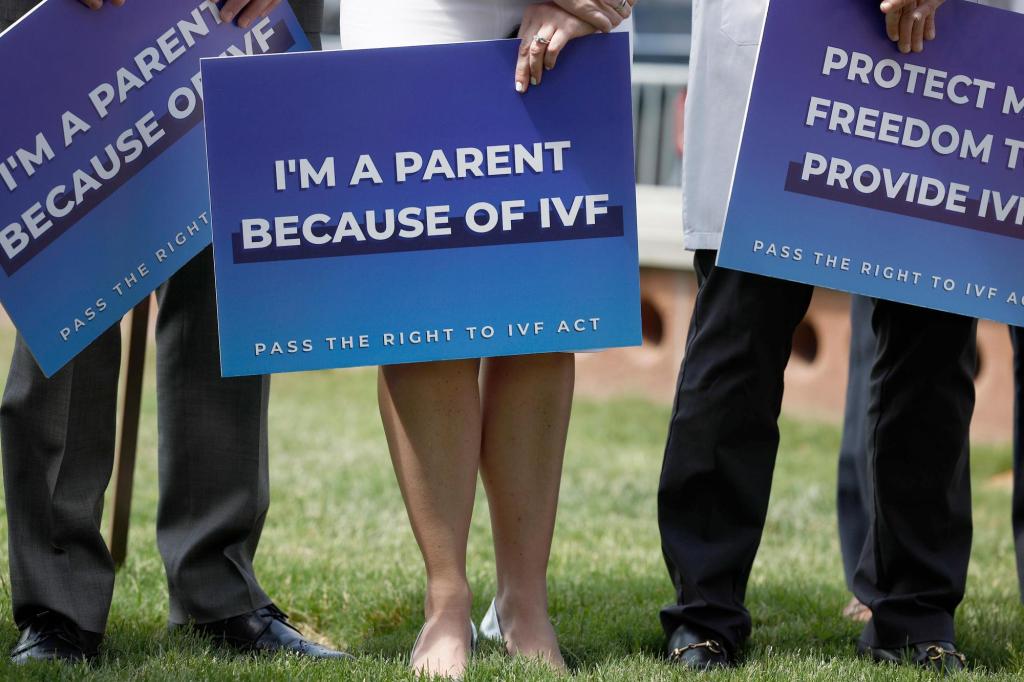
Like millions of Americans, my wife and I struggled with infertility. What began with hope slowly became years of appointments, medications, procedures, waiting and heartbreak. We endured five rounds of intrauterine insemination (IUI). We went through in vitro fertilization (IVF). And experienced a miscarriage.
Every setback carried emotional frustration, disappointment and financial stress.
Eventually, after years of uncertainty, a successful round of IVF brought our son into our lives. And I will spend every Father’s Day grateful for that miracle.
But I also know how close we came to not being able to afford the chance.
According to national estimates, the average cost of a single IVF cycle is roughly $20,000-$25,000 — and many families require multiple cycles before they are successful.
Who has that kind of money just lying around?
California recently took an important step forward with the implementation of Senate Bill 729, which expands access to infertility treatment coverage, including IVF. That matters. But major gaps remain.
Small-group employers, religious organizations and self-funded employer plans are exempt from the mandate, leaving many Californians still facing crushing out-of-pocket costs if they hope to become parents. Not to mention the 35 states throughout our country that do not offer any type of coverage for these treatments.
For aspiring families, the choices are often grim: take on a high-interest loan, drain savings, borrow from relatives, apply for grants, travel overseas for treatment, or give up on the dream of having children altogether.
Even with my wife’s employer covering roughly half the cost, we still had to come up with more than $15,000 upfront just to begin IVF treatment. We were fortunate. Family helped us bridge the gap.
But not everyone has that support system.
At one point, I explored withdrawing money from my retirement account to help pay for treatment. I was stunned to learn we would face early withdrawal penalties for using our own retirement savings to start a family.
Think about that for a second.
Federal law already recognizes that certain life-changing investments justify access to retirement savings without penalty. Starting a family should be treated the same way.
What better use of your own retirement savings — outside of retirement itself — could there be than building your family?
Federal law should allow Americans to make penalty-free withdrawals of up to $20,000 from retirement accounts for qualified fertility treatments, like IUI and IVF, and increase the exemption for adoption-related expenses to reflect the true cost families face today.
This would not create a new entitlement program. No new federal spending. It would simply allow people to access their own savings without being punished for trying to become parents.
I understand this is not a silver bullet, especially for the 40% of Americans who do not have retirement accounts. But this is another financial tool in the toolbox. One small, practical step that could immediately reduce the financial burden on family planning.
We spend so much time in this country talking about declining birth rates, family values and supporting children. But if we are serious about being a pro-family nation, we must make it easier to become parents in the first place.
To be clear: Money should not be a barrier that prevents someone from starting a family.
And that is my wish for my first Father’s Day. Not a gift for me, but an opportunity for others.
This Father’s Day, I’ll spend the day holding the little boy who made me a dad.
I want more families to have that chance.
Let’s make it easier for people who dream of becoming parents to get there.
Bishop is the director of government affairs for the city of San Diego and lives in La Mesa.