
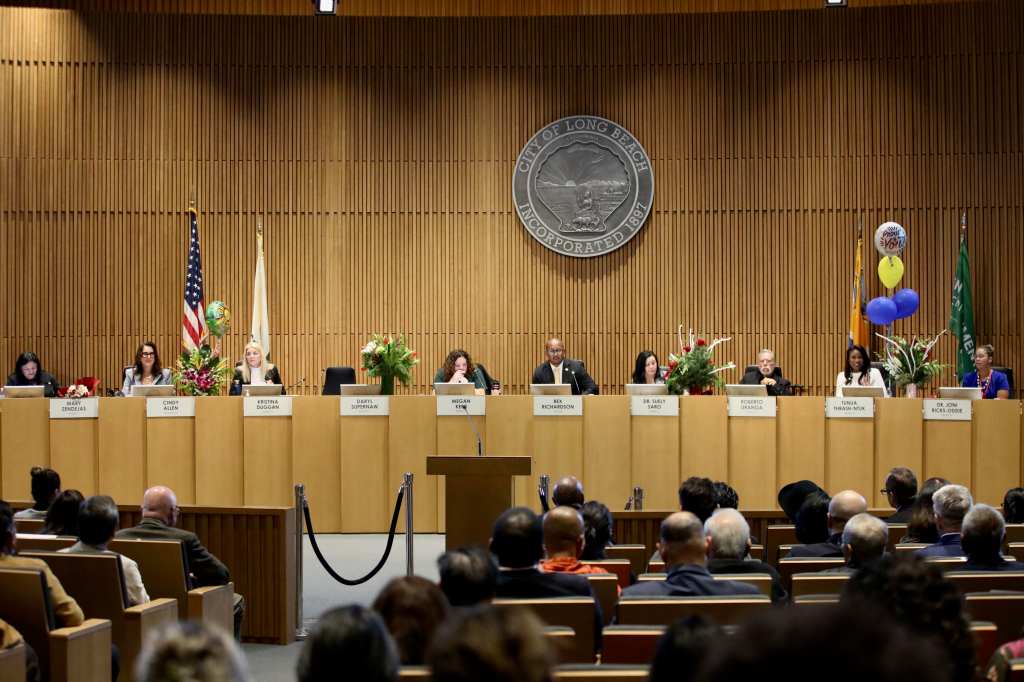
Residents will soon be allowed to publicly comment virtually during Long Beach City Council meetings, starting on July 21, in addition to being able to address officials in person in the Civic Chambers — but no other changes will take place for now.
The change stems from a new state law that create additional opportunities for residents to participate in local government by allowing them to attend meetings remotely and provide live public comment through a two-way audiovisual or telephonic platform.
In anticipation of this change, city leaders have been discussing whether the way City Council meetings are structured should change – particularly when and how long residents will have for public comments. An ordinance with these changes had been proposed, but ultimately, a majority of council members voted against the proposals this week.
So City Council meetings will continue with their current order, with the addition of remote public comment, according to city staffers.
Last month, city leaders began discussing how they could reorganize council meetings to make them more accessible to the public, but also accommodate state Senate Bill 707, which will take effect July 1 and expands requirements for public participation in local government meetings, including providing remote access, equal options for remote and in-person speakers, enhanced accessibility and language requirements, and new procedures for addressing technical disruptions, according to a staff report.
The failed proposals, meanwhile, included council meetings starting at 4:30 p.m.; residents having to sign up for general public comment no later than the start of the meeting; agenda item public comments being heard immediately following general public comments, with sign-ups closing at 5:30 p.m.; people only having 90 seconds for agenda item public comments; and the agenda public comment period being limited to an hour, though the mayor — or presiding officer — would have had the discretion to expand the period by 30-minute intervals.
The proposed ordinance had passed its first reading, sending it back to the council for its required second vote on Tuesday, June 16. But on Tuesday, the council shot it down 5-3.
The recommendations were intended to ensure that city staff mitigated potential technical difficulties that could happen with every item receiving public comment, said City Clerk Monique De La Garza.
“(The new state law) increases the chances of us losing connectivity, having a high volume of calls, there could be a lot of internet traffic, and we would have to stop the meeting, depending on our connectivity issues at any point,” De La Garza said on Tuesday. “The thought behind having one public comment period was that it would reduce potential technical difficulties that we were having. It would also allow us to determine the volume of callers that we were going to have for that meeting.”
The council on Tuesday unanimously approved establishing a policy addressing disruptions to telephonic and internet service during meetings, which makes Long Beach compliant with SB707, according to city staff.
Under the policy, if a disruption prevents members of the public from attending, observing or providing comment in real time, the City Council must recess open session for at least one hour, or until service is restored. Upon reconvening, if service is not restored, the City Council may proceed only after a roll call vote on the record that good faith efforts were made to restore access and that continuing the meeting outweighs the interest of remote public access, according to the staff report.
But the other changes failed.
“Over the past week, I’ve heard from many residents about their concerns with this proposed change,” Third District Councilmember Kristina Duggan said. “These are significant changes to how we will run our council meetings, and people have raised real issues. I think changes are needed as we implement this ordinance, SB707, but I don’t want to make a rash decision based on an arbitrary deadline that we are imposing on ourselves.”
Duggan said she had concerns with having only one public comment period at the beginning of the meeting and disliked the idea that the meeting chair had the authority to cut off public comment. She also emphasized that community members wanted more public discussion on these changes — as it would affect how people participate in meetings.
“I think that with every process, we’re a democracy; it’s not perfect, especially when a legislative item is passed at the state level for local cities to figure out how to implement it based on the size of their city, the resources they have and the level of connectivity,” said Sixth District Councilmember Suely Saro, who supported the changes. “I think that there’s a lot of pressure because of this deadline that we need to meet, and at this point, we’re at the (second) reading, but I also understand that it takes time to kind of really allow people to digest what it means, maybe at this point, for their ability to make public comments.”
Throughout these council discussions, residents repeatedly expressed concerns about how these changes would limit public access and participation – and Tuesday was no different. Public commenters said the changes were “far too sweeping” to be made all at once and risked damaging public engagement because of unforeseen impacts.
“I do appreciate the efforts to improve the efficiency of a City Council meeting, but the concerns are there, and there’s a potential impact to those who don’t even get off work in enough time to reasonably arrive at City Hall by 4:30 or 5:30 p.m. to sign up to speak,” said Long Beach resident Sharifa Batts, a former candidate for City Council. “There’s also concern with the proposal to reduce the speaking time to 90 seconds because 90 seconds on complex issues that affect our neighborhoods, our families, our businesses and quality of life, it’s just not enough time to clearly articulate the concerns and provide relevant facts and offer meaningful input.”
(Batts is also president of the Long Beach chapter of the NAACP, but started her public comments by stressing that she was speaking as a resident, not as the leader of that organization.)
The City Council ultimately voted against the ordinance. Councilmembers Mary Zendejas, Cindy Allen, Duggan, Daryl Supernaw and Megan Kerr voted against the ordinance. Councilmembers Saro, Tunua Thrash-Nutk and Joni Ricks-Oddie voted in favor. Vice Mayor Roberto Uranga was absent.
Mayor Rex Richardson was not present during Tuesday’s meeting, but he previously had shown support for the changes.
After the motion failed, residents in the Civic Chambers cheered and applauded.
The ordinance not passing still means that Long Beach will have to comply with SB707 once the council returns from summer recess on July 21, and will continue under the current order of business, except in a hybrid environment, according to city staff.
Additional information, including participation instructions and meeting procedures, will be made available soon, according to the city’s website.