
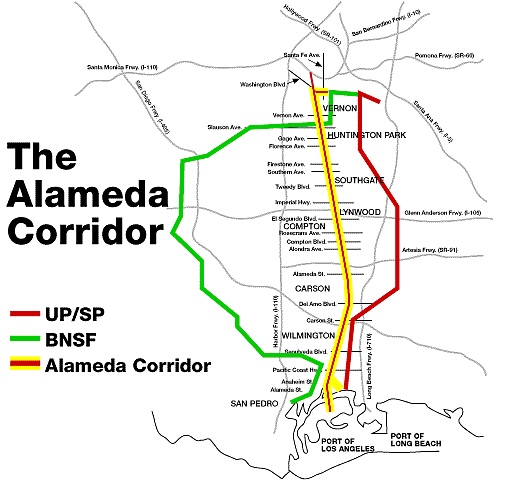
Map shows the path of the Alameda Corridor highlighted in yellow, center. (Photo courtesy of the Union Pacific website)
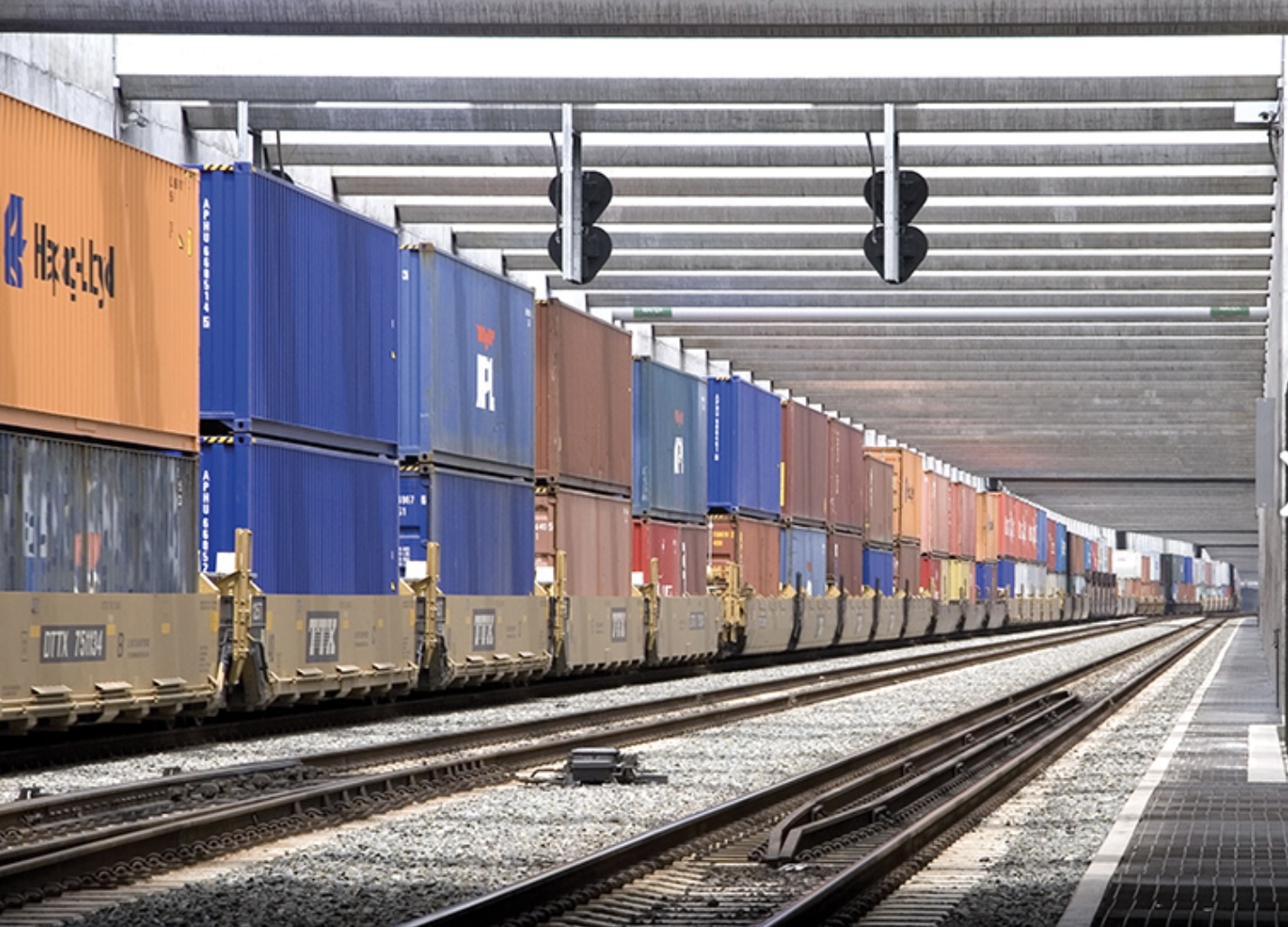
Undated post-2002 photo shows a train loaded with containers traveling on one of three tracks through the Mid-Corridor Trench section of the Alameda Corridor. (Photo courtesy of the Alameda Corridor Transportation Authority website)

North-facing view from just above the 91 Freeway shows the Mid-Corridor Trench section of the Alameda Corridor project as it passes through Compton. Trains descend into the 10-mile-long, 33-foot-deep trench, separating them from roadway traffic. April 4, 2002. (Photo by Jeff Gritchen, The Daily Breeze/SCNG)
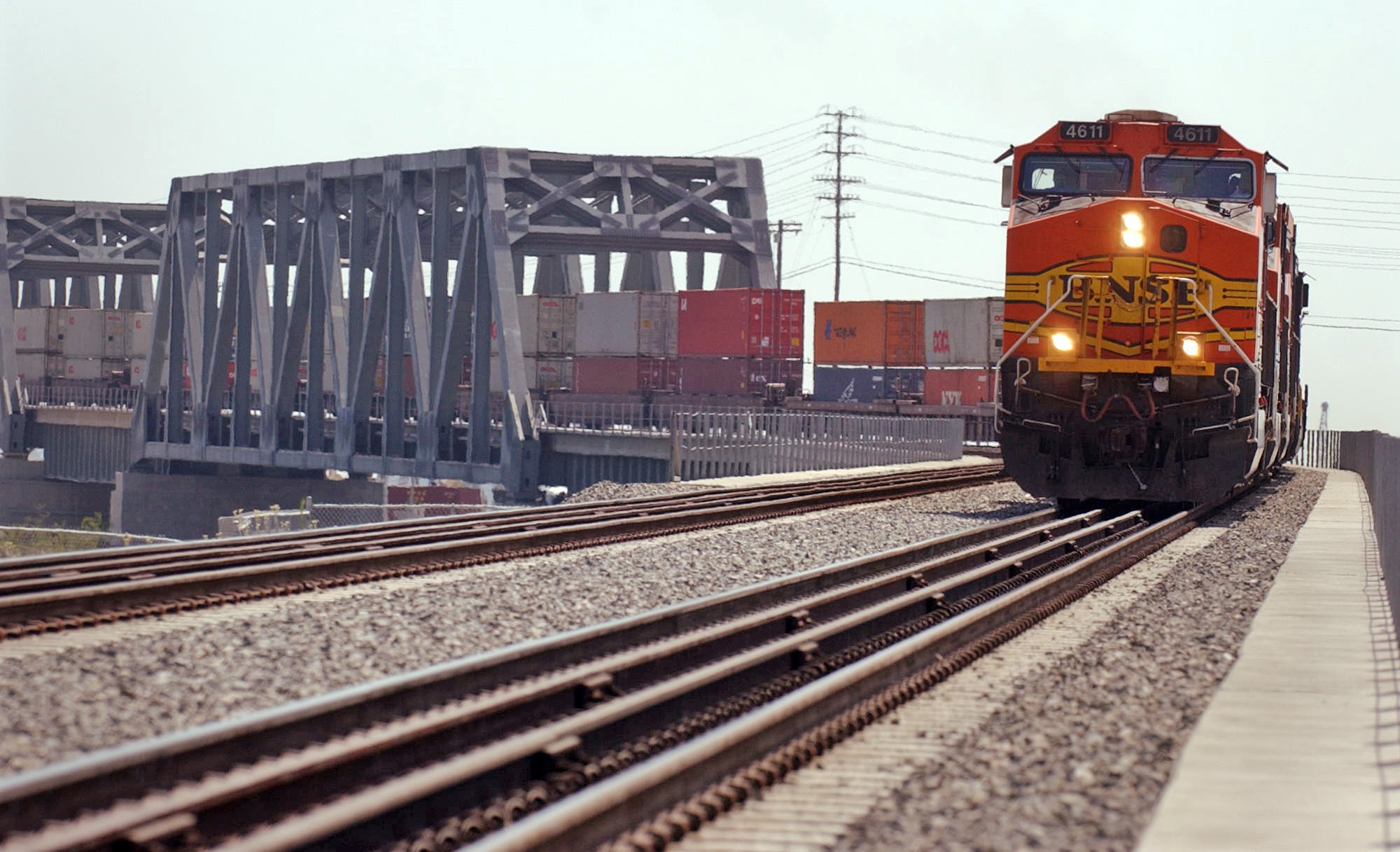
A freight train traveling the Alameda Corridor crosses the Dominguez Channel as it heads out of the Port of Los Angeles on April 12, 2005. (Photo by Sean Hiller, The Daily Breeze/SCNG)
Show Caption
1 of 4
Map shows the path of the Alameda Corridor highlighted in yellow, center. (Photo courtesy of the Union Pacific website)
Los Angeles Councilmember Tim McOsker will take the reins for a third time as chair of the Alameda Corridor Transportation Authority, an intergovernmental agency formed under the joint-powers authority of Los Angeles and Long Beach.
ACTA, established in 2002, oversees the Alameda Corridor, a 20-mile, grade-separated freight rail corridor connecting the nation’s busiest port complex, the San Pedro Bay ports, to the transcontinental rail network near Downtown Los Angeles.
Also elected this week was Long Beach Councilmember Suely Saro, the outgoing president who will now serve as vice chair.
Other officers for the 2026-27 term are Frank Colonna, Long Beach harbor commissioner; Ed Renwick, Los Angeles harbor commissioner; Noel Hacegaba, chief executive officer of the Port of Long Beach; Gene Seroka, executive director of the Port of Los Angeles; and Michael Cano, deputy executive officer for L.A. Metro.
McOsker represents Los Angeles City Council District 15, which encompasses the communities of Harbor City, Harbor Gateway, San Pedro, Watts and Wilmington, as well as the Port of Los Angeles, making his stewardship of ACTA a natural extension of his commitment to the region’s port communities and goods movement infrastructure, a board announcement said.
“I am honored to once again serve as chair of the Alameda Corridor Transportation Authority,” McOsker said in a written statement, calling the corridor “one of the most important pieces of infrastructure in our nation.”
The corridor that connects the ports to the rest of the country, he said, also supports “hundreds of thousands of jobs and keeps goods moving to communities across America.“I look forward to continuing our work with our partners in Los Angeles and Long Beach,” he said, “to strengthen this critical freight corridor, support our supply chain, and ensure this infrastructure remains reliable, resilient, and prepared for the future.”
An attorney and lifelong resident of Council District 15, McOsker was elected to the Los Angeles City Council in 2022. Prior to his election, he served as CEO of AltaSea, a nonprofit advancing scientific discovery and ocean sustainability at the Port of Los Angeles.
ACTA, meanwhile, features a network of bridges, underpasses and roadway improvements that separate freight trains from passenger rail and street traffic, reducing truck congestion on local freeways, cutting greenhouse gas emissions, and delivering measurable air quality and safety benefits to corridor communities.
For more about ACTA and its role in accelerating national goods movement, go to Acta.org.