
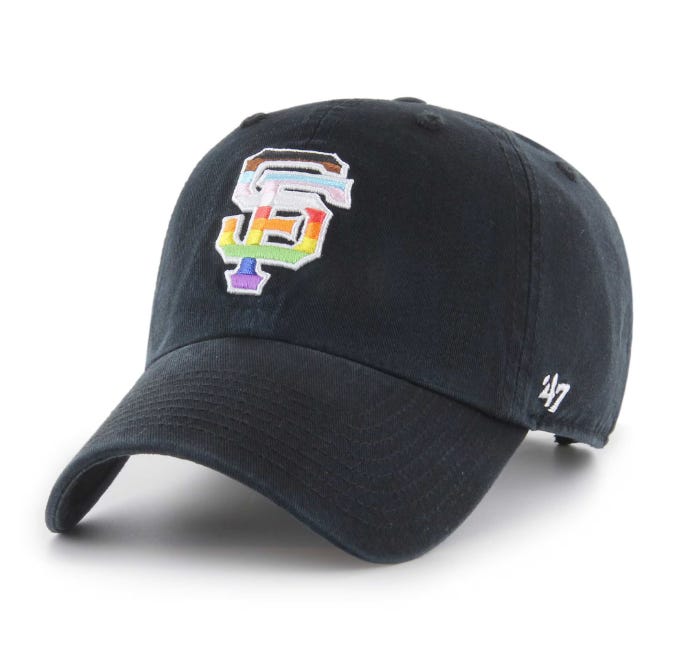
Author’s note: Some of the happiest baseball memories in recent years have come from attending San Francisco Giants games with my grandsons. Taking children to the ballpark should be about joy, tradition, and the simple pleasure of introducing them to a game that can still feel timeless. That is why this episode lands not as an abstract political disagreement but as a personal rupture. Seeing four Giants players turn Pride Night into a display of homophobia ended any intention to spend money on future games or support the team while the organization turns a blind eye to hatred. Consumers have choices about the companies and institutions they engage with. This is one choice: no more tickets, no more merchandise, no more benefit of the doubt.
The San Francisco Giants do not need to choose between baseball and principle. They need to recognize that, in this case, principle is part of the baseball business.
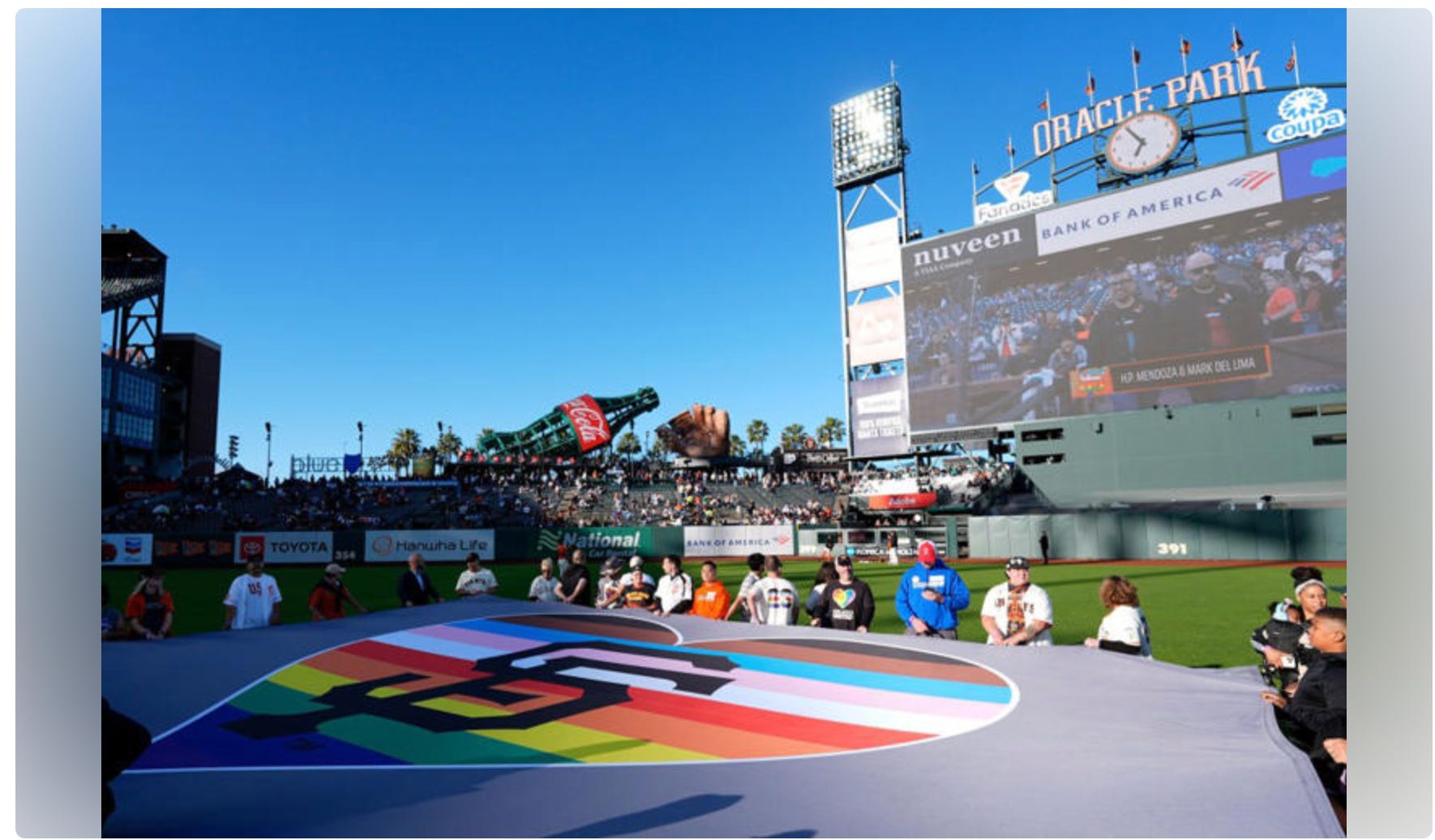
Four Giants pitchers — Landen Roupp, JT Brubaker, Ryan Walker, and Sam Hentges — turned the club’s annual Pride Night into a national controversy, with three writing Genesis citations on their Pride caps and a fourth declining to wear the cap at all. That episode triggered an MLB warning, helped spark a Justice Department inquiry, and pulled the franchise into a broader fight over inclusion, religion, and workplace identity.
The baseball question is not whether these players have a right to private belief. The baseball question is whether the Giants, a franchise in San Francisco selling tickets, civic belonging, and sponsor confidence, should continue to absorb the public cost of employees who chose to undercut one of the team’s most visible community-facing events.
Advanced pitching metrics are useful here because they remove some of the noise. WAR estimates total value over a readily available replacement. FIP focuses on outcomes a pitcher controls most directly, such as strikeouts, walks, and home runs. xERA uses quality of contact and strikeout-walk data to estimate what a pitcher’s ERA should be.
Those measures divide these four pitchers into distinct categories: one real asset, two replaceable relievers, and one pitcher already drifting below replacement level.
Landen Roupp is the hardest case because he is the one pitcher here who looks like a real baseball asset. Statcast lists his xERA at 3.36, and earlier-season analysis had his FIP in the mid-2s with nearly a full win above replacement already banked. In practical terms, that means he is good enough to interest other clubs, but not so singular that the Giants must subordinate every other consideration to keeping him. Precisely because he has market value, San Francisco should move him quickly and convert that value into players who fit both the roster and the franchise’s stated identity.
JT Brubaker is different. A reliever with a sub-3 ERA can look valuable in a box score, but a FIP around 3.77 and WAR around 0.1 points to something much less scarce: competent middle relief. Modern teams find competent middle relief constantly, through option shuttles, waiver claims, Triple-A depth, and low-cost trades. Brubaker may help on a Tuesday night in the sixth inning, but there is little in his current profile suggesting the Giants could not replace those innings elsewhere, which makes him a logical trade candidate or waiver decision.
Ryan Walker’s case is clearer. He was excellent in 2024, but the warning signs appeared in 2025 when his strikeout rate dropped and the gap between his reputation and his actual dominance started to narrow. In 2026, the production has fallen into negative WAR territory, with an ERA above 5 and a WHIP above 1.6 in publicly available summaries. The Giants are therefore not merely defending a controversial player; they are defending one who is actively underperforming a replacement alternative. A pitcher producing below replacement while dragging the franchise deeper into reputational harm should be placed on waivers or outright released if a trade cannot be made immediately.
Sam Hentges is the classic roster spot teams talk themselves into keeping because matchup lefties always feel scarce. But unless that lefty is overpowering, durable, and uniquely trusted in leverage, he is a role, not a pillar. Roles can be replaced, which means Hentges should be treated as movable inventory and designated for assignment if no trade market emerges.
The most direct player analogy is Ray Rice. After video surfaced of Rice striking his then-fiancée in an Atlantic City elevator, the Baltimore Ravens released him, and his NFL career effectively ended. The league’s broader domestic-violence crisis also triggered sponsor alarm, with CBS reporting that brands including Anheuser-Busch, PepsiCo, McDonald’s, and Visa publicly criticized the NFL’s handling of player misconduct.
Adrian Peterson provides a second example of how quickly business pressure can reshape a team’s choices. CNBC reported that the Minnesota Vikings reversed course and barred Peterson from team activities after sponsor backlash intensified, including Radisson suspending its sponsorship and Nike putting its contract with Peterson on hold. That sequence is important because it showed that sports franchises do not make these calls in a vacuum. They respond when sponsors, fans, and civic stakeholders make the cost of inaction unmistakable.
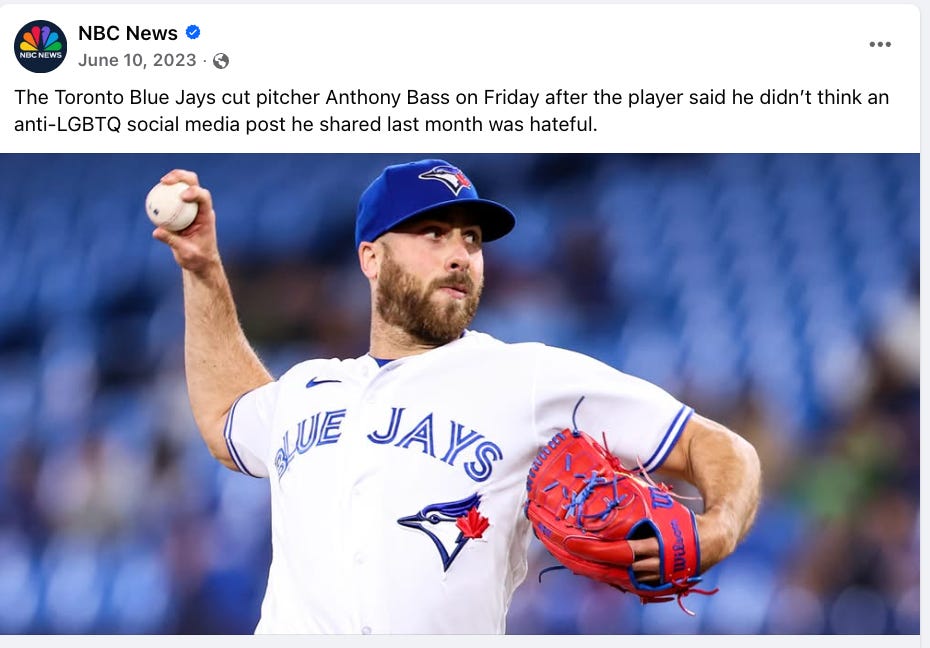
The same pattern appears when homophobia itself becomes the issue. The Toronto Blue Jays designated Anthony Bass for assignment after backlash over an anti-LGBTQ social media post, and general manager Ross Atkins said keeping him was not a realistic outcome. Thom Brennaman was immediately suspended by the Reds after he used an anti-gay slur on air and later resigned from his broadcasting role. In 2026, the Chicago Bulls waived Jaden Ivey for conduct detrimental to the team after anti-gay comments on social media.
The same pattern also appears at the endorsement level. Sports Business Journal reported that Nike terminated or suspended relationships with Ray Rice, Adrian Peterson, and Oscar Pistorius amid high-profile violence cases, while Adweek described brands and agencies as recoiling from a stream of abuse allegations involving athletes. The details differ from case to case, but the principle is stable: a brand partnership lasts only so long as the association helps more than it harms.
None of these cases is identical to the Giants’ Pride Night controversy. Domestic violence is not the same as public opposition to a Pride event, and a broadcaster is not a pitcher. But the franchise logic is identical. Teams and sponsors routinely decide that once a player or public-facing employee becomes inseparable from reputational harm, the sound business choice is to move on.
Every franchise exists in a market, but not every market carries the same civic meaning. The Giants are not just a baseball team in any city; they are a major institution in San Francisco, one of the symbolic capitals of LGBTQ history and politics in the United States.
That local context makes this controversy unusually expensive. In the wake of the Trump Administration’s open attacks on LGBTQ people, immigrants, and anyone outside a narrow vision of Christian nationalism and biblical patriarchy, too many corporate sponsors have lurched into reflexive retreat — pulling Pride money not out of conviction, but out of fear of the backlash machine they helped empower. Pride-related sponsorship has already become more fragile than it used to be, with six‑figure shortfalls at events in cities like San Francisco and New York as brands rush to appease this politics of grievance rather than stand with the communities they claim to celebrate. In moments like this, Timothy Snyder’s first rule in On Tyranny — “Do not obey in advance” — is not abstract theory; it is a direct warning to institutions not to pre‑censor their values and abandon their partners just because an authoritarian movement is shouting louder than everyone else.
That is why the Giants should reduce, not increase, perceived sponsor risk. A company considering signage, hospitality, promotions, or Pride-adjacent activation at Oracle Park does not just ask whether the team sells impressions. It asks whether the team can manage its own message. A franchise that cannot present a unified front on its own Pride Night becomes harder to underwrite.
Ticket sales work similarly. No public dataset yet isolates the precise number of tickets the Giants may lose because of this controversy. But sports business decisions are rarely made only after perfect measurement. Teams infer risk from fan response, sponsor behavior, media cycles, and the long-term erosion of trust.
In San Francisco, the warning lights are obvious. The constituency most likely to interpret this protest not as theological subtlety but as disrespect is also a constituency deeply woven into the city’s civic identity, tourism economy, and cultural self-conception. A smart franchise does not dare that audience to prove its spending power.
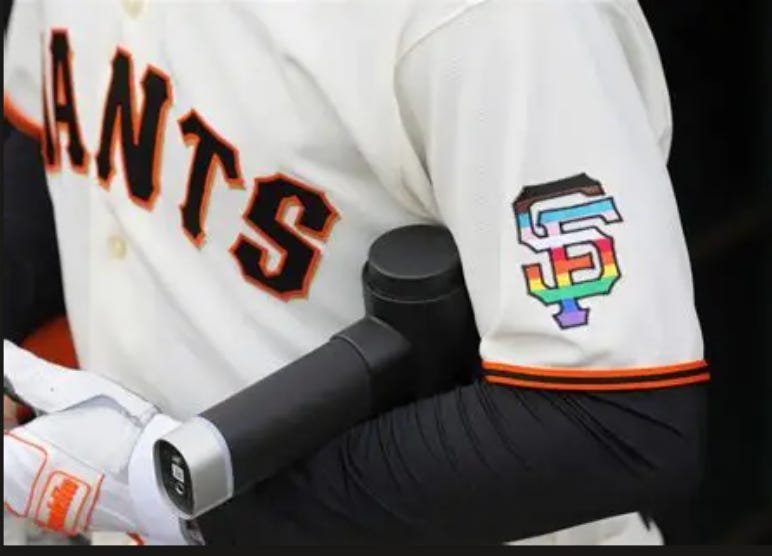
This is where the usual dodge appears: that moving these players would amount to punishing religion. But that framing obscures the actual question. The issue is not private faith. The issue is whether the Giants should continue employing public ambassadors who used a team-issued community event to signal opposition to the group being honored that night.
Sports franchises make these calls all the time. They cut veterans whose production no longer matches the distraction. They distance themselves from players, sponsors, and executives once public affiliation starts corroding the business itself. In the Ravens and Vikings cases, leadership eventually recognized that reputational damage was not a side issue; it was part of the core enterprise problem.
That is not censorship. It is governance.
The Giants should therefore move as quickly as the rules allow. Trade Roupp while his metrics still command real interest. Trade Brubaker if there is a buyer, and waive him if there is not. Put Walker on waivers or release him outright if no club wants the contract. Treat Hentges as expendable bullpen inventory and designate him for assignment if necessary. Speed matters here because every extra day of inaction signals that the organization is more comfortable with alienating fans than with inconveniencing four pitchers.
Baseball clubs sell more than innings and home runs. They sell family rituals, civic symbols, corporate hospitality, and the promise that when you put your money and emotion into the brand, you are part of something that does not insult your dignity. Once a team allows a subset of its roster to publicly negate one of those promises, leadership has to decide which business it is in: the business of courageously serving its stakeholders, or the business of protecting a handful of replaceable employees.
For the Giants, the baseball case for keeping these pitchers is, at best, mixed. The case for moving on is overwhelming when you factor in fans, sponsors, employees, and the city that surrounds the ballpark. A competent board or C‑suite in any other industry would not hesitate. When conduct undermines core values and erodes trust, you change the personnel, not the principles. Other franchises have already shown the template — when controversy starts staining the brand faster than performance enhances it, leaders who understand fiduciary duty and stakeholder capitalism act decisively.
If the Giants want to be taken seriously as stewards of a civic institution rather than passive passengers in someone else’s culture war, they need to do the same.