
This is the fourth and final installment in a series of stories on the history of dining out in La Jolla, how it’s changed and how it continues to evolve.
The 21st century brought several changes to La Jolla’s restaurant scene, including COVID-19 and an effort to see who could be the most unique.
This installment of the “Dining Out” series looks at changes from 2000 on and what local restaurateurs think might be next.
Jack’s La Jolla
One notable restaurant that took on the challenge of trying to stand out was Jack’s La Jolla, which opened in 2005 in what is now La Plaza La Jolla on Girard Avenue. At one time it was considered one of La Jolla’s largest businesses.
La Jolla Historical Society historian Carol Olten said Jack’s was “very confusing” in its approach.
“They had restaurant service on three different floors and each one was supposed to be its own cuisine and its own service,” she said. “One was high class, one was casual and the other was [very casual] and offered things like pizza and hamburgers.
“I went with a neighbor for her birthday and she wanted to sit in the fancy part of the restaurant but she wanted pizza. … So we sat down and asked for the pizza menu and they wouldn’t bring us one. Different waiters came and went and the manager finally came and gave in, so we got served pizza.”
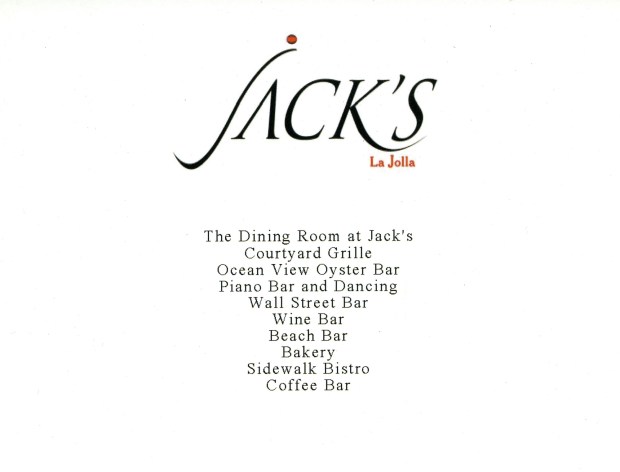 A card describes the offerings at Jack’s La Jolla. (La Jolla Historical Society)
Amid financial problems soon after its opening, a bookkeeper was accused of embezzling more than $3 million from Jack’s and using the money to fund other criminal efforts.
Jack’s closed in 2009.
A Panera Bread restaurant moved into the location for a while but was shuttered in September 2013.
Plans then started to take shape to establish La Plaza La Jolla, a three-story, 27,000-square-foot space on the corner of Girard Avenue and Wall Street.
When it opened in mid-2015, it had only four tenants. But others followed and filled the complex within a few years.
Changing practices
In the early 2000s, some restaurateurs started to change their philosophies on coming up with dishes.
Trey Foshee, co-owner and chef at George’s at the Cove since 1999, said chefs began shifting their focus to local ingredients and competing to see “who could be the most creative or … the most unique” with them.
“Restaurants and what people are looking for was constantly evolving,” Foshee said.
COVID-19
Never was that more evident than at the onset of the COVID-19 pandemic in early 2020. Many restaurants had to change or cease operations to accommodate social-distancing requirements. Many shifted to takeout-only service and/or applied for grants to remain open.
To help restaurants continue to operate, the city of San Diego in 2021 implemented its “Spaces as Places” program, which included new regulations that allowed restaurants to have outdoor seating on sidewalks and public parking spaces in front of their venues as long as they paid a fee.
Those outdoor seating areas came to be known as “streetaries,” a blending of “street” and “eateries.”
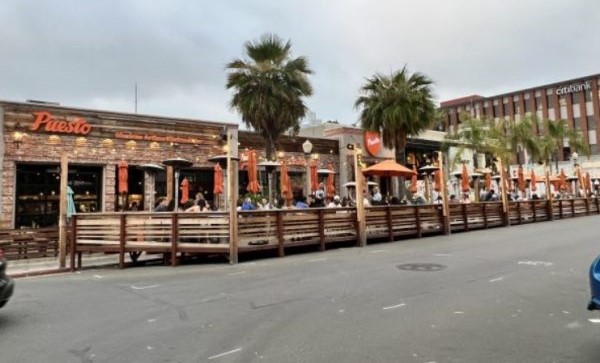
Some of the more notable streetaries that opened in La Jolla during that time were at Puesto Mexican restaurant on Wall Street and many restaurants along the stretch of Avenida de la Playa between El Paseo Grande and Calle de la Plata in La Jolla Shores. Queenstown Village on Wall Street and Hennessey’s Tavern on Herschel Avenue also opened streetaries.
“COVID changed a lot of things. … Restaurants moved to the sidewalk and stayed there,” Olten said.
Shores promenade
Among the more dramatic COVID-related changes was the establishment of the Avenida de la Playa outdoor dining program in 2020, in which the street was closed to vehicles to accommodate tables and seating.
The effort has expanded more recently to create a pedestrian promenade, or walkway, to go with the outdoor dining, and in 2025, the city approved a permit to make the dining program permanent.
In November, a fundraising campaign began to refine the promenade with new landscaping, bollards and signs, improve the outdoor dining spaces and remove on-street lines. Proponents call the effort Promenade de la Playa.
La Jolla Shores promenade project making progress as supporters seek additional funds
Maintenance for the promenade would be handled by the La Jolla Shores Business Association.
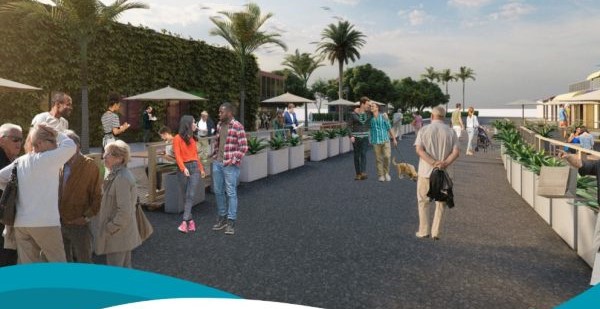 A rendering depicts the completed Promenade de la Playa as planned in La Jolla Shores. (Provided by Phil Wise and Darren Moore)
Future of La Jolla dining
Though Foshee said “it’s hard to say what people might look for” in culinary experiences, especially in the wake of the pandemic, “I think value is going to be a big topic for diners.”
“I think we have all gotten used to $40 to $50 entrees,” he said, but “people aren’t always looking for a creative experience. They are looking for quality, good service and some of the basics”
“There is something to the high dining concept and 14-course tasting menus … [but] the whole curated-for-you experience is not for everyone.”
Foshee added that hospitality will play a big role in the future of dining, with a focus on “making sure they have a good time.”
Giuseppe Ciuffa, owner and chef of Candor by Giuseppe, said La Jolla’s restaurant scene is “booming” but that focus on what locals want will likely be a strong priority in the future.
“The locals want consistency,” Ciuffa said. “Everyone in the food scene likes to find their spots … but the No. 1 issue I see often is that [restaurants tend to go] for the big bucks, so … there are places that are overpriced.
“A lot of people in La Jolla dine out most days of the week, so I think La Jolla needs places that are more affordable, not just your special-occasion places.”
Cuiffa said he also would like to see nightlife return to La Jolla, “like we used to have in the ’90s.”
La Jolla “needs some excitement,” he said. “We want to be attractive to young people and tourists. We want to see La Jolla on the food scene. There is a need for everyday food and fun special-occasion food. Some restaurants have music, bar specials, DJs, but La Jolla is an off location, so [there is] some need to focus on the fun, approachable everyday places.”
Sami Ladeki, owner of Sammy’s Woodfired Pizza and Roppongi Asian restaurant, said cultural experiences are likely to play a role in La Jolla’s culinary future.
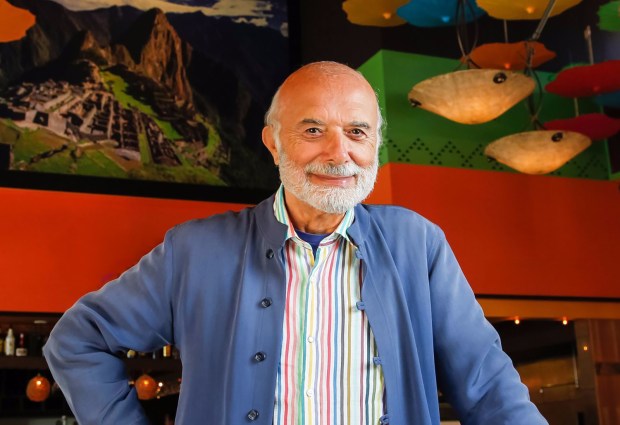 Restaurateur Sami Ladeki owns Roppongi in La Jolla and more than a dozen Sammy’s and Toasted Gastrobrunch locations in California and Nevada. (Eduardo Contreras / The San Diego Union-Tribune)
“I think … dining in La Jolla will continue to be driven by experience, quality and authenticity,” Ladeki said. “Guests have more choices than ever before, so restaurants need to give people a reason to leave home and spend an evening with you.
“I also believe we’ll continue to see more cultural influences and culinary creativity. Diners are open to exploring flavors and traditions from around the world, and that creates exciting opportunities for chefs and restaurateurs.”
However, he said, as much as things change, they also can stay the same.
“Hospitality will always be about making people feel welcome and creating genuine connections,” Ladeki said. “Technology, trends and dining habits will continue to evolve, but restaurants that focus on great food, great service and meaningful experiences will always have a place in La Jolla.
“What has made La Jolla special for decades is that people here appreciate excellence. As long as restaurants continue to innovate while staying true to hospitality, I believe the future of the dining scene is incredibly bright.” ♦
Previous stories:
Dining Out — series Part 1: A look at the evolution of La Jolla’s restaurant scene
Dining Out — series Part 2: How La Jolla restaurants changed from the 1920s to 1960s
Dining Out — series Part 3: Familiar restaurants opened in La Jolla from 1970s to 1990s