
Making Birth Smarter
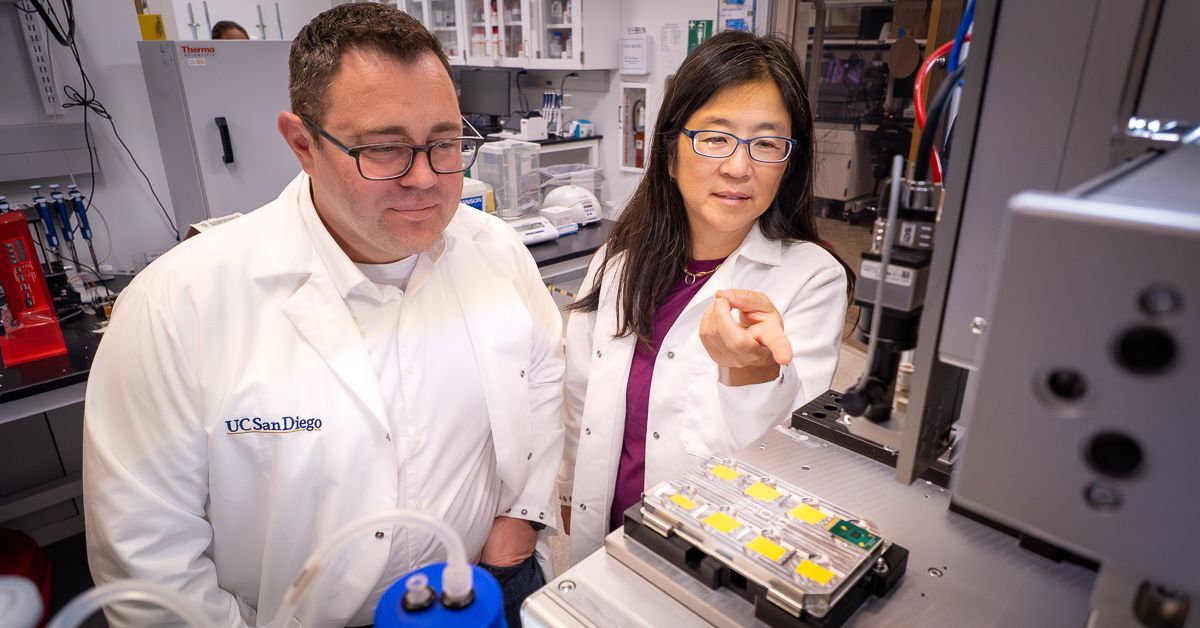
The UC San Diego research team is co-led by Drew Hall, a professor of electrical and computer engineering at the Jacobs School of Engineering, and Louise Laurent, MD, PhD, professor and co-director of the Center for OB/GYN Research Innovation at the UC San Diego School of Medicine Department of Obstetrics, Gynecology, & Reproductive Sciences. The researchers will collaborate with women’s health diagnostic company Sera Prognostics, and advanced semiconductor firm Allegro MicroSystems.
“Our goal is to provide a more objective evaluation about the level of risk for each mom-baby pair going into labor,” said Laurent, a maternal-fetal medicine physician at UC San Diego Health. “This will help care providers at all levels have a better understanding of the resources needed for each particular patient, and remove some of the subjectivity from labor and birth decisions as care providers work to ensure the safest, best outcomes for both mom and baby.”
The research team will first identify the most accurate set of biomarkers that are predictive of fetal hypoxia. These biomarkers could be microRNAs, proteins, or nanoparticles called extracellular vesicles (EVs). Levels of EVs from the placenta have been shown to be twice as high in patients with preeclampsia than those without; preeclampsia is associated with placental dysfunction and is one of the clinical risk factors for fetal hypoxia. Laurent’s lab, which specializes in RNA biomarker discovery, and diagnostic industry partner Sera, which specializes in protein biomarkers, together will identify and validate the most accurate biomarker panel.
Hall will partner with magnetic sensing leader Allegro MicroSystems to develop a point-of-care test for measuring these biomarkers from a small maternal blood sample. The platform leverages Allegro’s fully integrated giant magnetoresistive (GMR) semiconductor technology, adapting their magnetic technology for high-speed, high-resolution biosensing. The research team’s goal is to create a handheld device that allows care providers to quickly obtain results at the point of care.
The researchers will also develop a machine learning model that integrates the biomarker measurements into an overall fetal hypoxia risk score.
“Rather than asking clinicians to interpret several biomarker measurements separately, we want to use machine learning to combine those results into a single, easy-to-understand risk score,” said Hall. “The goal is to integrate information from each biomarker in a standardized way, so care teams can more quickly identify pregnancies that may need closer monitoring or intervention.”
This accurate, near-real-time information will help clinicians act quickly when needed, and simultaneously reduce unnecessary birth interventions.
“Our goal is to equip both the care team and the family with as much accurate, useful information as possible to make the smartest, safest decisions for mom and baby,” said Laurent.