
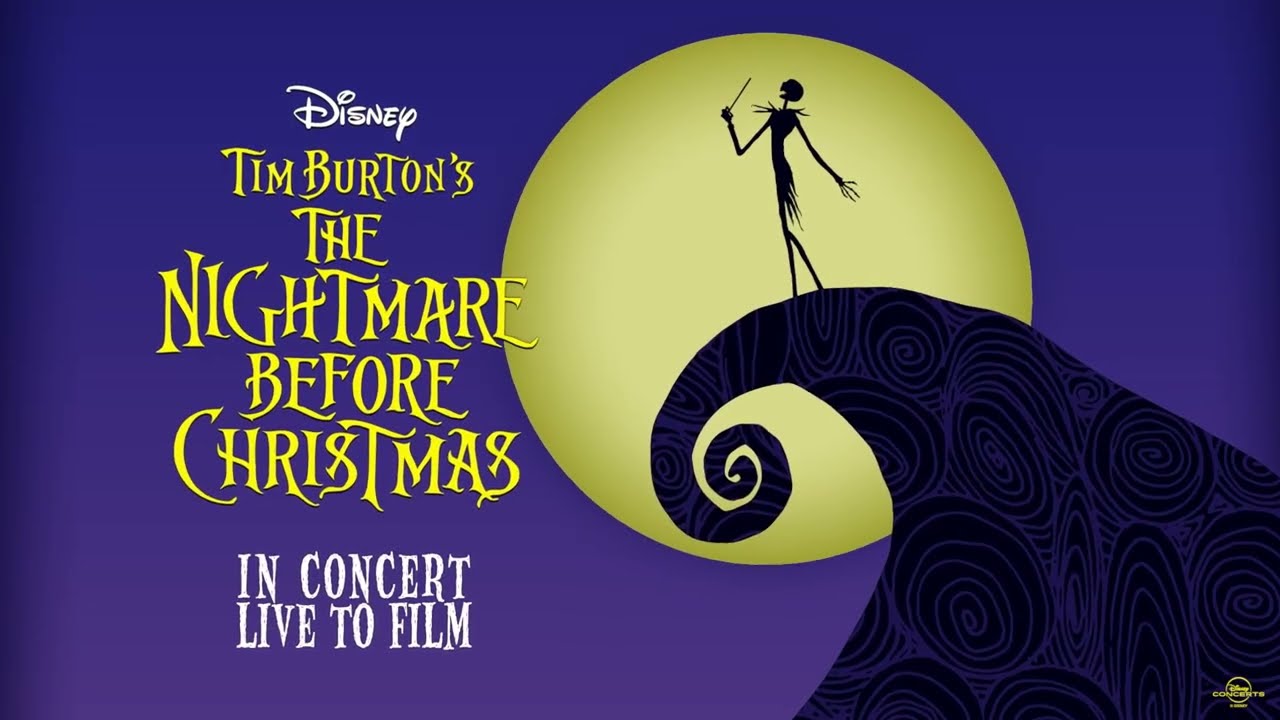
From the moment I first entered Halloweentown a decade ago, I was captivated by “The Nightmare Before Christmas.” On Oct. 24, I had the opportunity to watch a screening of Tim Burton’s Halloween classic at the Jacobs Music Center. That same childhood excitement rushed back — this time with conductor Scott Terrell leading the San Diego Symphony in a live performance of Danny Elfman’s iconic soundtrack and score alongside the showing.
As I walked into the venue, the air thrummed with stirring voices and the symphony’s warm-up. Taking my seat, the hum of conversation and soft music reverberating around the concert hall built my anticipation for the upcoming performance with every passing second. A few moments later, Terrell walked onto the stage, and the symphony gathered, ready to perform.
“The Nightmare Before Christmas” explores the tantalizing but destructive search for power. When we first set foot into Halloweentown — ruled by the charismatic yet fickle Pumpkin King, Jack Skellington (singing voice by Danny Elfman, speaking voice by Chris Sarandon) — the music rapidly scales up and down, conveying a tenseness that alludes to the impending conflict.
The score plays a crucial role in “The Nightmare Before Christmas,” mapping together character arcs and plot points.
In “This is Halloween,” the eerie instrumentation and vocals of the symphony’s performance perfectly captured the haunting mood of Halloween, just before Jack is transported to the cozy, cheerful Christmastown. Terrell’s use of softer melodic tones in “Sally’s Song” highlights Elfman’s lyricism: “No, I think not, it’s never to become / For I am not the one.” Sally (Catheirne O’Hara) longs for Jack but deep down knows her love is unrequited, and the slower tempo showcases this reflective tone and invites the audience to consider the depth of Sally’s vulnerability.
One of the reasons why I enjoy the soundtrack so much is not just how the music emphasizes dramatic moments, but also the comedic ones. In every watch, I always laugh when Jack mistakenly refers to Santa Claus as “Sandy Claws,” but I hadn’t noticed how the tempo shifts and contrasting rhythms create a musical punchline until I heard the symphony’s live version. Parallel to the humorous storyline, Terrell’s comedic timing and effect added to the movie’s timeless charm — with live instrumentation, these comedic moments shone under a visceral light.
Declaring “Christmas will be ours,” Jack flies to the real world with his skeleton reindeer to realize his plan to be Santa Claus. Impersonating Santa, he scares children with “gifts” from Halloweentown. The symphony’s slow and ascending tempos emulated a sonic roller coaster of disarray, matching the children’s horrified reactions toward Jack’s presents.
During “Poor Jack,” Jack reflects on his actions after his masquerade as Santa: “I never intended all this madness, never / And nobody really understood, how could they?” only to turn on a dime and declare, “Cause I’ve got some new ideas / That will really make them scream!” This sonic and thematic switch encapsulates Jack’s capricious personality — though the musical technique of the movie and the live performance is equivalent, the live version made for an unforgettably visceral viewing experience.
Throughout the performance, the live symphony amplified each character’s mannerisms and voices through intentional pauses and tone shifts — Jack’s cryptic smile and varying vocal styles, for example, made me appreciate how the score interacts with the characters.
This relationship of sight and sound speaks to the intentionality behind every musical choice: The slower beats illustrate the monotony of Halloween, whereas the rising tempos thereafter demonstrate Jack’s insidious obsession with control as he plans to hijack Christmas.
After a cascade of chaos, Jack and Sally are reunited at last in Halloweentown. The iconic final shot of the movie has stuck with me: As soft snow falls in Halloweentown under the moonlight, Sally and Jack embrace each other. In a full circle moment, they share one last song together: a rendition of “Sally’s Song,” wherein they sing: “As anyone can see / We’re simply meant to be.” The soft tempo, melody, and vocals shape this scene in its entirety, with the live symphony accentuating the romantic tone through gentle orchestration.
The familiar image of these scenes, combined with the live soundtrack, culminated in a riveting listening and watching experience. It kept me on the edge of my seat the entire time, almost as if I were experiencing the movie for the first time again.
“The Nightmare Before Christmas” is a tried and true classic. From captivating set designs to memorable ballads, it has everything you could ever want in a movie, and it’s perfect for this spooky time of year. The San Diego Symphony’s performance portrayed the characters in a new light, particularly Jack’s pursuit of power and his relationship with Sally. This performance showed me how the soundtrack of “The Nightmare Before Christmas” is a character in and of itself; I found myself nodding along to the music, entranced by its immersive nature.
I can still hear the end credits in my mind — the last moments of an engaging live cinematic experience.