
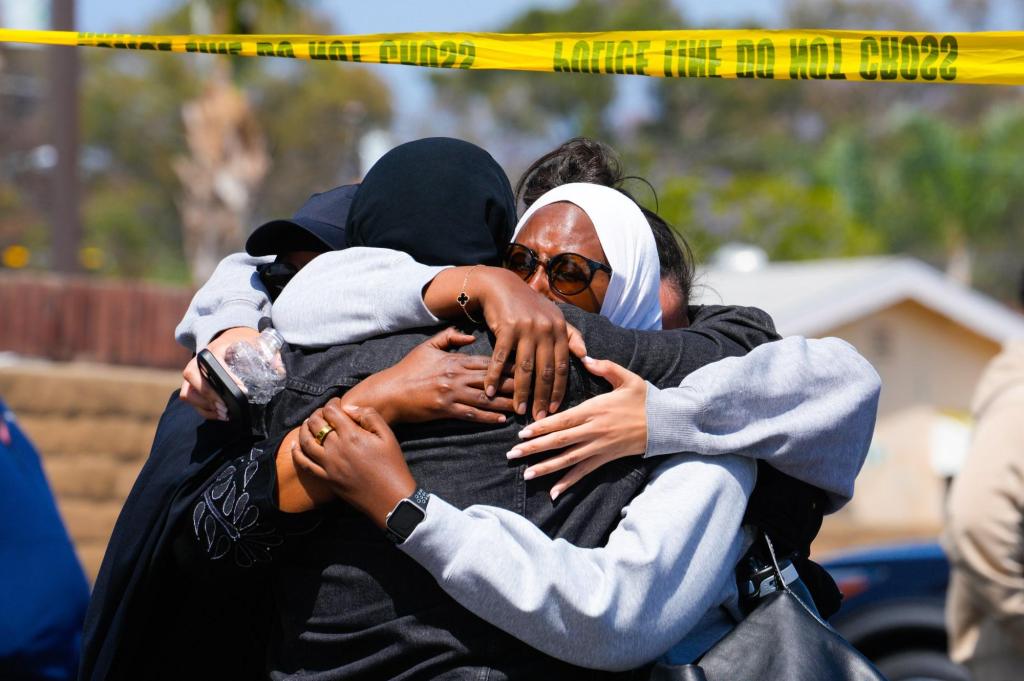
The Islamic Center of San Diego, a central part of my life for over three decades, is where I pray, raise my family, celebrate milestones, mourn losses, build lifelong friendships and watch generations of families create a vibrant community rooted in service, compassion and civic engagement. We never imagined our mosque becoming the site of a deadly shooting that claimed innocent lives and forever altered our sense of safety.
One month after May 18, our community requires tangible action and education more than condolences. We remember how lives changed in an instant. Pain did not end when the headlines faded. The attack was not on buildings, but an act of terror directed at a community because of who we are.
Our fear resurfaced days ago on the one-month anniversary, when another alert was issued after a man circled the Islamic Center pretending to possess an explosive device while displaying a Nazi flag. Once again, phones lit up and the community panicked. Our trauma, barely healing, was reopened.
We need all Americans to understand and protect us rather than reinforce our exclusion. The data shows how Muslim Americans are systematically denied opportunities, targeted and made to feel unwelcome in their own country. California must make investments in protecting vulnerable faith communities by making it real on the ground. The needs are simple infrastructure with measures to protect worshippers, students, staff and visitors, and a long commitment to study and erase anti-Muslim hate.
One month of pain has not altered the data. However, I am witnessing profound hope. Faith leaders stand beside Muslim families, neighbors continue to bring meals, attend vigils, offer comfort and show up to say “You are not alone.” Community organizations mobilized resources. A few elected officials offered support. In one of our darkest moments, San Diego reminded us that hate does not define who we are. I am grateful. However, gratitude cannot replace accountability.
Our societal climate fosters deliberate dehumanization and stereotyping of Muslims and Arabs, keeping us as perpetual outsiders. Hate grows if consistently nourished and the consequences of that are devastating.
For decades, Muslims and Arabs in America have experienced the violence of entrenched othering or Americans saying “you are not us.” Misinformation, deliberate exclusion and intentional hate create discrimination, harassment and hate crimes, along with the relentless “official” policies casting suspicion on our identities. Muslim students continue to report the highest rates of bullying among religious groups in the country. In a Council on American-Islamic Relations, California (CAIR-CA) report, nearly half are targeted because of their faith.
Prejudice begins where voids of ignorance flourish. Culturally inclusive education could fill those gaps. An example is the Sharia-Free America Caucus, which uses lies to target Muslims and advance legislation to criminalize ordinary Islamic beliefs and practices, making them targets for government discrimination and removal. This fuel ignites hate against Muslims and Arabs.
We can solve problems we are willing to understand. Every interaction with a public institution should affirm a person’s humanity, not reinforce their exclusion. Educators, administrators, first responders, health care workers and front-line service providers must be required to receive training that promotes cultural understanding and dignity as the principles of service for Muslim and Arab communities. Research, data collection, education and evidence-based interventions are the foundations for identifying the hidden root causes of prejudice. We have culturally inclusive educational resources for sensitivity training, but our institutions need to be open and accepting. Culturally inclusive education teaches the histories, cultures and contributions of Muslim and Arab communities as part of our shared world.
Effective public safety requires trust, transparency, accountability and partnership. Public safety must consistently include Muslim communities who deserve dedicated protection from possible threats. Let’s also recognize contradictions in our history of surveillance and intelligence-gathering programs targeting Muslims in the post-9/11 era.
A new study from UC San Diego’s U.S. Immigration Policy Center surveyed 312 local Muslim San Diegans, with 88% saying they feel less safe since last month’s shooting. How long will families have to live on the edge of fear to remain on constant alert simply to worship, learn and gather in peace? How many more threats before our concerns are treated with the urgency they deserve?
Hate should never have the final word. The victims of May 18 deserve more than our remembrance. A resolute commitment to society-building where all are treated with acknowledgement, dignity and respect must become our future. It awaits us and we will build it together.
Nizam is the executive director of the Council on American-Islamic Relations — CAIR San Diego and lives in North County.