
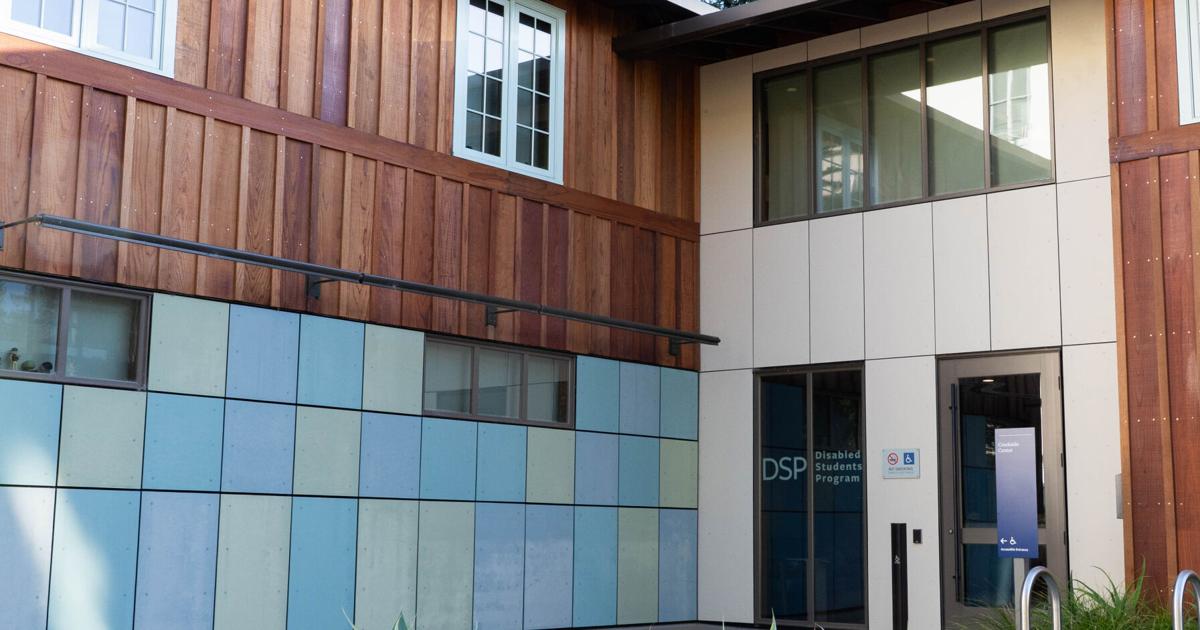
Roughly 20% of UC Berkeley law students are now registered with the campus’s Disabled Students’ Program — a figure that has recently drawn national headlines but that several media outlets have incorrectly overstated.
Total Disabled Students’ Program, or DSP, enrollment has also increased over the last five years — from 4,585 students in the 2021-22 academic year to more than 6,205 in the past spring semester.
The New York Post, among other outlets, recently published articles claiming that more than 30% of UC Berkeley School of Law students were enrolled in DSP. While not factoring in the spring 2026 increase, according to fall 2025 enrollment data, including programs outside of the J.D., the number is actually around 20%.
UC Berkeley Law students enrolled in DSP increased from 296 last fall to 378 in the spring. UC Berkeley’s law school is distinct from its body of graduate students in DSP’s data report — while 3% of the entire graduate student population was enrolled in DSP in 2021, around 9% was enrolled in spring 2026.
DSP provides students with academic accommodations that are compliant with federal and state law, such as additional time on tests, notetaking services, real-time captioning or sign language interpreters. Disabilities covered by DSP include psychological/emotional disorders, ADD and ADHD, chronic health, vision and hearing.
According to DSP executive director Carmen Varela, UC Berkeley DSP registration has increased in parallel to national numbers “in part due to changes in law and policy.”
In an email, Varela cited contributing factors as the COVID-19 pandemic, which also increased awareness of disability and mental health needs. Increasing support for students with disabilities in K-12 also means more of those students became eligible for higher education.
“Our practices are aligned with and often more stringent than the guidance issued by our professional association, the Association on Higher Education and Disability,” Varela said in an email.
Claudia Center, legal director at the Disability Rights Education and Defense Fund in Berkeley, said increased DSP enrollment can also be partially attributed to decreasing stigma surrounding these conditions.
“We used to talk about the ADA generation,” Center said. “It’s people who’ve grown up with (disability) laws and the system, and so they don’t have the sense of shame or secrecy, about self-identifying and asking for what they need to show their strength and knowledge and their skills.”
Enrollment for psychological and emotional disabilities, which might include depression or anxiety, ranked highest in spring with 2,640 students. 2,535 students were enrolled with two or more disabilities.
In assessing a student’s eligibility for DSP services, the program requires documentation of a diagnosis. Psychological diagnoses must also have an impact on major life activities, the definition of which includes tasks like learning, reading and speaking, as stipulated by the Americans with Disabilities Amendment Act of 2008.
UC Berkeley’s DSP site notes that “University of California students with learning disabilities typically have average to superior ability, yet experience marked difficulty in one or more academic areas as a result of a significant information processing disorder.”