
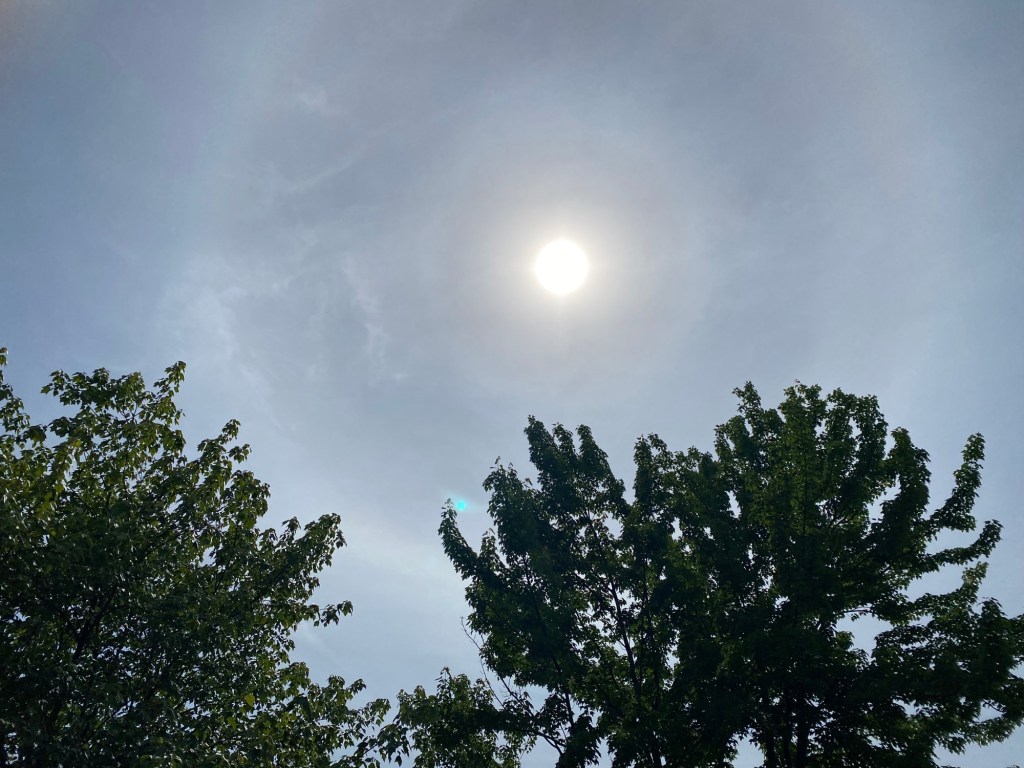
A heat dome will bring “dangerously” hot conditions to Southeast Michigan on Tuesday, with at least four consecutive days of temperatures well above the 90-degree mark.
The National Weather Service issued what’s known as an extreme heat warning for noon Tuesday, June 30 through 8 p.m. Thursday, July 2.
Meteorologists say a dangerous heat wave will bring heat index to about 105-110 degrees. The weather service said heat-related illnesses increase significantly during extreme heat events.
“Little relief occurs at night as low temperatures only fall into the mid and upper 70s, with nighttime heat index around 80,” the weather service said Monday.
For the rest of Monday, peak afternoon heat “real feel” temperatures will reach the mid to upper 90s.
The weather service says the heat indices are expected to reach 105 degrees through Thursday as hot and humid conditions persist for the rest of the week. Thunderstorm chances aren’t in the forecast until Friday and Saturday.
Also Monday, the Michigan Department of Environment, Great Lakes, and Energy (EGLE) has declared an Air Quality Alert for Monday June 29 for elevated
levels of ozone.
EGLE representatives recommend individuals limit or avoid strenuous outdoor activities, especially those with heart disease and respiratory conditions such as asthma. Symptoms may include wheezing, coughing, chest tightness, dizziness, or burning in nose, throat, or eyes.
According to EGLE, people are urged to avoid activities which can lead to ozone formation, such as refueling vehicles, using gasoline-powered lawn equipment or using charcoal lighter fluid. The state agency said people should drive less and instead walk or ride their bikes, delay running errands, and using water-based paints.
Up-to-date air quality data for Michigan can be found at the MiAir site https://michigan.gov/MiAir
Preparedness tips:
Drink plenty of fluids, stay in an air-conditioned room, stay out of the sun, and check up on relatives and neighbors.
Do not leave young children and pets in unattended vehicles. Car interiors will reach lethal temperatures in a matter of minutes
Take extra precautions when outside. Wear lightweight and loose fitting clothing. Try to limit strenuous activities to early morning or evening. Take action when you see symptoms of heat exhaustion and heat stroke.
To reduce risk while working outdoors, the Occupational Safety and Health Administration recommends scheduling frequent rest breaks in shaded or air conditioned environments. Anyone overcome by heat should be moved to a cool and shaded location.