
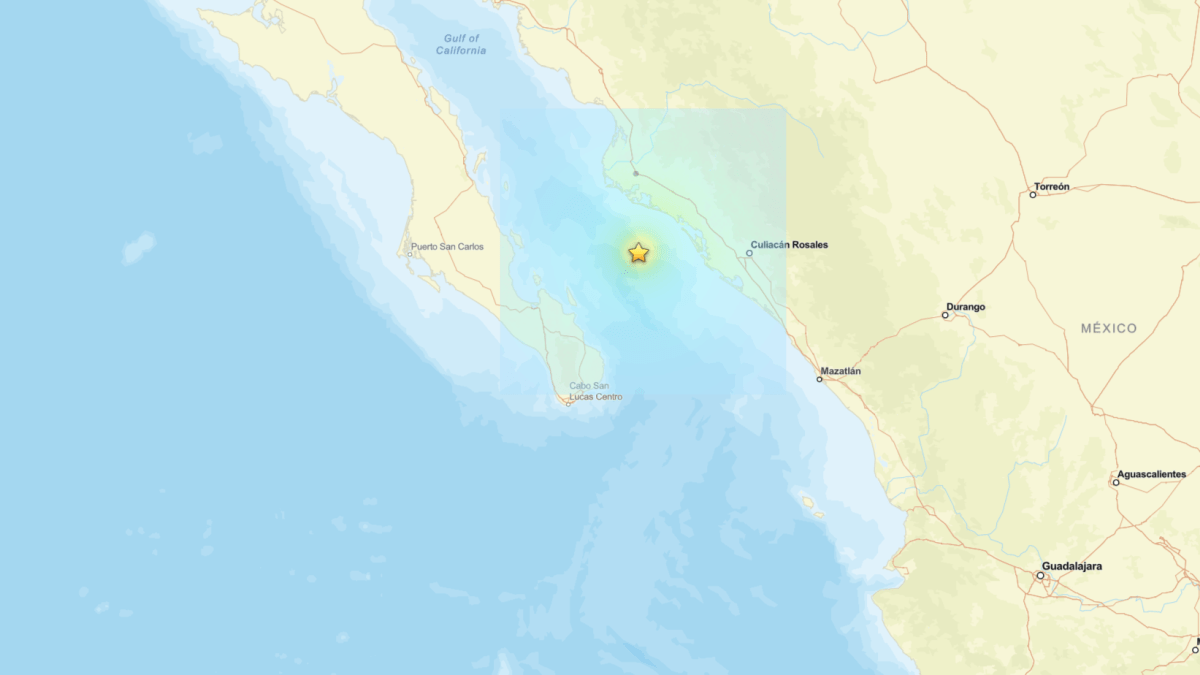
A magnitude-6.0 earthquake was reported early Tuesday afternoon in the Gulf of California.
The quake, reported at 12:45 p.m., was centered northeast of La Paz on the Baja California peninsula and southwest of El Progreso, a port city on Mexico’s Yucatán Peninsula. Shaking was reported in Los Mochis, Culiacan, Zapopan and other areas.
There were no immediate reports of damage.
Did you feel it?
Whether you feel shaking from an earthquake largely depends on three major factors — magnitude, distance and local soil conditions. Magnitude refers to the strength of the quake. The closer your location to the epicenter, the more likely you’ll feel the effects of seismic waves that become less intense as they move out from the fault. Generally, the looser the soil under your location, the greater the amplification.
Aftershocks
Some earthquakes are followed by a larger earthquake, in which case the first quake would then be called a foreshock. For example, the magnitude-9.1 Japan earthquake and tsunami in 2011 was preceded by a magnitude-7.3 foreshock two days earlier.
Aftershocks decrease over time, but can continue for days, weeks, months and years.
Photos: What to Keep in Your Disaster Emergency Kit