
This week, San Francisco authorities will begin towing vehicles as the city implements its new ban on RVs parked for over two hours on public streets. That means potentially hundreds of mobile homes will need to be stored somewhere — and that somewhere, says District 10 Supervisor Shamann Walton, is Dogpatch’s Pier 68.
The former Union Iron Works shipyard, now a historic district occasionally used for workforce training, is a swath of largely unoccupied land dotted with a few remaining abandoned industrial buildings. A large-scale redevelopment project encompassing Pier 68 and Pier 70 has been in progress for years, adding retail, restaurant, and office space to the waterfront. But in the meantime, the pier may be used to store RVs towed by the city.
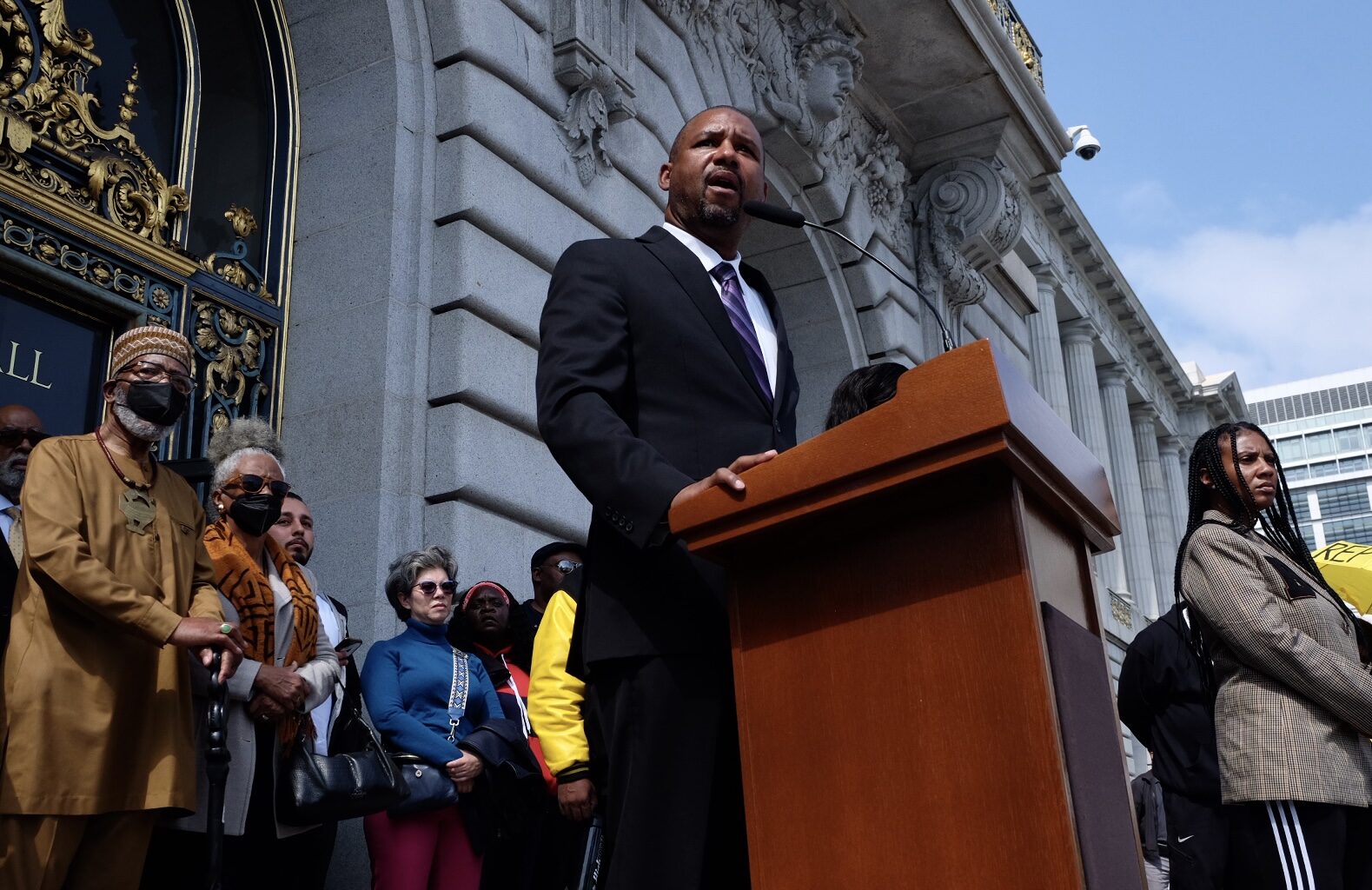
Supervisor Walton, who represents the neighborhood along with Bayview and the rest of District 10, says that neither he nor residents were consulted. The neighborhood, he says, “does not have the capacity” to store RVs at the pier.
Yes, there is space, but Walton said that he has other hopes for the port property that would better serve his district’s residents, like a trucking training program. But he learned during a meeting with the Port of San Francisco on Monday morning that the pier would be used to store RVs indefinitely.
“The Mayor’s Office, the Department of Emergency Management, the Port and the Department of Homelessness and Supportive Housing are once again strong-arming and treating District 10 as a dumping ground for the city’s hardest challenges,” said Walton in a statement and post to his Instagram.
The mayor’s office contends that the move is a temporary one, but did not answer questions as to why Walton was not consulted.
“As families move, empty RVs will be held temporarily at a city-owned lot with available space and then dismantled,” said spokesperson Charles Lutvak, in a statement. “Government has spent years failing to address this issue — we are doing what it takes to do right by San Francisco families.”
Walton has repeatedly criticized the mayor’s lack of transparency in the city’s plans for his district, which is disproportionately low-income and has a larger minority population than the rest of San Francisco. Earlier this year, the supervisor butted heads with Mayor Daniel Lurie over Jerrold Commons, a shelter proposed by former Mayor London Breed and planned with the supervisor, when Lurie eliminated safe parking spots for RVs and moved tiny cabins to the area for “temporary storage” without Walton’s input.
During July’s budget hearings, Supervisor Walton said Mayor Lurie made a personal promise to consult him and other residents before making decisions that impacted the “already overburdened” neighborhood. Now, Walton says, Mayor Lurie, who spearheaded the decision to ban two-hour parking for RVs throughout the city, has broken that promise.
Walton was one of two San Francisco supervisors, including District 9 Supervisor Jackie Fielder, to vote against the ban. His district has one of the largest populations of RV residents in the city, and many may be displaced once the ban goes into effect this week.
“I don’t think it will be successful,” said Walton, of the ban. “It could potentially be hundreds of vehicles or thousands of vehicles” that could be towed, said Walton. “They don’t have anywhere to put anybody.”