
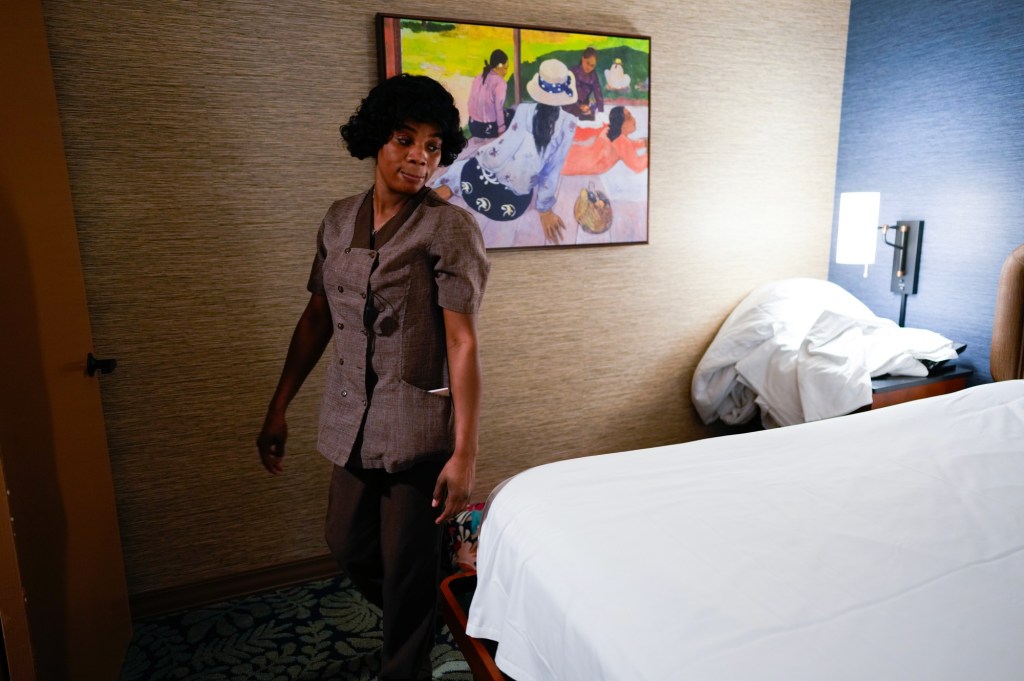
Thousands of San Diego tourism workers on Wednesday saw their paychecks rise thanks to a city ordinance that raised their minimum wage.
Most hotel workers will see minimum wage rise to $19 an hour and those who work at event centers will see wages up to $21.06 an hour. The ordinance will require annual increases until 2030, when both groups will have a minimum wage of $25.
San Diego City Council unanimously approved the increase in September, arguing workers in one of the region’s biggest industries needed higher wages to live in the area.
“Our tourism industry is one of the cornerstones of San Diego’s economy and today’s wage increase helps ensure the workers who welcome millions of visitors each year can better share in that success,” said Mayor Todd Gloria.
The tourism industry minimum wage was opposed by the San Diego Regional Chamber of Commerce and much of the hospitality industry, which had raised $1.6 million for a potential ballot measure to overturn the wage increase. Councilmember Sean Elo-Rivera, who led the effort, had reached a compromise to allow for a gradual phase-in for amusement parks, hotels and major event centers like Petco Park.
“This didn’t happen because corporations decided to do the right thing,” Elo-Rivera said. “It happened because workers organized, refused to be ignored and demanded this city works for them.”
Event center workers will start at the higher wage, which includes places like Pechanga Arena, the Civic Theatre and the San Diego Convention Center.
The proposal was backed by local unions and would not affect already negotiated labor contracts. San Diego Zoo workers were exempted from the new law because their unionized workers last summer negotiated an agreement that provided for better wages.
Additionally, state-owned venues are exempt, meaning specific locations like San Diego State University’s Viejas Arena and the Cal Coast Credit Union Open Air Theatre are not subject to the mandate.
Hotels with 150 or more rooms, as well as amusement parks, which would only affect SeaWorld, are subject to the $19 hourly wage.
San Diego officials said there are 89 hotels in the city with at least 150 guest rooms, and those properties account for more than 27,000 rooms. On the flip side, there are 180 hotels that contain fewer than 150 rooms, and together these hotels have more than 12,000 rooms.
Several hoteliers not covered by the ordinance have argued that they would have to raise wages anyway to keep workers, who could just walk across the street to get a higher-paying job. The citywide minimum wage, which is higher than the state’s and kicked in on Jan. 1, is $17.75 an hour.
Other California cities have passed similar measures. Voters in Long Beach approved a measure that increased hotel workers’ wages to $29.50 an hour by 2028, while the Los Angeles City Council backed a proposal to raise the minimum wage of tourism workers to $30 an hour within the next three years.
In general, California has been more open to minimum wage hikes than other parts of the nation. Voters in Oklahoma two weeks ago rejected a ballot measure that would have raised the state’s minimum wage from $7.25 to $15 an hour over three years.
California’s minimum wage is $16.90 an hour, and voters also recently rejected a ballot measure, in 2024, which would have raised it to $18. In both cases, there were arguments about minimum wage increases causing prices to increase.
California lawmakers and activists have had better luck with targeted wage hikes for specific industries. State legislation led to a $20-an-hour minimum wage for all fast-food workers that went into effect two years ago.