
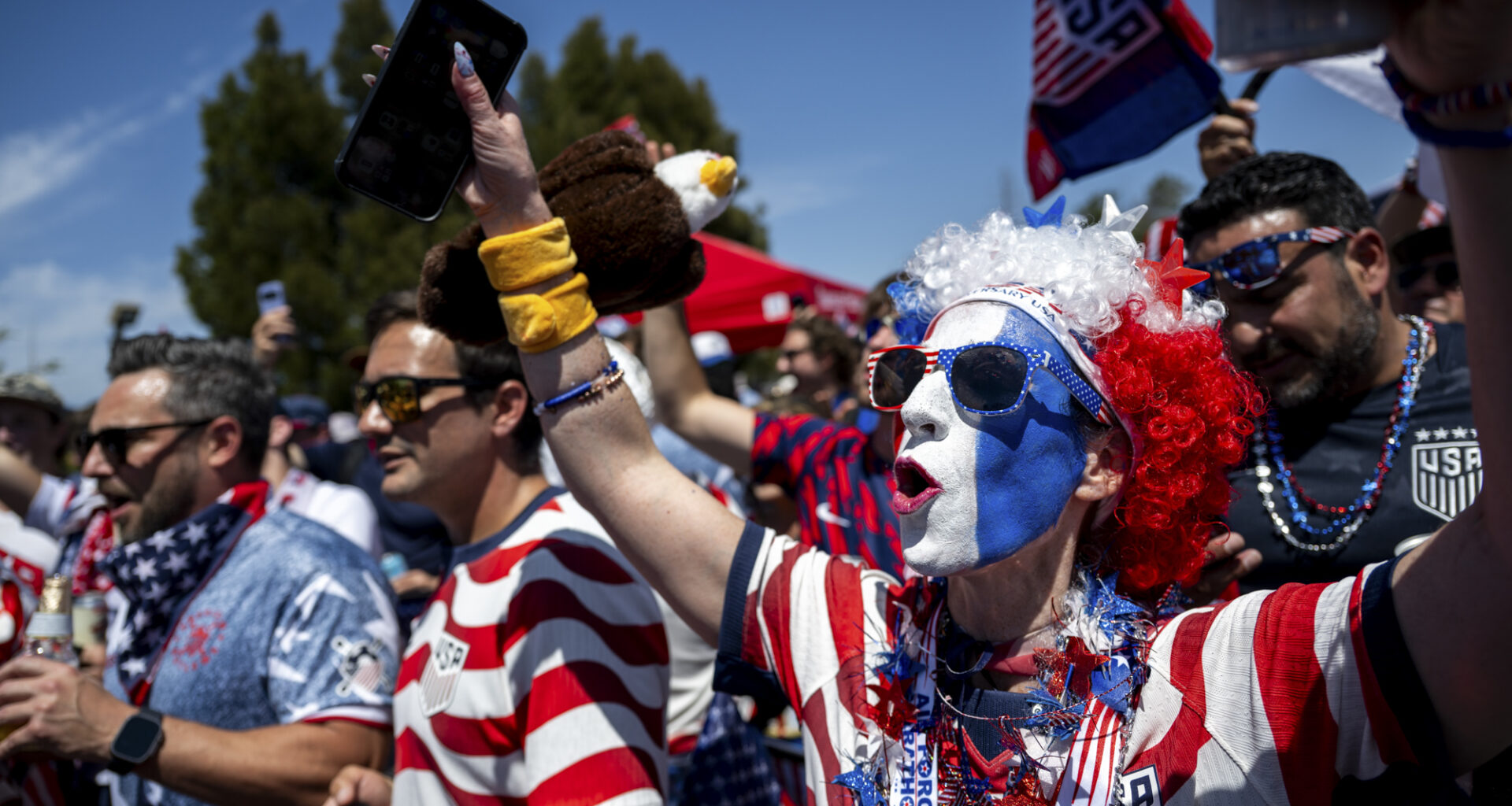
Levi’s, which has been temporarily renamed the San Francisco Bay Area Stadium for the World Cup, previously hosted group stage matches, largely between teams that don’t garner as much attention on the world stage.
Fans of the U.S. team were confident about their chances, as they rallied and tailgated ahead of a march toward the stadium.
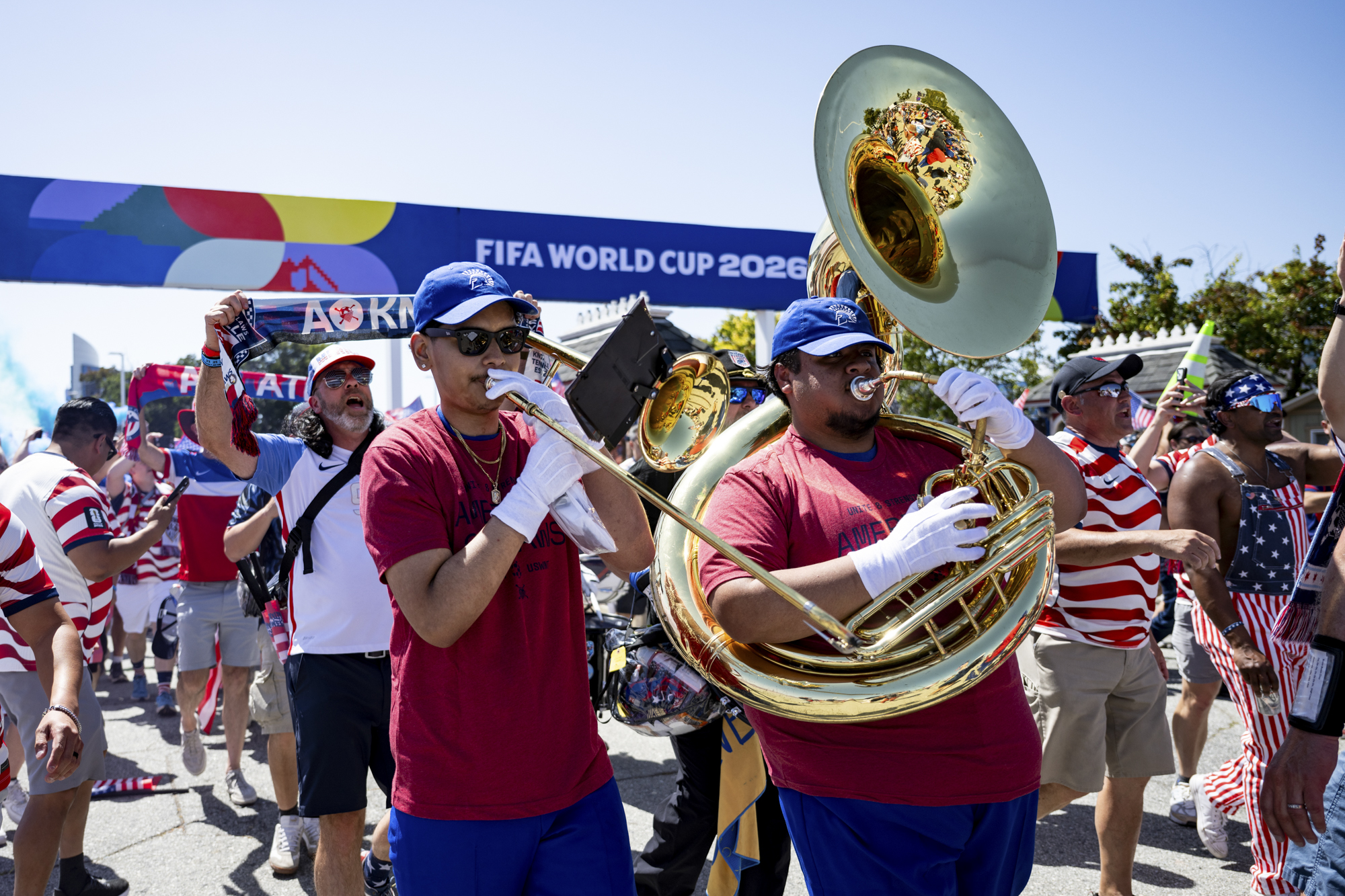 U.S. national men’s team soccer fans march toward the San Francisco Bay Area stadium for the FIFA World Cup game between the USA and Bosnia and Herzegovina in Santa Clara, California, on July 1, 2026. (Beth LaBerge/KQED)
In a parking lot nearby, thousands of American Outlaws, an unofficial support group of the team, celebrated, ate burritos, chanted, “USA, USA,” and sang anthems like John Denver’s “Take Me Home, Country Roads” and Woody Guthrie’s “When The Yanks Go Marching In.” The group’s drummers and horn players kept spirits high before much of the crowd headed out for the drumline-led march to the stadium.
Jacob Wong, a 29-year-old San Francisco resident, took the day off to attend the game.
“It’s kind of a once-in-a-lifetime opportunity,” said Wong, who was certain the U.S. would win “by 100.”
“You can feel the energy,” he said. “Everyone is excited.”
“It feels like Christmas morning,” said Joe Duffy, who, along with two friends, each paid $3,000 to sit in nosebleed seats.
Many attendees, heeding warnings about road closures and traffic, took public transportation to the game and local transit authorities said they were prepared for an influx of riders.
Caltrain said it had seen a 20% increase in ridership on game days and expected even larger crowds for the U.S. match. The agency was running two additional trains before the game and said it was keeping additional trains on standby to accommodate post-game crowds.
Raj Patel flew into town from Atlanta and was riding the train from San Francisco with his college roommate, Sid Balireddy. The pair were luckier than Duffy’s crew. They scored tickets for $800.
“We don’t get this kind of thing in Atlanta,” Patel said. “A lot of other places could do with something like this.”
Their train, full of boisterous fans, some of them sharing beers with new friends, experienced a brief delay in Menlo Park for what a conductor said was a quick “reset,” but continued on its way after a few minutes.
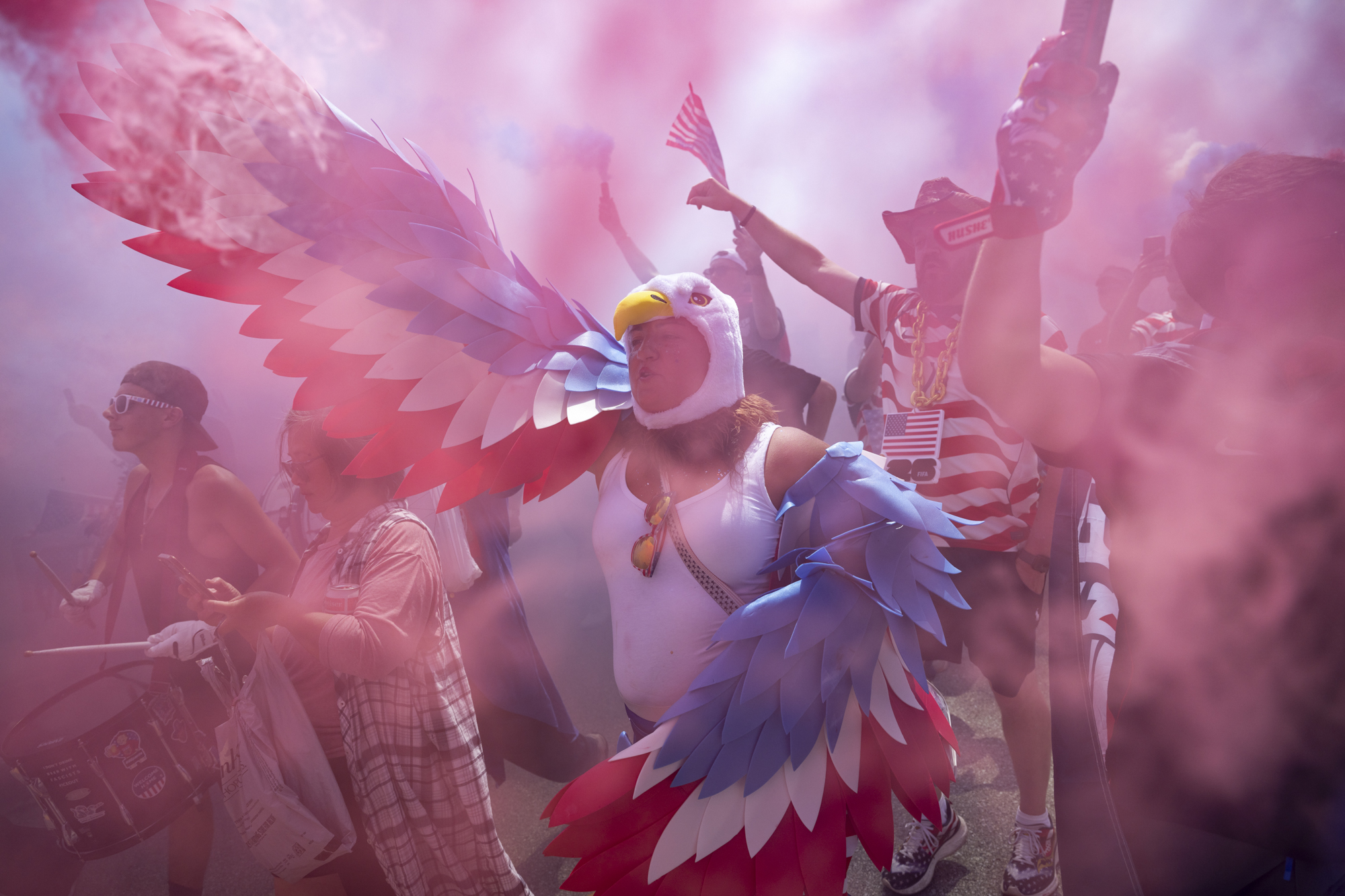 U.S. national men’s team soccer fans march toward the San Francisco Bay Area stadium for the FIFA World Cup game between the USA and Bosnia and Herzegovina in Santa Clara, California, on July 1, 2026. (Beth LaBerge/KQED)
The Santa Clara Valley Transportation Authority, which has a light rail stop near the stadium, said it was expecting a record ridership day and was running supplemental bus service ahead of the game because trains were full. VTA said it had about 80 train cars available for after the game and planned to run them one behind the other to move people as quickly as possible.
Interest in the sport appears to be growing in the Bay Area, if the huge crowds gathering for watch parties in places like San Pedro Square in downtown San José are any indication, much to the delight of local boosters and businesses.
Closed streets, massive TV screens and special permission from the city to allow outdoor drinking have drawn in several thousand to tens of thousands of people per match, with some of the most popular games bringing people to the area hours ahead of kickoff to nab spots.
 Margrit Muller and her daughter Robin Roettger sit before walking in to the San Francisco Bay Area stadium for the FIFA World Cup game between the USA and Bosnia Herzegovina in Santa Clara, California, on July 1, 2026. (Beth LaBerge/KQED)
Brian Kurtz, CEO of the San José Downtown Association, said watch parties have exceeded expectations. He chalked up a lot of the success to the increasing popularity of soccer and the diversity of the city.
“The World Cup celebrates culture, it celebrates countries, diversity and heritage. And what we’re seeing in downtown, in a city where more than 40% of our population is foreign-born, is that coming to real life,” Kurtz said. “And I see this as something that’s only going to grow and grow as the years go on.”
There have been some tense moments near watch parties, however. One man was killed and another was critically wounded on Sunday in a shooting just blocks from San Pedro Square.
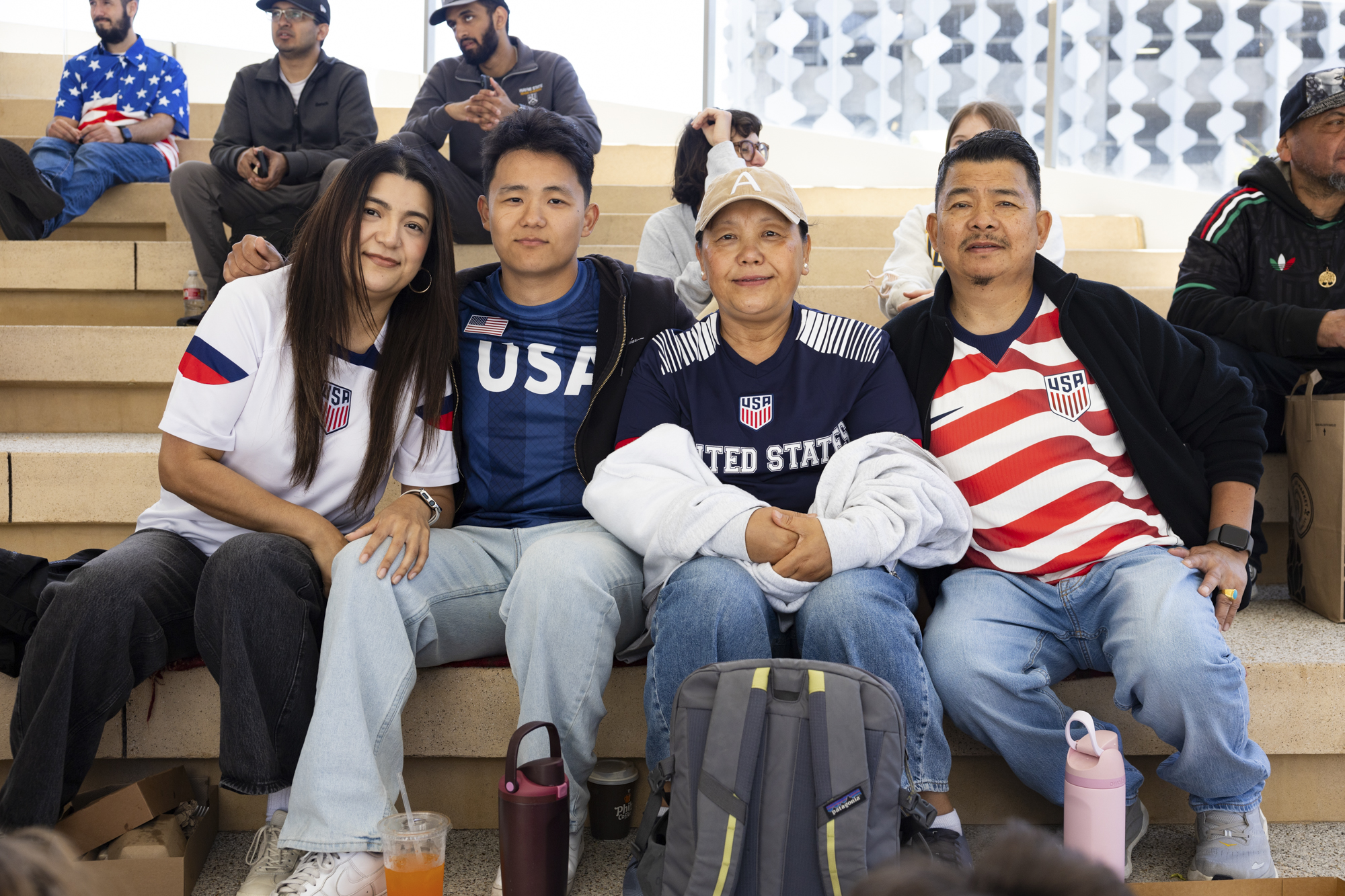 From left: Tenzin Nima, Tenzin Samten, Deckyi Dolma and Jigme Rapgyal, a family rooting for Team USA, pose for a photo ahead of the World Cup knockout game between USA and Bosnia and Herzegovina at Thrive City in San Francisco on July 1, 2026. (Gina Castro for KQED)
In San Francisco, SPARK Social on Wednesday abruptly canceled all of its remaining watch parties “in the interest of protecting the safety of our guests, staff, vendors, and community” after two people were wounded in a shooting in the area.
Overall, though, the atmosphere surrounding the game near the stadium and at watch parties across the region has been upbeat and friendly.
Tenzin Samten, 23, arrived more than two hours early to get a seat in front of the mega screen broadcasting World Cup games at Thrive City outside the Chase Center in San Francisco’s Mission Bay neighborhood. After picking up food nearby, Samten, who was watching with his parents and sister, eagerly waited for the U.S. kickoff as the Senegal versus Belgium game played.
“It feels more fun to come out and support the team when they’re close by,” the Richmond resident said.
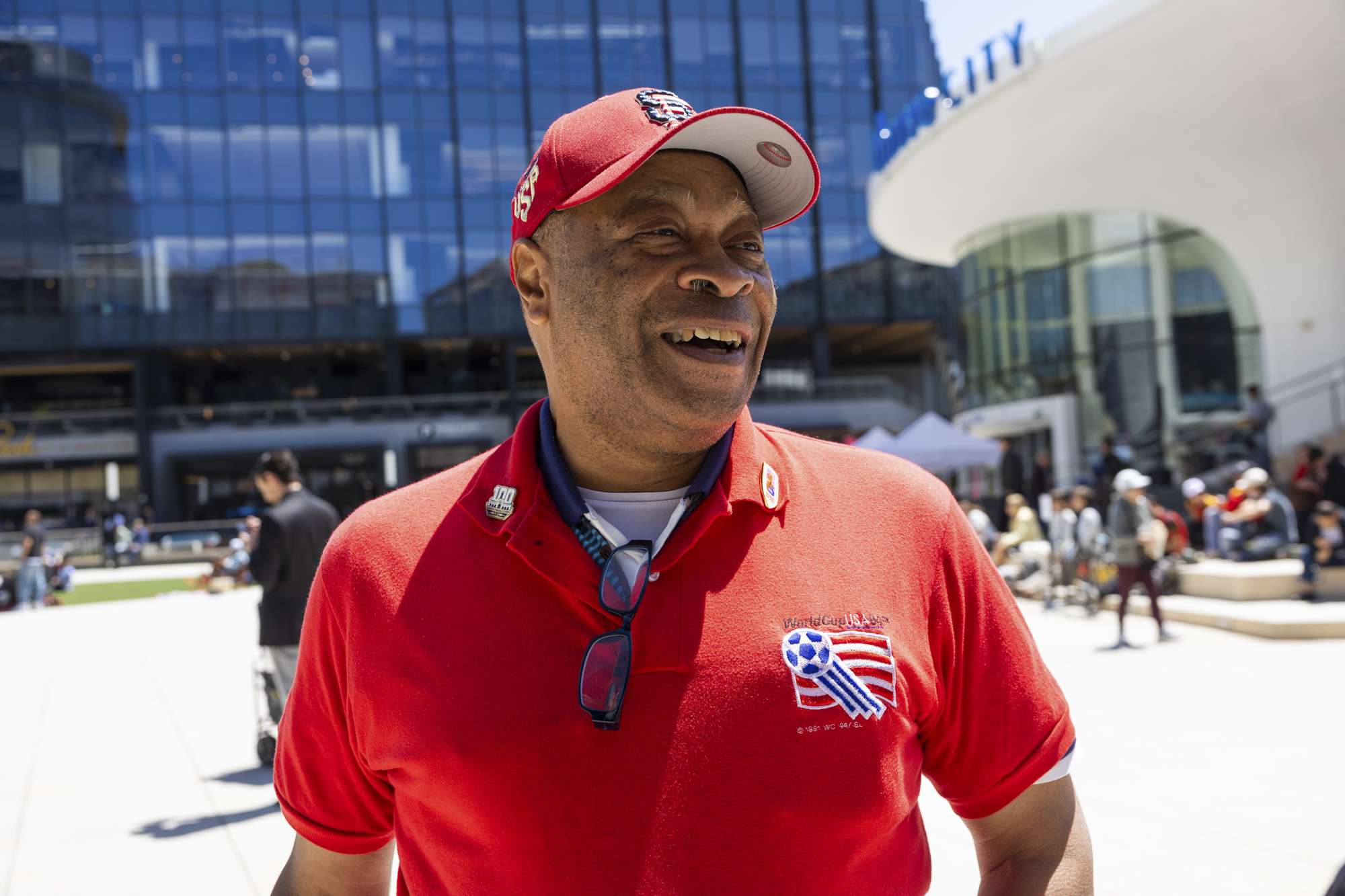 James Talcott, 69, rooting for Team USA, poses for a photo at Thrive City, ahead of the World Cup knockout game between USA and Bosnia and Herzegovina, in San Francisco on July 1, Stanford Stadium 2026. Talcott also attended a few games held at Stanford Stadium during the 1994 World Cup. (Gina Castro for KQED)
James Talcott, 69, also strolled through the Thrive City watch party early on Wednesday to get some food and find a seat before the 5 p.m. kickoff.
“They’ve been doing very good, but I will say: The good news is you have a home game. The bad news is they have not defeated a European team in a couple of years or something like that,” he said. “Bosnia, I know they’re in that lower league, but don’t dismiss them.”
The Tenderloin resident was thrilled to watch the U.S. play and see the Bay Area hosting games. He recalled attending World Cup matches when the tournament took place at Stanford University in 1994.
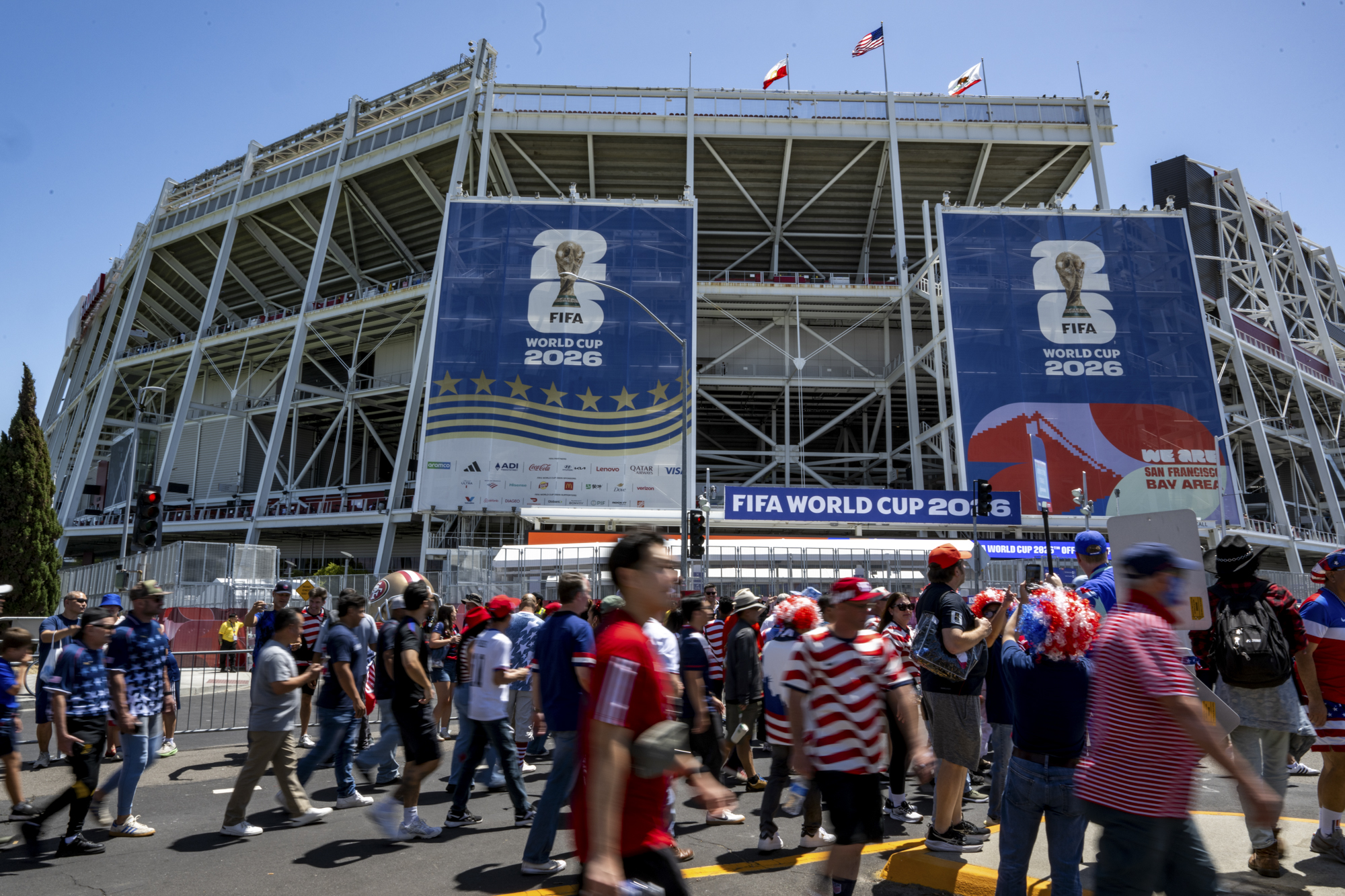 Fans walk toward the San Francisco Bay Area stadium for the FIFA World Cup game between the USA and Bosnia and Herzegovina in Santa Clara, California, on July 1, 2026. (Beth LaBerge/KQED)
“It’s been great, but I’ll tell you what, I went to the one they had 30 years ago here, at Stanford. And I remember the tickets were free. Now they’re talking about tickets like $3,000,” he laughed. “I mean, come on.”
Ticket prices weren’t the only thing spiking. Just a five-minute walk from Levi’s Stadium is the Hilton Santa Clara, which recently completed a renovation and hosts an ongoing “TailG8 Zone” for the public to gather, eat and drink before and after major events at the stadium.
Sales and marketing director Kunal Khandwala said it had been difficult to predict what bookings would be like for FIFA World Cup matches because so many factors, including inflation, war, politics and travel restrictions, could influence how many fans were attending various games.
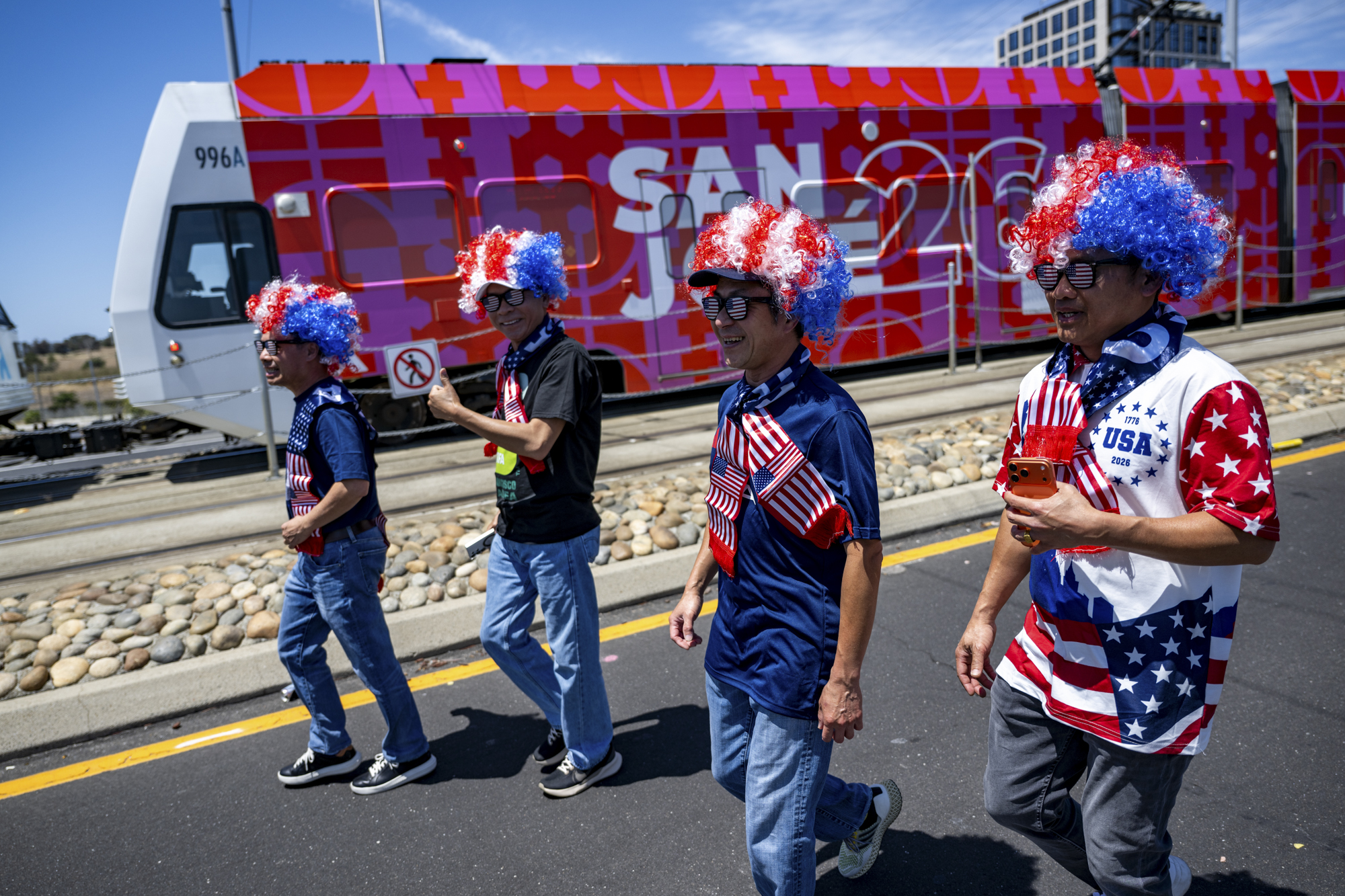 U.S. national men’s team soccer fans walk toward the San Francisco Bay Area stadium for the FIFA World Cup game between the USA and Bosnia and Herzegovina in Santa Clara, California, on July 1, 2026. (Beth LaBerge/KQED)
But Khandwala said he has seen a lot of recent demand with the U.S. team playing a match locally.
“We just picked up a lot more rooms over this past weekend. Once, I guess, the final teams were announced, people got more excited, and they started picking up hotel rooms and last-minute ticket sales at the stadium as well,” he said.
Rooms for Wednesday night at the hotel appeared sold out this week. Rates for a standard room on Tuesday night began around $500 and increased to more than $1,000 for a suite, according to the website.