
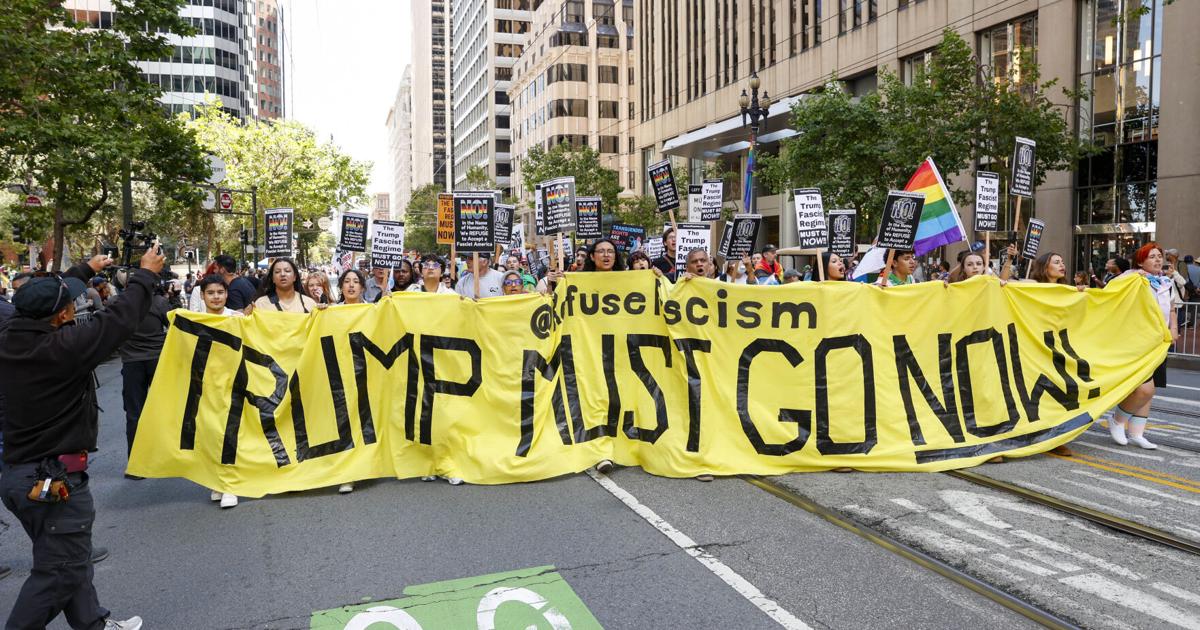
For communities that feel as if they’re being targeted by the current federal government’s policies, how to celebrate the United States’ 250th birthday has become a thorny question.
Since President Donald Trump began his second term in January 2025, sweeping policies have been proposed or enacted that affect the country’s most vulnerable people, including immigrants, the LGTBQ community, low-income families, people of color and women.
Congress slashed social safety nets such as Medicaid and SNAP in the One Big Beautiful Bill Act, jeopardizing food and health-care benefits for hundreds of thousands of people. In one of his first acts in office, he issued an executive order defining gender as sex assigned at birth on official government documents, affecting the identities of transgender and nonbinary people.
As of May, 400,000 people have been detained by Immigration and Customs Enforcement as Trump aims to fulfill his promise of mass deportations, according to an analysis by Brookings, a policy think tank.
San Franciscans have other occasions to celebrate this summer, such as the annual Pride parade that recently took place and the 250th anniversary of the founding of the Presidio in September.
But when it comes to feeling patriotic, some are trying to carve out their own ways to mark the coming holiday — or finding it difficult to feel celebratory at all.
“Of all the years that I’ve been doing drag here in San Francisco, this last administration has really thrown us all for a loop,” said San Francisco drag queen Juanita More.
More said that rather than Independence Day, she often focuses instead this time of year on Pride, where she throws an annual party to raise money for charity, this year supporting the GLBT Historical Society. Over the 22 years that she’s hosted this event, she’s raised more than $1.5 million for local causes.
She said that for this year’s event, to mark the anger and frustration she’s felt over ICE activity, she’s hired only Latino DJs and performers.
“That was my little powerful way of making a statement,” More said.

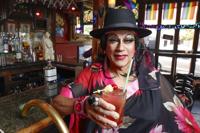
Juanita More shows off a Juanita More cocktail, made with the queer-owned LALO tequila, lime juice, grenadine and seltzer.
Craig Lee/The Examiner
More said the Fourth of July isn’t much of a big day for her during an average year — but for her, being an American and a San Franciscan means showing up every day and being as active and visible as possible.
“I’m going to be even more queer and even more louder,” she said.
More said she feels that she’s not the only one in her community reacting that way right now.
“Everyone is more busier,” she said. “People want us all to be present, to be visible, so that’s super, super, super amazing.”
For some, it’s difficult to even find any type of patriotic expression — even at the local level — in challenging times.
Del Seymour, a formerly homeless veteran who is now a local substance-use recovery advocate known as the “Mayor of the Tenderloin,” said he’s become fed up with even San Francisco’s inadequate show of solidarity.
“I’m not feeling sorry for myself, because I can handle myself, but I look at the people that can’t handle themselves, some of our youth, our LGBT people, and this mess with the Giants … that was too much for me,” he said.
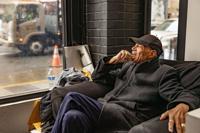
Code Tenderloin founder Del Seymour sits by his office window to observe who might need help as they walk past 55 Taylor Street in November 2024.
Craig Lee/The Examiner
Seymour is referring to the San Francisco Giants players who recently added unauthorized bible verses to their Pride-themed team caps. LGBTQ activists and fans criticized what they called a lukewarm response from the league and the Giants, while conservatives accused MLB of restricting free speech and discriminating against Christians.
This latest event is just one of many that Seymour said make him feel that the country — and San Francisco — has lost its way.
“How can I be patriotic?” Seymour asked. “What would I be celebrating?”
Seymour said he feels The City should be stepping up and doing more to advocate for and protect the communities affected by Trump. That was the San Francisco he used to know, Seymour added.
“I’m not seeing our activism out here,” he said. “I’m not seeing our protests out here.”
Seymour wishes there could be more emphasis on American values — that is, “the general principles of living a good, fair, and loving life, loving everyone.”
Until then, he said he’s at least going to show up for Pride.
Pride coincides with the finalizing of The City budget and LGBTQ+ orgs are calling for the restoration of nearly $3 million to their programming

Three facilities that serve youths and seniors are slated for closure if the proposed budget is finalized
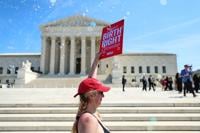
San Francisco resident’s successful 1898 appeal set precedent in case that had profound implications for the nation and The City
“Even if it’s only for an hour, I’ll be there,” Seymour said.
Shellena Eskridge, a San Francisco native who is the executive director of the Homeless Prenatal Program, said she’s also struggled to feel as proud of today’s San Francisco as she did the San Francisco of her youth.
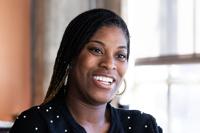
Shellena Eskridge, Homeless Prenantal Program Executive Director at 2500 18th St. in San Francisco on Friday, March 7, 2025.
Craig Lee/The Examiner
“I think a lot of community and activism that was here is no longer here,” she said.
The influx of forces such as tech and AI has made it harder for The City to retain its spirit of protest and activism and remain a haven for those most vulnerable, Eskridge said.
Eskridge and her program work with low-income unhoused mothers and families, some of whom are undocumented immigrants. She said her clients and her newborn son provide her with a source of pride when she might not be able to find it elsewhere.
“Every single day we support people who are pregnant and get to witness little newborns coming into our space,” she said. “There are still a lot of things that we continue to fight, continue to advocate for what is right, and advocate for what families deserve.”
She said that keeping that in mind, she wants to take the opportunity to open a dialogue this Fourth of July with her young cousins and nieces, who are between eight and 10 years old, about what they would “change in America,” and what they would “want to do differently in the future.”
Nonie Greene, a longtime San Francisco organizer and leader with Reproductive Freedom for All, has similar conversations with her daughters — not just about the future of America, but its past.
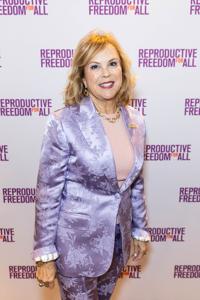
SAN FRANCISCO, CA — March 21 — Nonie Greene attends Reproductive Freedom for All 29th San Francisco Power of Choice Luncheon 2024 on March 21st 2024 at Fairmont San Francisco in San Francisco, CA (Photo — Ando Caulfield for Drew Altizer Photography)
Drew Altizer Photography
“Every Fourth of July, I always read the Declaration of Independence,” she said. “If I’ve got a bunch of kids around, they’re all reading it too … those words are maybe more meaningful to me now than ever.”
It’s also not just the country’s history, but her personal history too, that makes her feel pride around this time of year.
“I have a lot of beautiful stories in my family of really strong women who, when the men went off, they took care of everything — the farms and the businesses, everything,” she said. “My great-grandmother was a suffragette, and she never got to vote because she died, but I still think about her, and I have photos of her, and I look at her, and I just feel so strongly about the courage that she had.”
While there have been setbacks in the area of reproductive health in recent years, with abortion access being restricted and rolled back across the country, Greene said she’s also focusing on the positives this Independence Day. They include progress that has been made in improving maternal health outcomes, covered maternal leave, education, and stigma around pregnancy in the workplace.
It’s those advancements that reflect the principles on which this country was founded on, she said.
“Unalienable rights and the pursuit of happiness — these things bring a lot of joy to me,” Greene said.
Honey Mahogany, a transgender activist who is the director of The City’s Office of Transgender Initiatives, said she also often comes back to those foundational principles outlined in the Declaration of Independence these days.

Honey Mahogany, director of The City’s Office of Transgender Initiatives, said “the safest place in the world for people like me is right here in San Francisco.”
Craig Lee/The Examiner
“Trans people in so many ways really exemplify what it means to believe in the pursuit of life, liberty, and the pursuit of happiness,” she said. “Trans people are expressing what it means to be free, to be their true selves, to live their lives in peace, and to be happy.”
That’s especially important for her and her community, she said, because the transgender community has been the subject of several policies aimed at making its existence harder, including limiting access to gender-affirming care.
“I see people in our community doing that every day in different ways, whether they are directly involved in politics or government, or whether they’re fighting for resources on behalf of their community, people are really engaged in this battle for their lives” Mahogany said.
Ultimately, Mahogany said, what she wants people to keep in mind this year, at a major milestone, is that the United States was built on the very communities being targeted right now.
“Being patriotic right now means understanding how this country was built, which was through rebellion, through people standing up for their rights and their independence from an oppressive regime,” she said.
Fighting back is something that they will continue to do, every day, not just on the Fourth of July.
“These are battles that are ongoing, and right now it feels in some ways that we are taking steps back and losing some fights, but that doesn’t mean that we give up hope,” Mahogany said. “It means that we have to fight harder, and fight smarter.”