
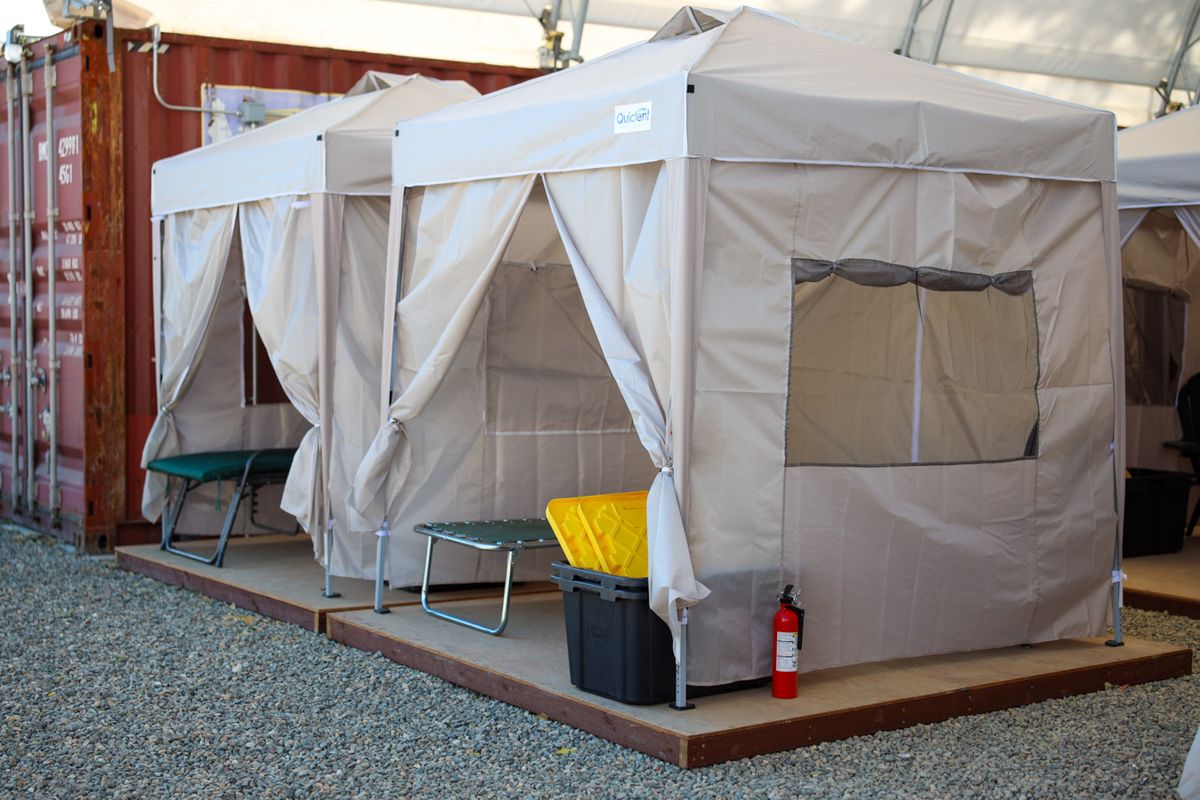
“We want to make certain that these individuals are ready to transition into housing and that this is not just a stopgap,” City Manager Maraskeshia Smith said.
McCarty acknowledged the campground is not a perfect solution but said the city cannot afford to wait for one.
“There are too many people who are still languishing on our streets, sometimes unfortunately, dying on our streets,” he said. “This isn’t perfect, but we can’t let the perfect be the enemy of the good.”
Sacramento’s Homelessness Challenge
The campground opens as homelessness continues to pose one of Sacramento’s biggest challenges.
According to Sacramento County’s 2026 Point-in-Time Count, more than 7,400 people were experiencing homelessness on a single night in January, including 4,205 people living unsheltered. Although homelessness increased countywide compared with 2024, the City of Sacramento reported a 19% decline in unsheltered homelessness within city limits.
The report also highlights stark racial disparities. Black residents make up roughly one-third of Sacramento County’s homeless population despite accounting for about 10% of the county’s overall population.
The new campground also opens as Sacramento faces growing questions about whether its shelter system is successfully moving people into permanent housing. A city audit that came out just one week prior to the camp site opening found that while Sacramento has significantly expanded its shelter capacity in recent years, the city lacks consistent data to measure how effectively people transition from temporary shelter into permanent housing. The audit recommended improving data collection, performance tracking and coordination across the city’s homelessness response system.
Learning From Past Efforts
The River District campground is not Sacramento’s first attempt at sanctioned outdoor shelter.
The city previously operated Safe Ground sites at Miller Park and X Street, but both locations eventually closed after flooding and other operational challenges.
Officials say those experiences helped shape the River District site. Raised sleeping platforms, permanent shade structures and expanded on-site services were all incorporated into the new design to create a more durable and functional campground.
According to Smith, the city spent approximately $2.5 million to build the site. Annual operating costs are expected to total about $1.2 million, covering security, maintenance, community oversight and day-to-day operations.