
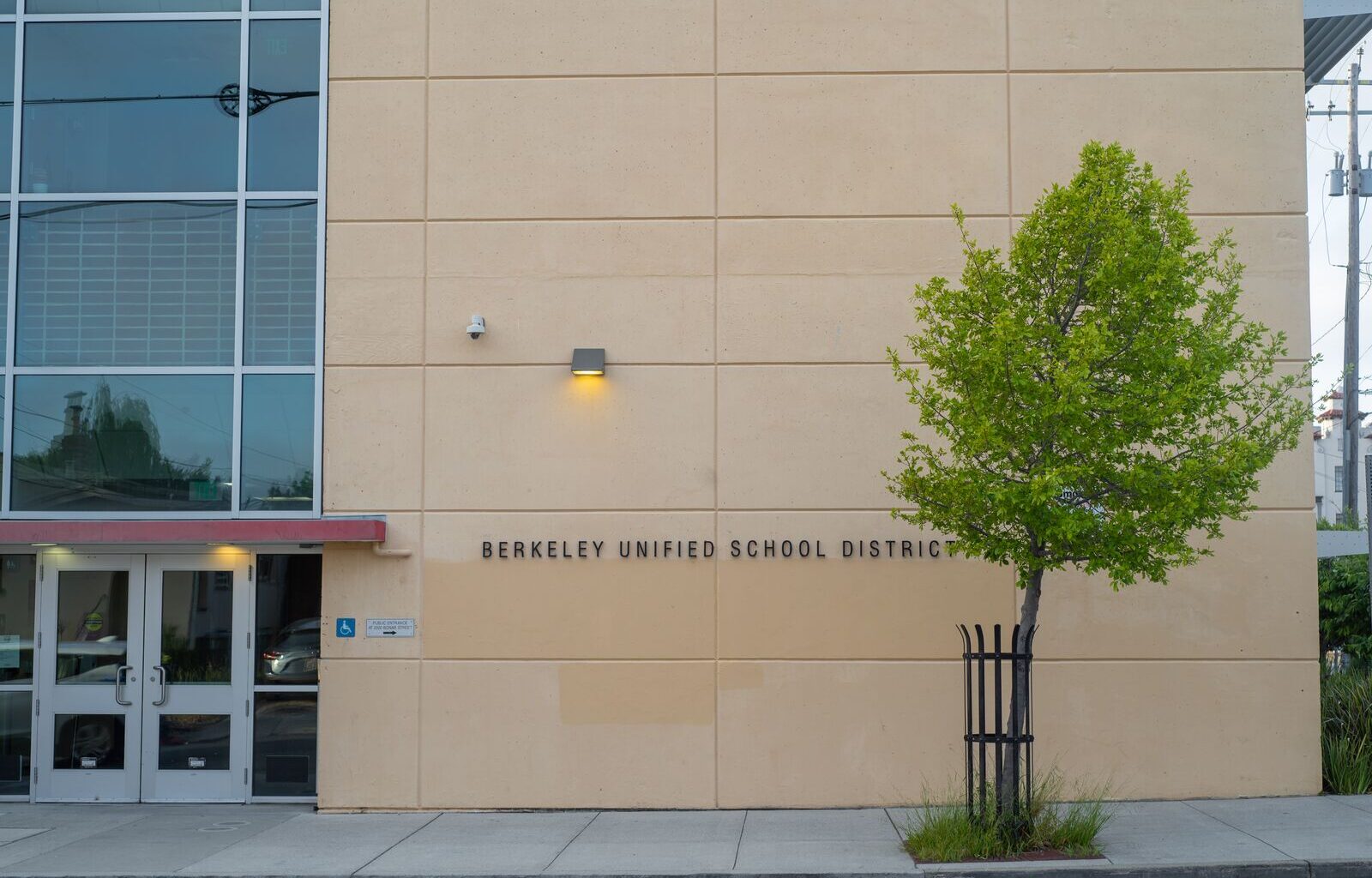
 Board members meet at the BUSD office building on 1250 Addison Street in West Berkeley. The district recently balanced its budget but foresees financial challenges ahead. Credit: Ximena Natera, Berkeleyside/CatchLight
Berkeley Unified slogged through another tough budget year, with officials in June approving a series of difficult cuts and budget-balancing measures totaling $11.2 million. But with a deficit of over $7 million projected across the 2027-28 and 2028-29 school years, their work is far from over.
Berkeley Unified leaders said rising salary costs and the expiration of one‑time funds are fueling the bleak projections, with more reductions likely ahead to maintain a state-required 3% budget reserve. The district has also projected a $600,000 deficit in its Local Control and Accountability Plan (LCAP) budget, which pays for services aimed at high‑need students.
Contract negotiations earlier this year between the school district and Berkeley Federation of Teachers yielded a 3% salary increase for educators over two years, starting last year. About 700 non-classroom staff represented by the Berkeley Council of Classified Employees, which includes positions such as custodians and bus drivers, reached a separate agreement for 3% and 4% increases for last year and the coming year, respectively.
How BUSD closed the gap for the 2026-27 school year
School districts in California must adopt balanced budgets for the upcoming year by June 30, and BUSD adopted theirs on June 17. Because districts get most of their money from the state, they have 45 days to update their budgets if they need to adjust to the state’s final budget, which is released at the end of June.
The Superintendent’s Budget Advisory Committee, which is composed of about 20 community members, parents, union leaders, and district staff, met from October through early spring to discuss revenue and cost-cutting proposals in four phases, with an objective of shaving $10.4 million. The last phase, presented at the May 30 board meeting, totaled $3.3 million in savings, putting BUSD over its target by $843,549. The district noted, however, that just over $6 million of these budgeting solutions are “one-time in nature.”
The budgeting phases focused broadly on eliminating vacant positions, staff layoffs, and consolidation of central office roles, before turning to non-personnel costs such as facility rentals and looking at new revenue streams like block grants and transportation fees to raise funds.
Notably, the district eliminated all nine after‑school coordinator positions, trimmed staffing at Berkeley High and Berkeley Tech, and explored shifting costs to the Berkeley Schools Excellence Program (BSEP) — a voter‑approved special tax — to close the multi‑year deficit without destabilizing classrooms.
The nine after-school coordinator positions were cut as part of a broader program restructuring, and some of those employees were reassigned into lower‑paid specialist roles that no longer carry supervisory duties. The board also reduced the ethnic studies teacher position and cut a climate literacy teacher role, both responsible for their respective curricula and professional development throughout Berkeley Unified. The moves drew pushback from families and community members.
Deeper personnel cuts, including classroom teachers, were largely avoided: The district earlier this year issued around 330 notices of potential layoff in March to certified and classified staff, with all but 21 rescinded by the end of May.
Other cost-saving strategies across all phases included:
Reduced instructional hours in the home-hospital program, which serves students unable to attend school due to physical or mental disability, saving $75,000
Charging $1 per day for students busing from school to non‑district aftercare programs, which is expected to generate about $242,000 (though rollout details have not been released)
Reducing printing costs by $867,000
Requiring non-union employees earning over $125,000 to take five furlough days next year to reduce expenses by $211,265 (although board members agreed to strike this plan if more funding becomes available)
Changing the district’s website vendor and moving costs to the BSEP, saving $17,000
Consolidating wellness staff at Berkeley High, saving $73,324
In addition to cutbacks, the district also cited new revenue streams in helping them meet their budget goal for the coming year. For example, a Student Support and Professional Development Discretionary Block Grant is expected to bring in over $4.5 million, while a slight increase in enrollment could result in an additional $194,000.
The Berkeley Unified board is scheduled to review the first interim report for the 2026-27 budget in December, which could impact its budget projections for 2027-2028 and beyond.
“*” indicates required fields