
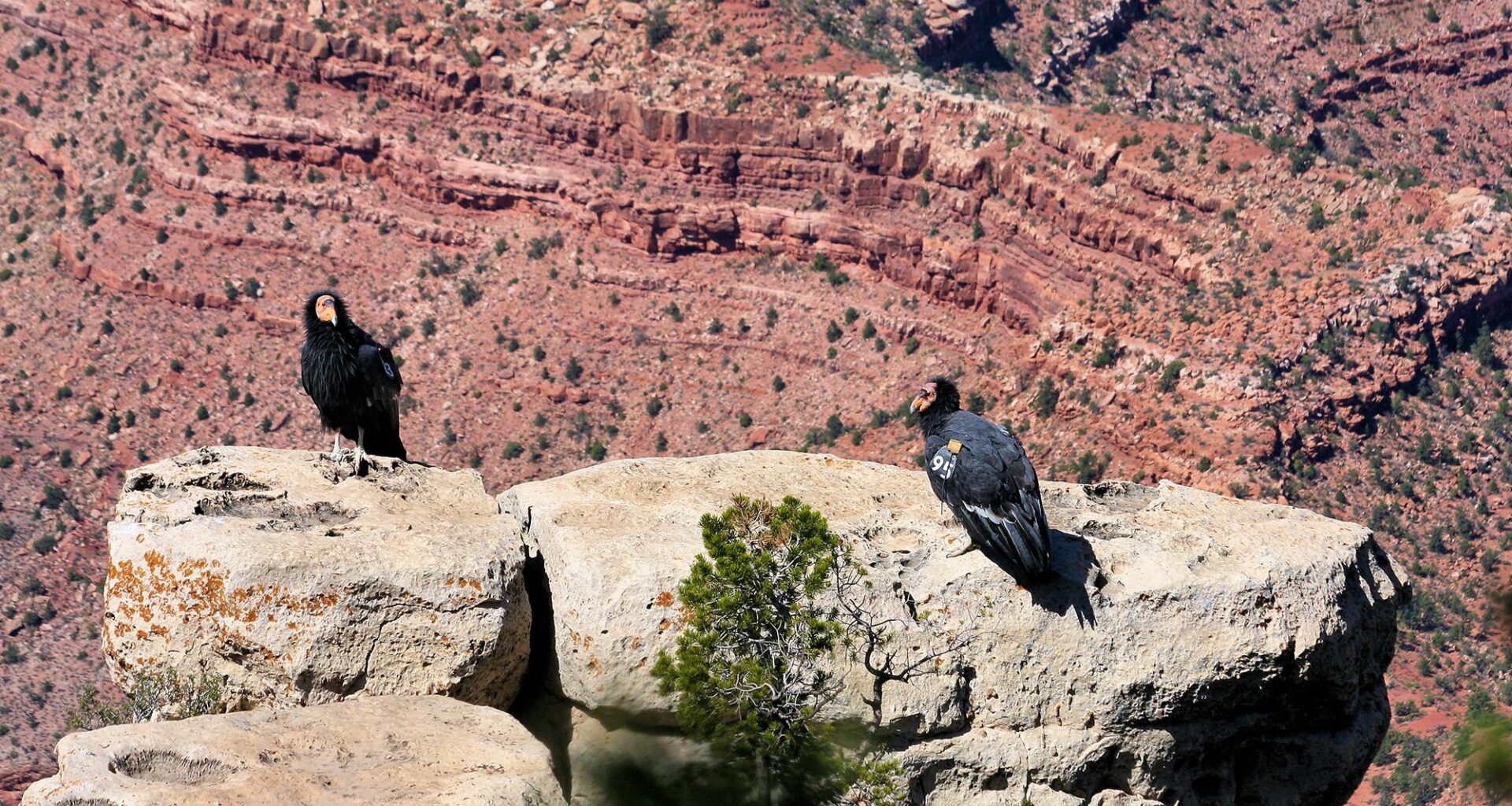
California condors are North America’s largest land-based bird with an impressive wingspan of nearly 10 feet.
These birds have been around since the late Pleistocene Era, 40,000 years ago. They nest on high, difficult to access cliff faces or in tall, gnarled trees. California condors travel up to 250 miles a day in search of food.
Why are California condors endangered?
The population steadily declined during the 20th century until there were only 22 California condors known to exist in the world.
The last of the free-flying condors were taken into captivity in 1987 to avoid additional mortality and to preserve as much diversity of the gene pool as possible. Reintroduction of condors into the wild began in early 1992 and continues today, with the population of approximately 350 in the wild.
Lead poisoning from spent ammunition is the number one cause of death among adult California condors in the wild. Condors also pick up and feed their young small objects left behind by humans known as “microtrash”, such as pieces of glass and metal, and have been known to accidentally drink poison like antifreeze. Human development and uncharacteristically large, severe wildfires have significantly degraded or destroyed the habitat condors require for foraging, nesting and roosting.