
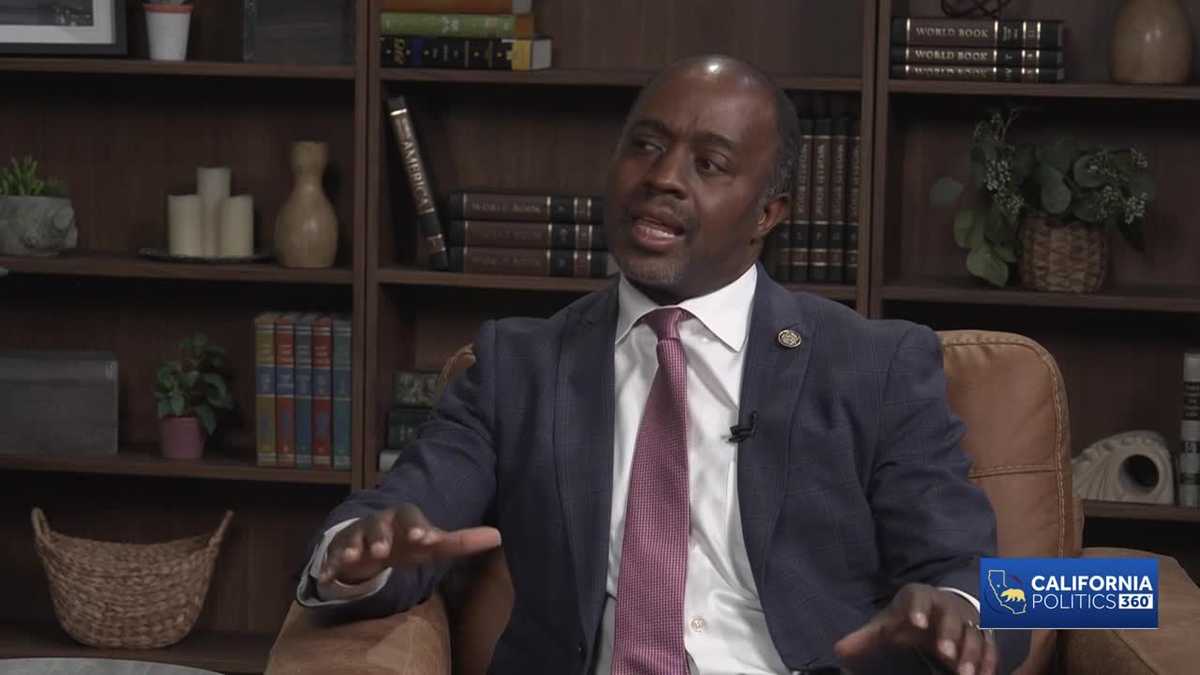
Top California public schools chief says he was left out of power shift decision | CA Politics 360
Mr. Superintendent, thank you so much for making time for us. Sure, thanks for having me on. So we saw *** lot of movement happen really quickly on the Department of Education. Lawmakers and the governor moved so that it’s no longer overseen by the superintendent, your office, but now the governor of California moving. Forward, what’s your response to all of this? To be honest, you know, I don’t think it’s *** bad idea when *** governor wants to be involved in education, and, and, and quite frankly, most states have an executive over education who was appointed by the governor, so it’s not *** bad thing, but it should have been done by taking it to the voters, right? The state superintendent position is approved by the voters, and, uh, I, I just think that would have been *** cleaner way to do it. I’m concerned that this proposal has been created. And it has not offered *** single outcome or metric for how it will improve student performance, and it has weakened the existing state superintendent position. And so, um, it’s interesting their, their premise was that they were trying to streamline all these layers of government seems to me. That by not getting rid of the one thing and creating this other thing they essentially just created another layer of decision making in the education sector. You’re one of our first interviews on this since this proposal passed, and again it passed quickly. Um, it was put into writing last Friday. It was passed on Monday. There really were no public hearings just to flesh out this one topic. Is that OK? He Well, it meets the, it meets the requirements of the law, but is it the best way, you know, to talk about *** complex process? No, no, in fairness, there have been some hearings in the education committees in the assembly in the Senate, um, but again, I think that this is *** process that, um, um, *** measure of this, uh, magnitude, I think. Uh, either you put it to the voters or you put it through *** traditional bill process and let it go through the legislative hearing process and get approval by two houses, and then the governor signs it. The governor told me over the phone last week that he would not sign the state budget without this being approved by lawmakers. There you have it. What’s your response to that? That tells you that lawmakers knew that the only way they’re going to get the other things that they wanted in the budget is that they had to concede on this measure and on it being in the budget process. Do you, I know when we last spoke about this proposal, which the governor, I mean from his standpoint, he did pitch this in January, um, since then, what have your conversations been like with lawmakers and the governor? Most lawmakers that I’ve spoken with have said that they didn’t like the proposal. They didn’t understand it and they didn’t like it. I’ve actually never had *** real conversation with the governor. Um, he’s mostly spoken to me through his staff on this. We’ve exchanged *** few text messages. He knows that I question why do it and why do it now and what is the intent behind it. Look, in fairness, I think this governor has done more for education than any governor in modern history. He’s put more in spending on more programs than we’ve seen. In modern times, uh, this seems to be, um, ***, ***, ***, ***, *** change of direction um from what I’ve seen from him. I’ve known this governor for *** long time. We’ve been allies. We’ve worked together for more than 2 decades, and I have deep respect for him, uh, but I couldn’t disagree more on the manner in which this new proposal has been crafted. And it really does decimate the state superintendent position. I feel bad for the person who will be the next state superintendent. It has essentially taken away anything that they might have function over and relegates them to serving on 3 boards in the state of California. The Republican running, I know has been Sonja Shaw has been very outspoken. She’s upset. Have you spoken to Democrat Richard Barrera about this? Um, I, I have seen some of Sonia Shaw’s posts, and she thinks that this position was crafted directly towards her, and I don’t think anybody was thinking about her, and I’ll be honest, I think that for her to be the state superintendent, she’s *** very dangerous person. She has threatened and bullied students. In our state and uh that’s not someone who should be the state superintendent. Um, I’ve spoken with Richard Barrera about it in the sense that, um, uh, you know, I’m concerned for him if he becomes the state superintendent uh about how he will carry out his policies. There are 1500 staff who work at the Department of Education and without access to many of those staff, it’s hard to carry out *** vision and *** platform for helping. *** big state with 1000 school districts and so we’ve spoken in in that respect and we’ve talked about ways that he might still be able to get his work done, uh, even with these drastic changes. Do you think that there is *** lane to talk to whoever the next governor may be about this to roll this back? I mean, do you, do you, or do you think that Governor Newsom is this powerful and this is probably going to be the way that it is? I, I think that this is the way it’s gonna be. Um, I do think that. You know, whoever becomes the person appointed by the governor, I will also talk with them and try to assist them if they’re going to be running. The department. It’s unusual. It’s different than what people think, and I’m, I’m happy to uh share any experiences that I’ve had, uh, that might help that person. Quite frankly, I wish that the people who wrote the research and the people who dreamed this up in the governor’s office had talked to me about it and asked me about what I saw as the pros and cons. I’d have been happy to share that. Um, so you were completely left out of this process, as the, as the state superintendent for the last 8 years. You were not involved in this major change in your office’s makeup. That’s right. Uh, this is how it went down. Uh, hey, the governor is interested in making this change. You’re both leaving office. Figured this is *** good time to do it. I saw *** few, you know, schematics of what it might look like. Um, the governor’s never spoken to me directly about that. Um, I don’t think that’s the way you conduct, uh, making *** change of this nature, and, uh, uh, having said that, I’m willing to talk to the person who the govern the next governor appoints to oversee the Department of Education to assist them in any way that I can. Um, but that’s *** different job than leading education in the state. That’s *** different job, and I wish that for all the time we’re spending talking about this measure, we were talking about real things that we know will make *** difference for helping kids in our state, like making sure they learn to read by 3rd grade, like the 5-year plan that I’ve written and that I’m raising money for to make sure we have more dyslexia screening. More tutoring programs, more training in phonics and the science of reading, things that are proven to help kids and to help California breakthrough to the next level over the next several years. In the very brief time that lawmakers did discuss this over the last week, they, they pointed to uh *** century worth of studies that pointed out that. It is hard to hold essentially hard to hold anyone accountable for some of these education outcomes because of the way that our government is structured is that so there aren’t that many studies out there? Is it just the one, the PACE study done by Stanford that that they’re referring to, do you think, or what do you make of that? If they’d asked me, I could tell them that when you are the state superintendent, you’re accountable for anything in education. Um, if they want to decide who gets blamed, it’s easy to put that on the state superintendent. I get blamed for traffic. I get blamed blamed for climate change, you name it. If there’s an issue, I can’t get through *** grocery store in this state without someone stopping me saying, Can I talk to you about an issue that’s facing our school community? And I take that seriously. And I don’t tell them, nope, sorry, you gotta call your superintendent or your local school board. I tell them, how can we help you? And then I work with that district to address that issue. Uh, you know, it seems to me they’re just looking for someone to blame when they say that, uh, rather than thinking about solutions. Um, let’s find solutions. And so for them to create *** system. That doesn’t have outcomes or metrics tied to it for student performance seems to me all they’ve done is just move the boxes from one side of the desk to another. Um, meanwhile, I’m gonna continue working on things that are gonna make *** difference for helping our kids, making sure more kids graduate, making sure that more kids are ready to enter the workforce. I raised private money to make sure our kids will have access. to an internship, *** paid internship in *** STEAM-related field. We have students in Los Angeles County who’ll be learning STEAM, we have students in places like Oakland who’ll be learning STEAM. You know, we have to make sure our students are ready for the jobs of tomorrow. I just don’t see how this, uh, this new proposal, um, does anything to move the needle, uh, for our students in our state. Just shifting gears just very broadly. I know you, you have 6 months left in this office. What, what’s next for, for Tony Thurmond? It’s *** great question. Listen, I love the state. Uh, the people of California have allowed me to serve as an elected official for 18 years. Someone who comes from my walk of life doesn’t normally get that opportunity, you know, the son of immigrants, um, you know, I lost my, my only parent, my mom, when I was 6 years old. I was raised in poverty on, on public assistance. You know, free lunches, food stamps, and government cheese, and in spite of all of that, um, I’ve been given the opportunity to serve and to make *** difference in our community, and I’m grateful for that. Um, uh, you know, I didn’t win in my election to become governor, but I put everything into it and I didn’t make *** contingency plan, uh, you know, I, I just, I believe you, when you run for something, you put everything into it and you give it all you have, and, um, it didn’t work out the way I hoped, but, um, I’m not gonna run for any other offices. Um, I ran for governor. Out of intention because it is the office that has the most influence over what happens in our state by virtue of being able to set *** budget and uh that didn’t work out for me and so um I will find another way to contribute but as it relates to this proposal and the framers of the proposal saying that people needed to have clarity about who makes the decisions uh in education, that is so disingenuous. Anyone who works in education. Knows that ultimately it’s the governor and the legislature who make all the decisions. He or she who controls the budget ultimately controls the decision making. And so, um, well, you know, it remains to be seen where this is gonna go. I’ve already reached out to some of the governor’s team to say let’s get together and figure out where there might be gaps and how do we minimize any disruptions as this thing gets implemented because it’s getting implemented in January. It’s right around the corner. I mean, what does it mean for the school year? It’s created *** lot of anxiety for the people who work at the Department of Education. It’s created *** lot of questions. I think initially for school staff, it will raise questions about, OK, who do we go to? Do we go to the state superintendent or do we go to the governor’s appointee? Um, and so, you know, I wanna be intentional again. I want us to work through anything that will be *** disruption. The trains have to keep moving. We have to make sure that the dollars that go to our schools, that the Department of Education allocates, get allocated on time. Any other resources that schools need, we have to make sure they get them on time, and I’m gonna make sure that that happens, um. Uh, this is *** proposal that will raise questions, but it won’t be the end of education. It doesn’t have the solutions for what we need, and so those of us who know what makes *** difference, we’re gonna keep working on that. We’re not gonna stop until we help California kids, um, be prepared, uh, for great futures. Is there anything else you think we should know? Um. If I don’t get the chance, let me just say thank you to the people of California for allowing me to be your state superintendent. Thank you for the questions that you’ve asked in the course of my time as state superintendent and in the legislature. Um, you know, I am proud to have sponsored the legislation that created the first, uh, transitional kindergarten in the state and Universal Meals, and that got, um, $6 billion for broadband. At *** time when we learned that *** million kids in our state didn’t have access to *** computer or the Internet, um, um, you know, there’s *** lot more that needs to be done, but I’m grateful for having been given the opportunity, um, to serve kids who in many ways were, were just like me, just needed *** chance and needed for the promise of education to be made for them. So that they’ll know that if you just believe in education you’ll have *** great life and so to your viewers, uh, I hope that they will continue to share that message with their children no matter the difficulties that you face education will carry you wherever you want to go and anything that I can do in this role or the next to help our Californians in that way I’m more than happy to do. All right, we appreciate you. Thank you so much for your time, Mr. Superintendent. Thank you.
Top California public schools chief says he was left out of power shift decision | CA Politics 360

Updated: 8:20 AM PDT Jul 5, 2026
California’s top public schools official says he was left out of the negotiations and decision-making when the governor and state lawmakers approved a major education overhaul and stripped the Department of Education from his office. “It should have been done by taking it to the voters,” Superintendent Tony Thurmond said in an interview on California Politics 360. “It has weakened the existing superintendent position.”Legislation approved last week shifted the power over the Department of Education to the governor’s office. Starting in January of 2027, the DOE will be directly overseen by an Education Commissioner, who will be appointed by the governor. The superintendent’s responsibilities moving forward will be limited to sitting on the state’s various education boards. Thurmond expressed frustration with the speed of the proposal’s passage and the lack of public hearings. “It meets the requirements of the law, but is it the best way to talk about a complex process? No,” he said. He added that a measure of this magnitude should have gone through the traditional legislative process. The superintendent also criticized the proposal for failing to provide specific outcomes or metrics for improving student performance. “It has weakened the existing state superintendent position,” Thurmond said. “Their premise was that they were trying to streamline all these layers of government. Seems to me that by not getting rid of the one thing and creating this other thing, they essentially just created another layer of decision making in the education sector.” Thurmond revealed that he was excluded from the decision-making process. “The governor’s never spoken to me directly about that. I don’t think that’s the way you conduct making a change of this nature,” he said. Despite this, Thurmond expressed a willingness to assist the governor’s appointee in overseeing the department, saying, “I’m happy to share any experiences that I’ve had that might help that person.” Reflecting on the broader implications, Thurmond said, “It really does decimate the state superintendent position. I feel bad for the person who will be the next state superintendent. It has essentially taken away anything that they might have function over and relegates them to serving on three boards in the state of California.” Thurmond also addressed concerns raised by lawmakers about accountability in education outcomes. “If they’d asked me, I could tell them that when you are the state superintendent, you are accountable for anything in education,” he said. “It seems to me they’re just looking for someone to blame when they say that, rather than thinking about solutions.” As his term nears its end, Thurmond reflected on his time in office and his future plans. “I love the state. The people of California have allowed me to serve as an elected official for 18 years,” he said. “I didn’t win in my election to become governor, but I put everything into it. I will find another way to contribute.” Thurmond highlighted his accomplishments, including sponsoring legislation for transitional kindergarten, universal meals, and broadband access for students. “There’s a lot more that needs to be done, but I’m grateful for having been given the opportunity to serve kids who in many ways were just like me, just needed a chance,” he said. Looking ahead, Thurmond emphasized the importance of focusing on initiatives that directly benefit students, such as improving literacy rates and expanding access to internships in STEAM fields. “We have to make sure our students are ready for the jobs of tomorrow,” he said. “I just don’t see how this new proposal does anything to move the needle for our students in our state.” Thurmond concluded by thanking Californians for their support during his tenure. “To your viewers, I hope that they will continue to share that message with their children, no matter the difficulties that you face, education will carry you wherever you want to go,” he said.KCRA 3 Political Director Ashley Zavala reports in-depth coverage of top California politics and policy issues. She is also the host of “California Politics 360.” Get informed each Sunday at 8:30 a.m. on KCRA 3.
California’s top public schools official says he was left out of the negotiations and decision-making when the governor and state lawmakers approved a major education overhaul and stripped the Department of Education from his office.
“It should have been done by taking it to the voters,” Superintendent Tony Thurmond said in an interview on California Politics 360. “It has weakened the existing superintendent position.”
Legislation approved last week shifted the power over the Department of Education to the governor’s office. Starting in January of 2027, the DOE will be directly overseen by an Education Commissioner, who will be appointed by the governor.
The superintendent’s responsibilities moving forward will be limited to sitting on the state’s various education boards.
Thurmond expressed frustration with the speed of the proposal’s passage and the lack of public hearings. “It meets the requirements of the law, but is it the best way to talk about a complex process? No,” he said. He added that a measure of this magnitude should have gone through the traditional legislative process.
The superintendent also criticized the proposal for failing to provide specific outcomes or metrics for improving student performance. “It has weakened the existing state superintendent position,” Thurmond said. “Their premise was that they were trying to streamline all these layers of government. Seems to me that by not getting rid of the one thing and creating this other thing, they essentially just created another layer of decision making in the education sector.”
Thurmond revealed that he was excluded from the decision-making process.
“The governor’s never spoken to me directly about that. I don’t think that’s the way you conduct making a change of this nature,” he said. Despite this, Thurmond expressed a willingness to assist the governor’s appointee in overseeing the department, saying, “I’m happy to share any experiences that I’ve had that might help that person.”
Reflecting on the broader implications, Thurmond said, “It really does decimate the state superintendent position. I feel bad for the person who will be the next state superintendent. It has essentially taken away anything that they might have function over and relegates them to serving on three boards in the state of California.”
Thurmond also addressed concerns raised by lawmakers about accountability in education outcomes. “If they’d asked me, I could tell them that when you are the state superintendent, you are accountable for anything in education,” he said. “It seems to me they’re just looking for someone to blame when they say that, rather than thinking about solutions.”
As his term nears its end, Thurmond reflected on his time in office and his future plans. “I love the state. The people of California have allowed me to serve as an elected official for 18 years,” he said. “I didn’t win in my election to become governor, but I put everything into it. I will find another way to contribute.”
Thurmond highlighted his accomplishments, including sponsoring legislation for transitional kindergarten, universal meals, and broadband access for students. “There’s a lot more that needs to be done, but I’m grateful for having been given the opportunity to serve kids who in many ways were just like me, just needed a chance,” he said.
Looking ahead, Thurmond emphasized the importance of focusing on initiatives that directly benefit students, such as improving literacy rates and expanding access to internships in STEAM fields. “We have to make sure our students are ready for the jobs of tomorrow,” he said. “I just don’t see how this new proposal does anything to move the needle for our students in our state.”
Thurmond concluded by thanking Californians for their support during his tenure. “To your viewers, I hope that they will continue to share that message with their children, no matter the difficulties that you face, education will carry you wherever you want to go,” he said.
KCRA 3 Political Director Ashley Zavala reports in-depth coverage of top California politics and policy issues. She is also the host of “California Politics 360.” Get informed each Sunday at 8:30 a.m. on KCRA 3.