
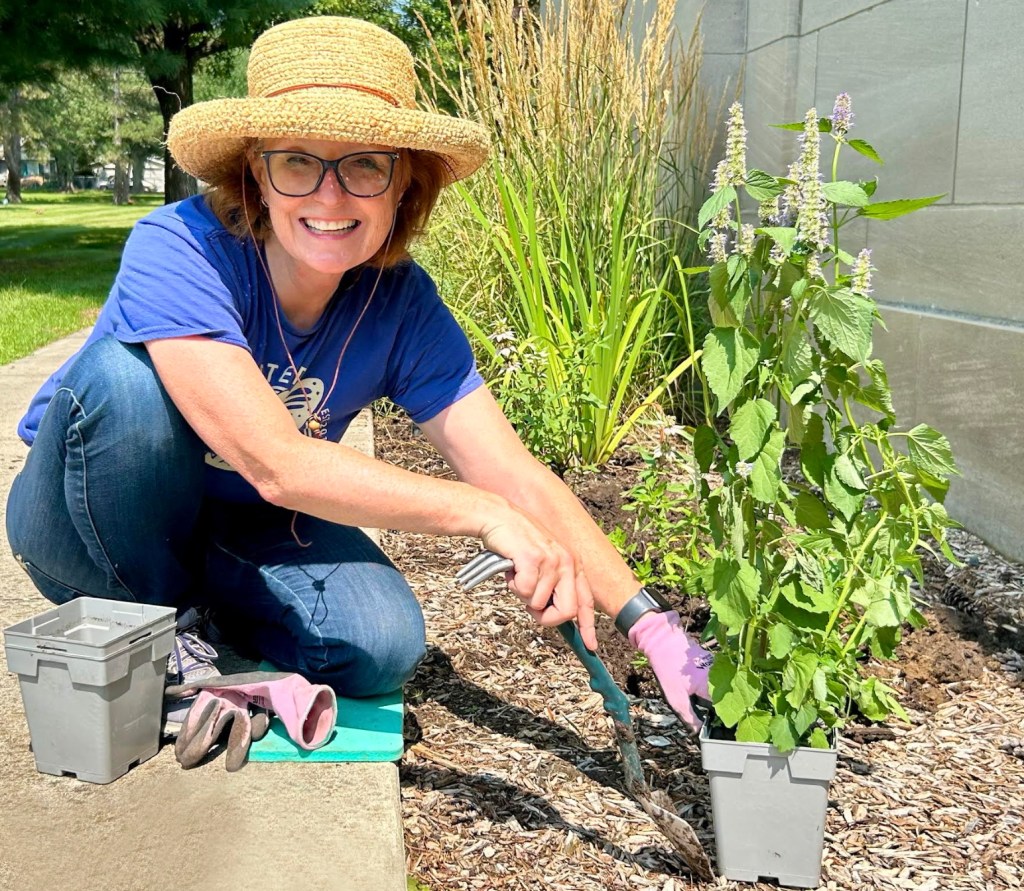
By Susan Thwing, For MediaNews Group
What began as a Rochester resident’s concern over the decline of Monarch butterflies has blossomed into a community-wide conservation movement that has placed the city among an elite group of municipalities nationwide.
For the fourth consecutive year, Rochester has been designated a Monarch Champion City by the National Wildlife Federation, recognizing its commitment to native habitat restoration, pollinator education and environmental stewardship. Rochester was designated in 2022, 2023, 2024 and 2025.
According to the NWF, Rochester is currently the only Michigan community to earn the distinction and one of just eight communities nationwide to achieve Monarch Champion status in 2025.
The other cities named: San Marcos, Texas; Minnetonka, Minn.; Carnegie Borough, Pa; San Antonio, Texas; Glen Ellyn, Ill. Hastings-on-Hudson, N.Y. ; and Chamblee, Ga.
For Rochester Pollinators founder Marilyn Trent, the recognition is both gratifying and surprising. When she founded Rochester Pollinators in 2019, she never envisioned this milestone.
“Honestly, not in my wildest dreams,” Trent said. “When I started, I never imagined that the City of Rochester would one day embrace native plant gardens the way it has. The level of support the city has given to this idea, and to me, has been truly humbling.”
The Monarch Champion designation is part of the NWF’s Mayors’ Monarch Pledge program, launched in 2015 to encourage communities to help reverse dramatic monarch butterfly population declines.
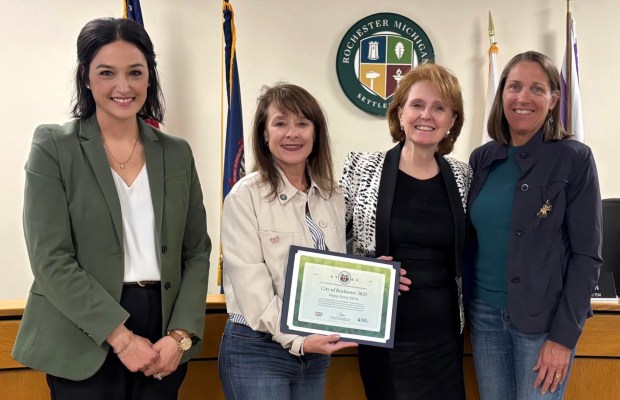 Representatives of Rochester Pollinators and city leadership celebrate Rochester’s designation as a 2025 Monarch Champion City by the National Wildlife Federation. Rochester is the only Michigan community and one of just eight nationwide to earn the recognition for its commitment to monarch butterfly conservation and native habitat restoration. (Courtesy of Rochester Pollinators)
“The numbers have been so bad in terms of monarch butterfly decline, and we knew cities could play a big role,” said Patrick Fitzgerald, senior director of community wildlife at NWF and national leader of the program. More than 350 communities participated in the pledge program in 2025..
“It’s a really big deal,” Fitzgerald said. “Some communities complete three or four action items. Rochester completed 24 or more. It shows a real commitment to Monarch butterfly conservation and taking significant action.”
According to Rochester’s 2025 report to the NWF, the city reached approximately 5,000 residents – nearly 39% of the 12,852 residents estimated in 2025 – through pollinator-related programs and education efforts while creating additional Monarch habitat throughout the community.
More than butterflies
While the Monarch butterfly serves as the movement’s symbol, supporters say the mission is much broader.
“I believe people simply didn’t realize that what they were planting in their own yards was harming insects and butterflies,” Trent said. “Once people understand the connection and realize they can do something tangible about it right in their own backyard, they don’t hesitate.”
Trent is most proud of the accomplishment that predates her service on Rochester City Council.
Through advocacy efforts, the city voted in 2022 to ban the use of neonicotinoids on public lands. According to the Natural Resources Defense Council, the pesticide is a synthetic neurotoxic insecticide chemically similar to nicotine and has been linked to declines in pollinator populations.
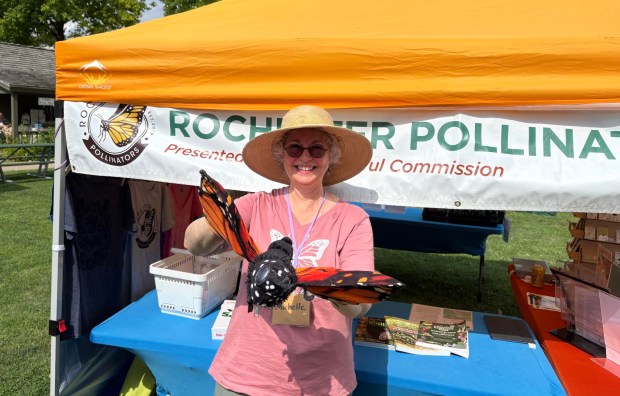 Volunteer Michelle Berry Lane welcomes visitors at a Rochester Pollinators event. Through native plant sales, educational programs and community outreach, the organization encourages residents to create pollinator-friendly habitats in their own yards. (Courtesy of Rochester Pollinators)
She also points to recent community outreach efforts, including distributing nearly 800 native plants and more than 200 native seed bombs during Rochester’s Heritage Festival through a grant from America250MI.
“The heart of that effort was this message: these plants are part of our American heritage,” she said. “They were here when the first settlers arrived in Michigan.”
The movement’s success, she believes, stems from helping residents understand they can make a difference.
“I had an 83-year-old woman tell me she hadn’t seen a Monarch or any butterflies in years,” Trent said. “After she planted milkweed and a few other native plants, the butterflies came back.”
From curiosity to conservation
Few stories illustrate Rochester Pollinators’ impact better than that of Amber Quesenberry, vice chair of the organization’s board.
Her family’s involvement began almost accidentally. Living in Rochester Hills and homeschooling her four children, Quesenberry and her husband decided to stop maintaining one section of their garden and see what happened.
“Lo and behold, common milkweed appeared, and soon after came the Monarch caterpillars,” she said. “We were all surprised and delighted.”
That discovery launched a deep dive into the world of pollinators, native plants and habitat restoration.
“Not all butterfly gardens are created equal,” she said. “Sure, nectar is important to adult pollinators, but host plants are where the real magic happens. Caterpillars have to eat the plant species they evolved with to survive.”
After learning about Rochester Pollinators, Quesenberry connected with Trent and became deeply involved. Along the way, she completed Michigan State University Extension’s Master Gardener program and later enrolled in courses focused on natural ecosystems.
“I started out thinking all perennial plants were native,” she said. “I learned that hardiness does not equal native.”
Today, she helps educate residents, organizes winter sowing workshops and participates in the group’s increasingly popular native plant sales.
“Our plant sales get bigger and bigger every year,” she said. “That’s where the real work happens: when people take those plants home and start restoring habitat in their own yards.”
Growing movement
The small volunteer effort has expanded dramatically.
According to Rochester’s NWF report, the Pollinators now includes more than 245 active volunteers, more than 2,400 newsletter subscribers and over 2,700 social media followers. The organization hosts spring and fall native plant sales, educational presentations, seed collection events, school programs and community workshops. In 2025 alone, Rochester Pollinators sold or distributed nearly 7,000 native plants through its seasonal sales.
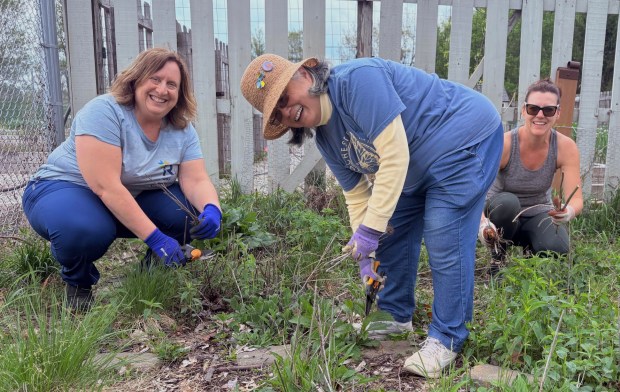 Volunteers participate in a spring cleanup of a Rochester pollinator garden. Rochester Pollinators relies on hundreds of volunteers who help maintain native plantings, educate residents and expand habitat for monarch butterflies, bees and other beneficial insects. (Courtesy of Rochester Pollinators)
The city’s partnerships have aided in its success, the NWF’s Fitzgerald said.
“The partnerships that the city has forged with Rochester Pollinators and the City Beautiful Commission have really helped,” he said. “Those partnerships have enabled the city to do more than it could do on its own.”
The ripple effect is already spreading.
The Pollinators’ Trent noted that Rochester’s efforts have inspired Auburn Hills, Rochester Hills and Grosse Pointe Park to participate in the NWF’s Monarch program.
Planting a forest for the future
Among the organization’s most ambitious projects is Rochester’s first miniature forest. Planted in May 2025 on a former municipal dump site, the 1,000-square-foot forest uses a dense planting approach developed by Japanese botanist Akira Miyawaki.
The project includes 290 trees and shrubs native to Michigan planted closely together to accelerate growth and mimic a natural forest. The dense mix of species boosts biodiversity by providing more forage for pollinators, shelter for birds and insects, and healthier soil through increased leaf litter. The diverse canopy also helps suppress weeds and improves the forest’s resilience against disease.
The site was transformed through partnerships with thePollinators, the city’s public works department, City Beautiful Commission, Rochester High School student volunteers and grants from the Community Foundation of Greater Rochester.
Beyond capturing carbon and improving water retention, the miniature forest is expected to provide habitat for birds and support hundreds of pollinator species.
Trent hopes it can serve as a model for communities across Michigan.
Looking ahead
The Pollinators currently partner with Detroit-based Cass Community Social Services to help landscape tiny-home communities with native plants and no-mow lawns. Trent is also preparing to launch a podcast, “We Have a Plant for That,” highlighting environmental advocates and native gardening success stories.
For residents interested in helping Monarch butterflies and other pollinators, both Trent and Quesenberry offer the same advice: start small.
“You don’t need to transform your entire yard overnight,” Trent said. “Start with a pollinator garden, or even just a few native plants.”
Quesenberry agrees.
“Every native plant is a step in the right direction,” she said. “It can be a garden bed, a small corner of your yard, or even a container garden. Our survival is dependent on theirs.”
For more information, volunteer opportunities, native plant resources or upcoming plant sales, visit Rochester Pollinators.