
As we celebrate the U.S. semiquincentennial, or the 250th anniversary of the United States’ independence this Fourth of July, there is no better way to commemorate the generations of hard work and dedication that have influenced the nation than by exploring the University of California, Berkeley. As the first UC, UC Berkeley has played a key role in the course of American history, allowing students and faculty to learn and make history through its diverse array of departments.
Join me on a tour of the campus as we discover some historic sites where UC Berkeley has contributed to the nation’s growth, representing the spirit of exploration and opportunity that has driven America forward.
Our first stop is the iconic Hearst Memorial Mining Building, a stunning example of Mediterranean and California mission-style architecture. Built in 1907 as a memorial to mining magnate and U.S. Sen. George Hearst, this building was once one of the world’s largest facilities dedicated to mining education. In the early 1900s, following the California gold rush of 1848, mining was among the most popular majors at UC Berkeley, which had a student population that numbered in the low thousands at the time. The Lawson Adit, a horizontal mine tunnel near the building, provided a space for aspiring miners to gain experience with drill rigs and dynamite. While the adit is now sealed off, the building still stands as a reminder of California’s rich mining history and its impact on the region’s rapid urbanization.
Continuing our journey, we arrive at Gilman Hall, located at the heart of the UC Berkeley campus. Envisioned by Gilbert Newton Lewis, dean of the College of Chemistry, as the “ultimate chemistry laboratory” in the United States, this building has been the site of landmark discoveries since its completion in 1917. It was within these walls that Glenn Seaborg and his colleagues first identified plutonium in 1941, a finding that later earned them Nobel Prizes and contributed to the Manhattan Project during World War II. Gilman Hall was also where William Giauque conducted his Nobel Prize-winning research on the properties of matter at temperatures near absolute zero. In recognition of its meaningful contributions to scientific research, the building’s “attic” was declared a National Historic Landmark in 1966.
Next, we make our way to Sproul Plaza, a space that has been at the forefront of student activism and political movements for decades. On Oct. 1, 1964, student activist Mario Savio delivered a historic speech from Sproul, denouncing the university’s ban on political activism on campus and calling for free speech. This helped catalyze the Free Speech Movement, which quickly spread to other college campuses nationwide. The campus witnessed the Third World Liberation Front strikes of 1969, which led to the establishment of the nation’s first collegiate ethnic studies department at San Francisco State University, with the second at UC Berkeley itself. In the 1980s, anti-apartheid protests held on Sproul contributed to the university’s decision to divest from companies operating in South Africa. The continuing spirit of activism in Sproul Plaza has reminded generations of students of their unique role in shaping the future.
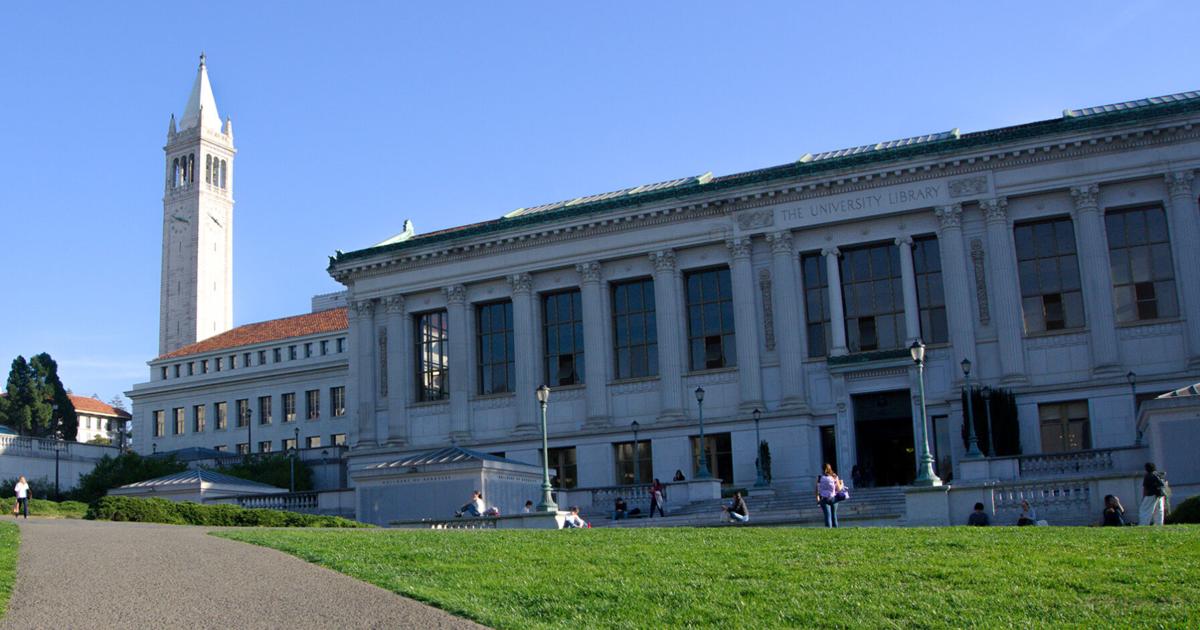
As we climb the steps to Doe Memorial Library, we encounter the Mark Twain Papers, vast archives of the renowned author’s work and personal documents. UC Berkeley has meticulously preserved hundreds of Twain’s original works, letters, first editions, photographs, manuscripts and documents related to his family and colleagues, maintaining an essential piece of the nation’s literary culture.
The Bancroft Library, housed in a building annexed to Doe Library, has an extensive collection of rare manuscripts, such as the History of Science and Technology Collections, which explores the scientific inventions and natural history of California and the American West. In addition, the library’s pictorial collections showcase memorabilia of Native Americans in California, the 1906 San Francisco earthquake and fire, LGBTQ+ history, Yosemite and the state’s diverse wildlife. By preserving these materials, the library commemorates multifaceted experiences across the United States.
As we venture into the hills north of campus, we reach Lawrence Berkeley National Laboratory, whose origins trace back to a room in the Physics Building. Founded by physicist Ernest Lawrence in 1931, the lab’s best-known achievement is the cyclotron, a groundbreaking particle accelerator invented by Lawrence that revolutionized the study of subatomic particles.
As Lawrence’s ambitious projects outgrew the main campus, he moved his Radiation Laboratory into the Berkeley Hills. The lab played a key role in the early stages of “big science,” particularly during World War II, when J. Robert Oppenheimer and his team of theoretical physicists worked on designing the atomic bomb as part of the Manhattan Project, before relocating to Los Alamos, New Mexico. Over the decades, Lawrence Berkeley National Laboratory has been a center of innovation, with its scientists earning an impressive 17 Nobel Prizes. Today, the lab continues to push the boundaries of scientific knowledge, cementing its place in history.
In the present day, UC Berkeley continues to maintain its lead in addressing the most pressing issues of the 21st century. Its facilities are dedicated to tackling climate change and the ethical advancement of artificial intelligence to empower students to become the leaders of tomorrow.
Wherever you set foot on this historic campus, you will continue to encounter locations that have hosted brilliant thinkers and birthed world-changing inventions. As new generations of students, researchers and faculty carry on this legacy of excellence and impact, UC Berkeley’s influence is set to resonate across the nation and around the world for years to come.
Happy 250th anniversary, America!