
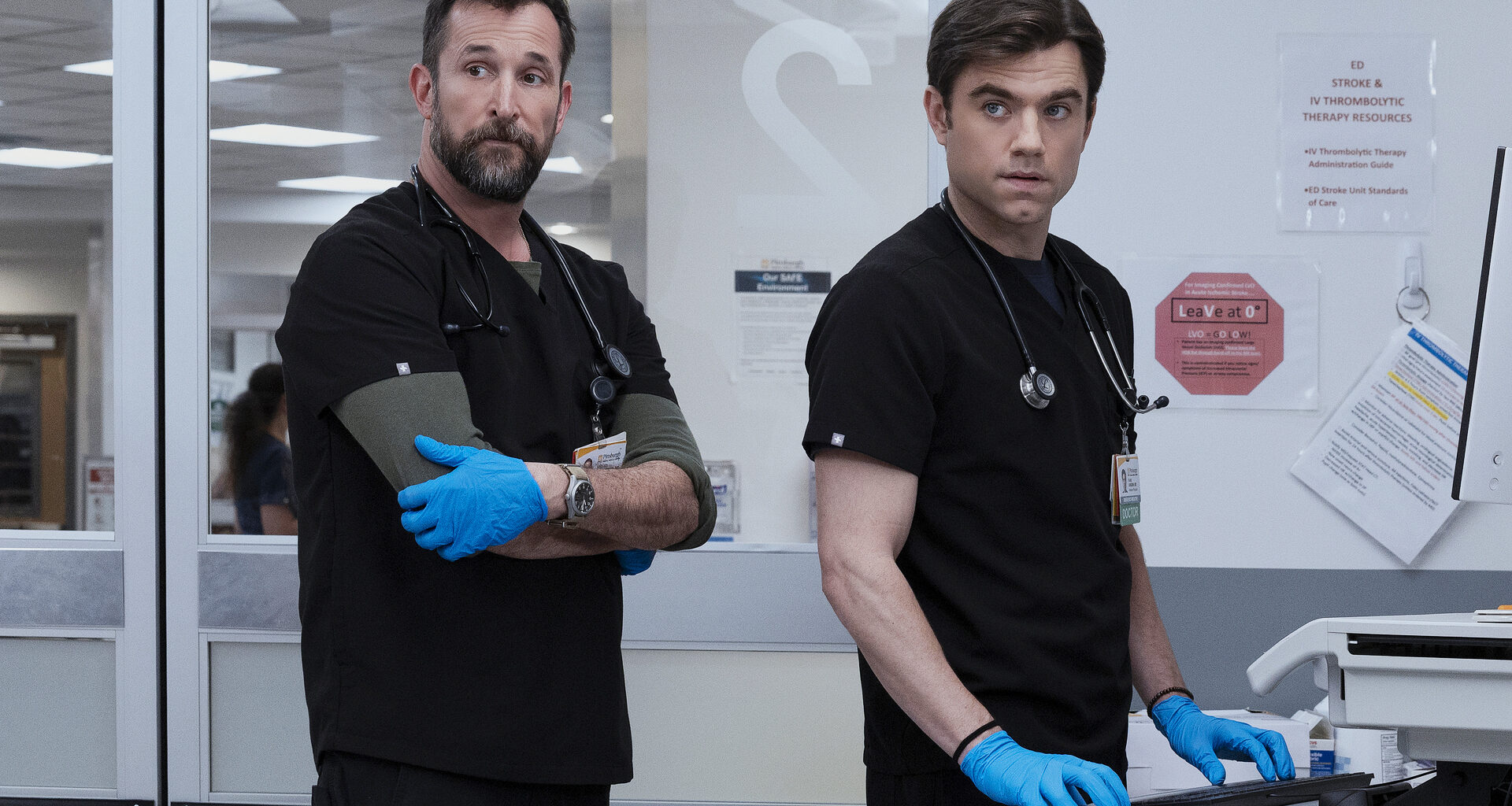
In a guest column that ‘The Pitt’ lead actor and executive producer wrote for Deadline, Wyle described how the show makes the most of tax incentives to benefit its production and the L.A. community
Healthcare workers at the fictional Pittsburgh Trauma Medical Center are doing more to support their community than just saving lives on screen. Because the actual filming location of the hospital drama series is in Los Angeles County, these heroes are also doing their part to save ailing film and television production in L.A.
Even with California’s $750 million annual tax-incentive program, the number of television series filming in L.A. are dwindling, and jobs in the industry have been declining for years. Candidates in both the L.A. mayoral race and California’s gubernatorial race have debated ways to boost production, in order to compete with foreign countries like the United Kingdom and Canada which have more favorable incentives for filmmakers.
Still, some creatives are committed to supporting the L.A. film and TV industry. The Emmy-award-winning TV series The Pitt, began filming its third season last week, and as with its first two seasons, is set to be filmed almost entirely in soundstages on the Warner Bros. Discovery Studio lot in Burbank, according to Deadline.
Lead actor and executive producer of the show, Noah Wyle, wrote a guest column for Deadline outlining how the series maximizes the benefits of filming in L.A., and how the show could serve as a replicable model for others to afford to head back home to Hollywood.
“As an Angelino, my biased advocacy for Los Angeles-based film and tv production is rooted equally in prayer for its ongoing legacy and concern for the livelihood of the creative community that built it,” Wyle wrote. “The Pitt’s phenomenal success has marked it both an artistic achievement and potentially viable production model.”
Despite the advantages of filming in L.A. which Wyle stated — a 35% tax incentive, local crew and talent, existing infrastructure, specialized vendors, permitting offices and major financing, to name a few — Wyle said production has been declining.
According to Wyle, the entertainment industry has lost 42,000 jobs, and it is estimated that location film and TV production has declined between 30% and 50% in the last five years. Soundstage occupancy has dropped from 90% in 2022 to 62% last year, Wyle said. In 2025, 80 family-owned production businesses, like prop houses and equipment rental companies, closed as a result, according to Wyle.
Despite the fact that The Pitt is set in Philadelphia, Wyle said they were committed to shooting in L.A. from the beginning, and to figuring out a cost-effective way to do so.
Scroll to continue reading
Here is how they did it.
The Pitt produces 15 episodes per season, during an almost 8-month production period, which Wyle said makes it a “veritable production Unicorn in this town.” The number of episodes typically produced has declined from the previous industry standard of 22-episodes per season for a network drama like The Pitt, according to Wyle.
The Pitt also benefits from filming on a soundstage. According to Wyle, the set cost $4 million to construct, which may seem like a steep expense, however, because the entirety of the show takes place within the building, Wyle said “that cost is amortized over the life of the show.”
By not filming on location, Wyle said they are able to reduce transportation costs, location fees, security expenses, catering and parking permitting which would typically make up a hefty portion of production costs. Additionally, given that the lighting is embedded within the set’s ceiling, The Pitt’s director of photography “saves hours of production time, maximizing each shooting day,” Wyle said.
Outside of their own efforts to reduce costs, they take full advantage of the California tax incentive. According to Wyle, the show received just under $25 million in incentives for seasons one and two, reducing the $6.6 million budget per episode by $760,000. That means each season they saved a little over $11 million — the cost of producing two full episodes, Wyle said.
Wyle said The Pitt has had a direct economic impact of $125 million on the California gross domestic product, employed over 1,000 people and supported 200 local businesses. This is the benefit of film production to the city — not only does it create jobs in the entertainment industry, it can also stimulate economic growth and positively impact the state’s GDP.
Still, Wyle said filming in L.A. does pose its own set of challenges.
“Doing this show in L.A. requires the discipline to continually face production obstacles and make them features instead of bugs; to turn the limitation into a frame,” Wyle wrote. “Basically, let necessity be the Mother of invention.”
As for whether The Pitt is a replicable model, Wyle wrote that, “It’s hard not to have faith when you’ve seen proof of concept made manifest.” He also cited the recent slight uptick in L.A. production as a positive sign that other shows may be realizing that shooting in L.A. is still a possibility. And not only is it possible, it can be an asset to the city, and to the productions themselves.
“[In L.A.] There’s tax incentives, top of the line infrastructure, local access to specialized vendors from SPX make-up prosthetics to digital graphics, the deepest cast and crew talent pool available in the world,” Wyle wrote, “And you just can’t beat the weather.”