
LAKE TAHOE, Nevada. — Golden mussels are creating a growing challenge for California’s waterways, and environmental advocates say the state still lacks a consistent strategy to prevent the invasive species from spreading.
“It’s been almost two years since golden mussels were first discovered, and we don’t have consistency in those regulations,” said Laura Patten, Natural Resource Director for Keep Tahoe Blue.
The mussels have already forced several counties to declare emergencies, while agencies across California work to slow their spread.
But as officials respond, one major question remains: why are some waterways requiring boat inspections while others are not?
Advocates argue that without consistent prevention measures across the state, one waterway’s efforts could be undermined by another’s weaker protections.
“Golden mussels are really replicating at a rapid rate, and they don’t recognize jurisdictional boundaries,” said Patten. “So, if one major water body has weaker protections, then we’re concerned that every connected water body in the state of California faces a greater risk.”
Patten says California needs a more unified approach when it comes to preventing the spread of golden mussels.
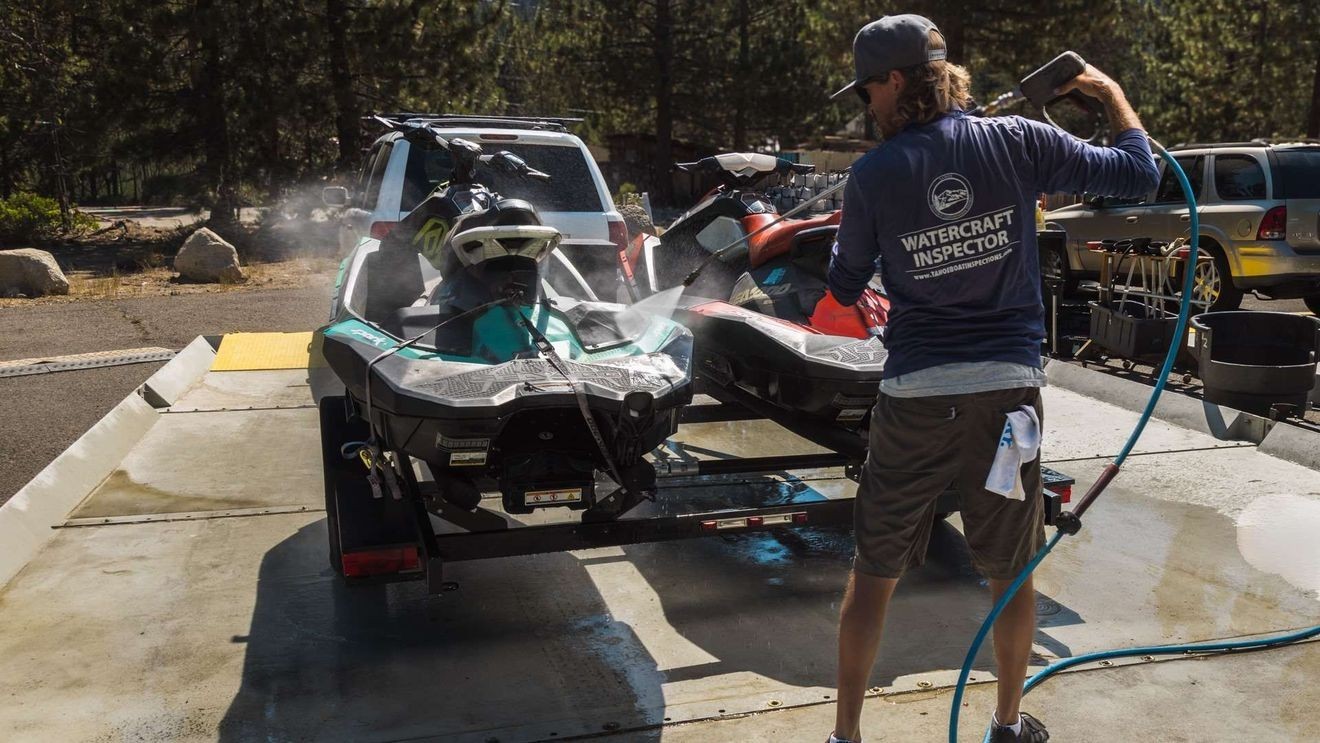
She points to Lake Tahoe’s prevention program as an example, where officials require watercraft inspections and decontamination efforts to help keep the invasive species out.
But she says those efforts only go so far if other waterways are not following similar measures.
“We were disappointed to see that Lake Oroville rolled those protections back,” Patten said. “Our water protections are really only as strong as our weakest link.”
The criticism comes after the California Department of Water Resources ended mandatory watercraft inspections and decontamination requirements at Lake Oroville, saying updated analysis showed a lower risk of golden mussels becoming established there. DWR says Lake Oroville remains free of golden mussels and that monitoring and testing will continue.
DWR says its decision was based on additional analysis of golden mussel biology, habitat conditions, infrastructure vulnerability, and seasonal water temperatures at Oroville. The agency says it will continue working with state and local partners on prevention efforts, including public education and monitoring.
While advocates push for statewide consistency, lawmakers say funding is also needed to help communities already dealing with the threat.
Assemblymember Rhodesia Ransom secured $6 million in funding aimed at helping five Delta counties with decontamination, boat inspections, and other prevention efforts.
Ransom says the money is intended to provide immediate support while broader policy discussions continue.
But Ransom says funding alone will not solve the issue without a coordinated statewide approach.
“I don’t think it’s fair that some folks are doing these inspections and then others are not,” Ransom said. “Because what happens is if you’re going from an area that does not have inspections to another area, you could potentially be setting them back.”
“We don’t want to throw good money after that,” Ransom said. “The whole point of this funding is to start focusing on decontamination at the same time that we’re working on a bigger plan.”
Who decides when inspections are required?
Ransom says the California Department of Fish and Wildlife. She explains it has the power to mandate.
The California Department of Fish and Wildlife tells FOX26, it does not.
It said, “CDFW does not have authority to require inspections at all waterbodies of the state, nor does it have authority to define the details of any managing agency’s mussel prevention program. This authority, and responsibility for preventing invasive mussel introductions, lies with the water manager. CDFW encourages and supports all responsible agencies in standing up and implementing mussel prevention programs. In addition, CDFW is actively engaging with water managers to develop voluntary standards and procedures, and enhanced coordination and communication around inspection programs.”