
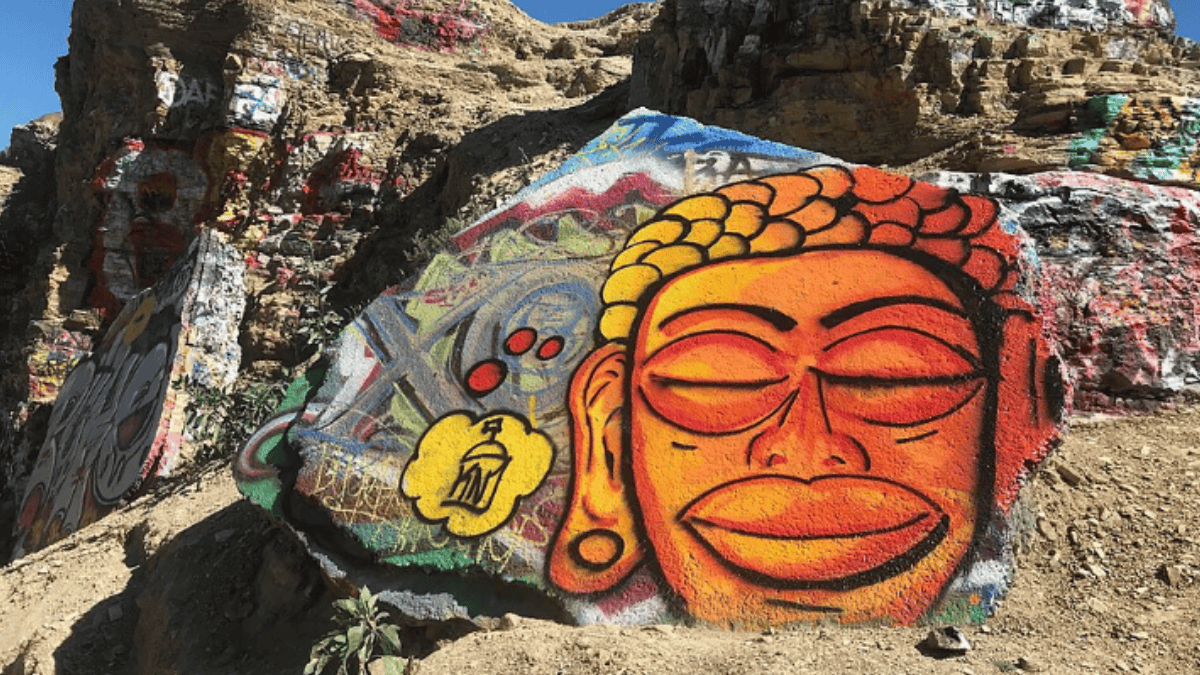
Los Angeles is considering partially reopening the long-abandoned Sunken City. Currently, only the upper part of the site is being considered for reopening, as the lower section is still deemed too dangerous for residents.
Officials have been weighing the move since at least February. That month, the LA City Council approved funding for a project to begin this process.
Per the Council documents, the project entails studying the site to determine the safety measures needed to be installed and the physical conditions that require improvement.
So far, leaders are mulling replacing the area’s current fence with a more secure barrier. This would keep residents safer while providing them with a closer look at the historic ruins.
For this, LA leaders have to get a Coastal Development Permit, but this process could take months.
“While we don’t have a precise timeline for reopening, we have informed the local neighbors that it may take another full year,” Sophie Gilchrist, communications director for Councilmember Tim McOsker, told LAist. “The project is actively moving forward.”
Officials have to submit an application detailing their development or construction plans along the coastline. Regulators then review the plan to make sure it would not negatively affect the environment and may allow residents to voice their opinions. The proposal will then be approved, denied, or approved with additional conditions.
About Sunken City
Today, Sunken City is off limits to Californians.
With the site’s concrete slabs, unstable cliffs, and coastal erosion, it is a dangerous zone. If anybody were to slip or fall, it would be hard to rescue them.
Despite the dangers, some locals and visitors still enter the area. If caught, they will have to pay a $450 fine.
Most people keep out of harm’s way. But due to Sunken City’s history, many locals, tourists, and photographers visit Point Fermin Park and Pacific Overlook Park to view the area.
Before the site became Sunken City, it was a coastal neighborhood in San Pedro established in the early 1920s by George Peck. The community enjoyed a few years of success.
But later that decade, locals began noticing broken pipes, damage to their homes, sidewalk cracks, and the ground shifting.
These were warning signs of the gradual landslide that began in 1929 and left the neighborhood nearly demolished by 1941.
During those 12 years, Sunken City’s grounds shifted 30 feet down and over 30 feet toward the sea, which caused the site’s hazardous conditions.
It is unclear exactly when the area was considered officially closed. But a 1987 report from the Los Angeles Times described the neighborhood as being closed for five decades.
That year, LA officials installed a steel fence around Sunken City to limit illegal trespassing.
Yet that did not stop trespassers, which is part of the reason LA leaders want to establish a safe viewing area at the site itself.