
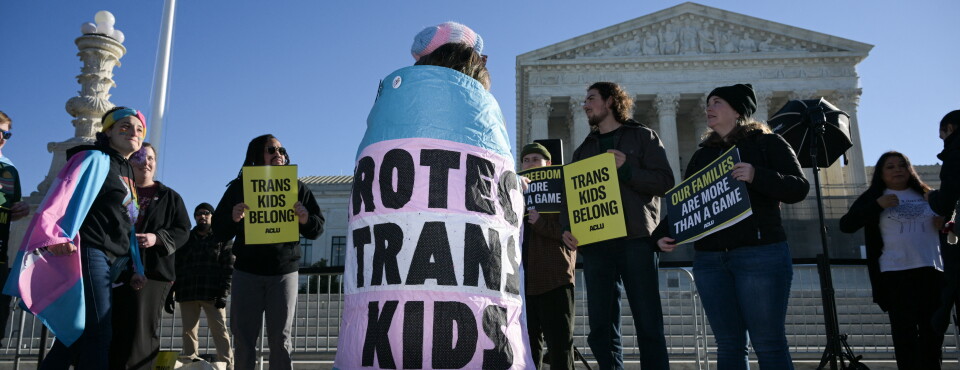
The US Supreme Court answered one of the most contentious Title IX questions in recent years by holding that states may limit participation on girls’ and women’s athletic teams based on biological sex. But the decision doesn’t end the debate over transgender student-athletes. For states like California, it alters the legal battleground.
The court decided whether states such as West Virginia and Idaho may adopt biological sex eligibility rules. It deliberately declined to decide whether state laws and regulations including California’s, which require participation consistent with gender identity, also comply with Title IX. That unanswered question may prove to be the decision’s most significant consequence.
In West Virginia v. B.P.J. and Little v. Hecox, the court held that Title IX allows schools to maintain separate athletic teams based on biological sex and that states may limit partipipation on girls’ and women’s teams to biological females without violating the Equal Protection Clause. Equally significant, the court declined to extend Bostock v. Clayton County into the Title IX athletics context.
The majority distinguished Bostock as an employment discrimination case decided under Title VII and emphasized that Title IX expressly permits sex-segregated teams. Justice Neil Gorsuch, who wrote the Bostock decision, joined the majority and wrote separately to explain why he viewed the two decisions as consistent.
The court’s treatment of Bostock is likely to influence future disputes over the relationship between Title VII – which prohibits discriminatory practices based on race, religion, sex, and other protected characteristics – and Title IX. In recent years, litigants have frequently relied on Bostock to argue that discrimination based on transgender status is also discrimination based on sex under Title IX.
By distinguishing Bostock rather than extending it, the court signaled that Title VII precedent won’t automatically control the interpretation of Title IX, particularly where Title IX contains provisions unique to educational athletics. Whether that distinction remains limited to athletics or extends to other Title IX disputes will likely become an important question in future litigation.
Equally important is what the court didn’t decide. The opinion repeatedly says that states may adopt eligibility rules based on biological sex but never that states must do so. The court also didn’t decide whether Title IX permits states to allow participation consistent with a student-athlete’s gender identity.
That distinction matters because the court upheld one approach to Title IX compliance without holding that it is the only permissible approach. As a result, states that have adopted different legal frameworks, including California, aren’t required to change those requirements based on B.P.J. alone. Whether those policies ultimately comply with Title IX remains an open question.
The majority emphasized that questions involving transgender student-athlete participation present policy choices for legislatures and school officials, not courts. That distinction is significant for states that have adopted a different approach to transgender student-athlete participation.
For California educational institutions, the decision doesn’t change the immediate legal landscape. California law continues to govern student participation in athletics. That is important because the Supreme Court’s decision doesn’t displace California’s existing legal requirements or authorize educational institutions to disregard them. Public K-12 schools remain subject to Education Code section 221.5, subdivision (f), which requires schools to permit students to participate in sex-segregated school programs and activities, including athletics, consistent with their gender identity.
California Interscholastic Federation eligibility rules also remain in effect. At the community college level, California Community College Athletic Association eligibility rules governing participation by transgender student-athletes likewise remain unchanged. Nothing in B.P.J. invalidates those statutes or athletic association rules. Until those governing rules change, they remain the primary source of direction for California educational institutions.
That doesn’t mean California escaped the decision’s impact. Although California’s laws remain in effect, B.P.J. is the Supreme Court’s first decision addressing Title IX and transgender student-athlete eligibility. That guidance is likely to influence how courts evaluate future challenges involving transgender student-athlete participation.
The decision arrives as the Department of Education continues to pursue investigations and enforcement actions involving transgender student-athlete participation, including matters involving California educational institutions as well as intercollegiate and interscholastic athletic associations.
Although those enforcement actions are distinct from the Supreme Court’s decision, B.P.J. is likely to become an important part of the federal government’s legal framework when evaluating athletic eligibility requirements. The decision provides the Department of Education with the Supreme Court’s first guidance on Title IX and transgender student-athlete eligibility, even though it leaves important questions unresolved. California educational institutions therefore must continue navigating both state law and an evolving federal enforcement landscape.
Educational institutions shouldn’t rush to rewrite athletic policies; they remain subject to applicable California statutes and athletic association rules while closely monitoring federal enforcement, additional litigation, and any legislative developments. Institutional leaders should be prepared to explain why their legal obligations under California law remain unchanged despite the Supreme Court’s decision.
The Supreme Court didn’t change California’s legal obligations overnight; it changed the legal framework in which courts and federal agencies will evaluate those obligations. The justices answered one important Title IX question. The next Title IX battle will likely focus on the one it left unanswered, and California almost certainly will be at its center.
The cases are Little v. Hecox, U.S., 24-38, 6/30/26 and West Virginia v. B.P.J., U.S., 24-43, 6/30/26.
This article does not necessarily reflect the opinion of Bloomberg Industry Group Inc., the publisher of Bloomberg Law, Bloomberg Tax, and Bloomberg Government, or its owners.
Author Information
Jenny Denny, an associate in Liebert Cassidy Whitmore’s Los Angeles office, is an education and employment law attorney who advises public and private education institutions.
Interested in writing? Review our author guidelines, and submit pitches to Insights@bloombergindustry.com.