
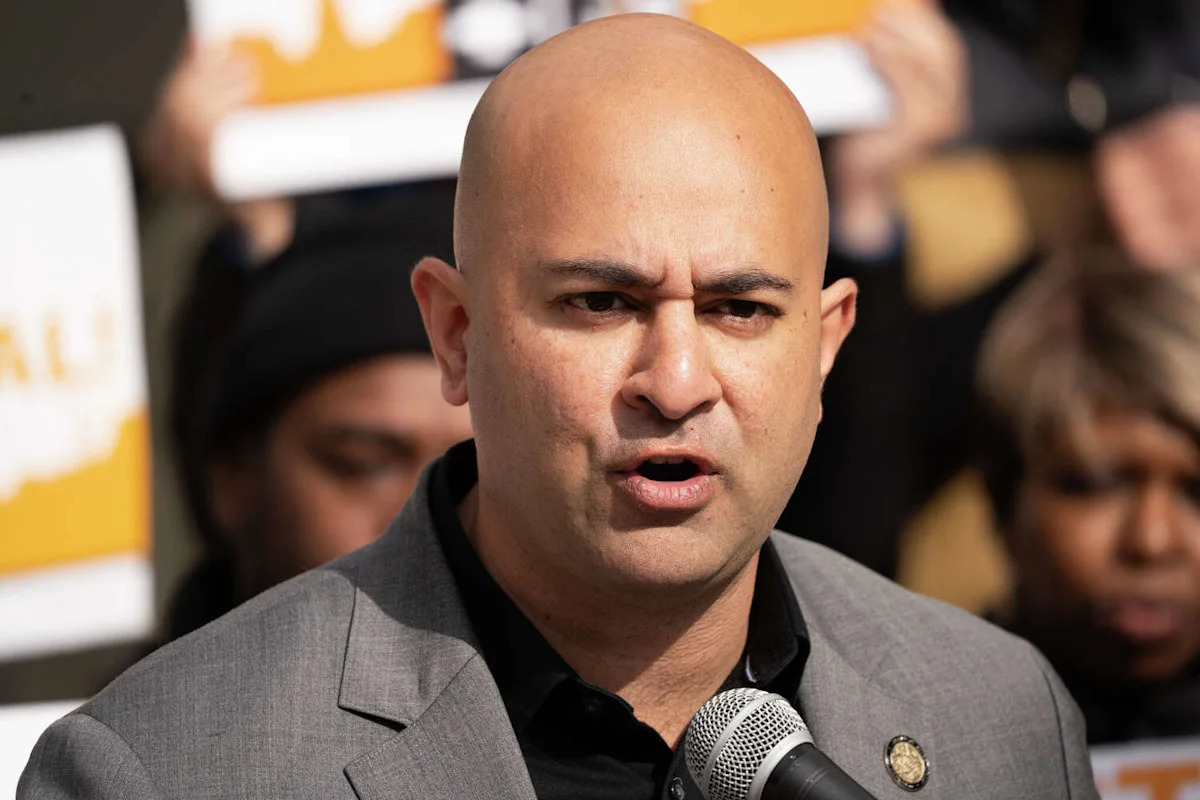
When Supervisor Bilal Mahmood unveiled his recent proposal to levy a tax on vacant grocery stores, he framed it as part of a plan to eliminate neighborhood “food deserts” where San Francisco residents lack convenient access to affordable kitchen staples.
Now, as Mahmood’s plan runs into stiff political resistance, skeptics are emerging to make the opposite case: that his tax plan could actually hinder the opening of new grocery stores in San Francisco. Mayor Daniel Lurie came out against the tax, as did the Chamber of Commerce. Some community leaders have questioned the proposal, and a major developer told the Chronicle that it would scuttle plans to bring a new grocery store to the site of the shuttered Fillmore Safeway.
“Penalizing things that are not economically viable is not a (good) policy solution for the retail challenge,” said David Harrison, the chamber’s public policy director. “I really appreciate the supervisor for working on this, and we’re committed to continuing to work with him, but we’re just not yet convinced that the policy as it’s written today is going to meaningfully impact grocery and pharmacy vacancies.”
Mahmood insists that his tax plan, part of a larger effort to reduce food insecurity in San Francisco, would not deter new grocers from opening because it would only regulate existing store locations. Still, the growing chorus of critics to his proposal has cast its political future into serious doubt, coming after the supervisor blasted Lurie and Supervisor Connie Chan over claims that they interfered with his efforts to bring the idea to voters this fall. The dispute also appeared to deepen tension between Lurie, and Mahmood, who has largely been an ally of the mayor’s since they both took office in 2025.
In a Tuesday email obtained by the Chronicle, community advocate Diane Matsuda said she thought Mahmood’s tax measure had “the potential to dissuade new grocery store-landowners from wanting to come into Japantown,” the neighborhood just north of the Fillmore. Mahmood, who was forwarded Matsuda’s email by another local leader, assured her that his tax proposal “only regulates existing stores” and would not impact new ones.
Matsuda, who did not immediately return a request for further comment, appeared relieved. She wrote to Mahmood in response that “it is great to hear that your proposed legislation will not deter any potential businesses from joining our community.”
Yet that view is not shared by the developer seeking to remake the closed Fillmore Safeway into a housing complex with a new grocery store. In a statement to the Chronicle on Friday, Align Real Estate said Mahmood’s proposal would derail its work to bring a new market to the Fillmore. The developer believes the tax would make it harder to secure financing for a store’s construction and would introduce too much risk to attract a long-term grocer to the former Safeway site.
David Balducci, an Align executive, said in his statement to the Chronicle that “the proposed grocery tax would make it harder – not easier – to bring affordable food to the Fillmore.”
“We are committed to making San Francisco more affordable by building housing and bringing a full-service grocery store back to the Fillmore, but if the grocery tax moves forward it would end our ability to pursue a store at this site,” Balducci said.
Mahmood accused Align of “misleading the public.” He said the Fillmore Safeway site would be taxed under his plan, but the company could avoid the levy by finding another grocer or farmers market to set up there temporarily, for example. Instead, the property has sat vacant since Safeway left it in February 2025, much to the concern of community members outraged by the closure. It’s unclear when Align’s project, which includes building more than 1,800 homes on the site, might be completed.
“Actions speak louder than words,” Mahmood told the Chronicle. “The abandoned pharmacy and grocery tax is structured in such a way that it doesn’t affect new stores. It actually taxes Safeway, not Align, and it creates no disincentive for new stores to open.”
Mahmood included the tax in a two-part legislative package he called the Affordable Groceries Act. He was hoping to secure a majority vote from his Board of Supervisors colleagues to put both parts of the package on the city’s Nov. 3 ballot.
Mahmood’s proposal was partly inspired by one of New York Mayor Zohran Mamdani’s signature plans: a push to open publicly owned grocery stores to bring down the cost of food. Under the first part of Mahmood’s package, San Francisco would create a fund to help convert corner stores into markets selling affordable produce and pantry items. The city wouldn’t run its own stores but could use the fund to buy vacant spaces and lease them to low-cost grocers.
The tax was enshrined in the second component of Mahmood’s legislative package. It’s intended to apply only to big grocers and pharmacies that have empty stores in San Francisco at the end of this year. The tax would start at $3 per square foot and increase in future years if the properties stay empty.
While the first part of Mahmood’s package – the grocery store fund – may still move forward, the fate of the tax measure was thrown into serious doubt on Thursday. That’s when Mahmood said that Chan, at Lurie’s request, declined to schedule a Board of Supervisors committee vote on his tax measure next week, imperiling his chances of meeting a July deadline for local lawmakers to put measures on the Nov. 3 ballot.
Mahmood accused Chan of exploiting her position as chair of the board’s budget committee to “block things through bad governance.” And he said Lurie had been “disrespectful” by interfering with the board’s procedures. In response, a Chan aide said she supported Mahmood’s intent but thought his plan needed more work, while a Lurie spokesperson said more taxes won’t help open new grocery stores. The mayor still supports the fund Mahmood proposed.
Mahmood on Friday characterized the overall pushback to his tax as the result of politics more than anything else.
“Some people philosophically don’t want big corporations to be taxed, and that is an ideological thing for them, regardless of the policy,” he said.
He said he’s still hoping that Board of Supervisors President Rafael Mandelman might allow all supervisors to vote on the grocery store tax in time to put it on the November ballot. Mandelman did not return a request for comment Friday.
Subscribe
There’s more to San Francisco with the Chronicle. Subscribe today for just 25¢.
This article originally published at Exclusive: Fight over vacant S.F. grocery store tax escalates with new critics speaking out.