
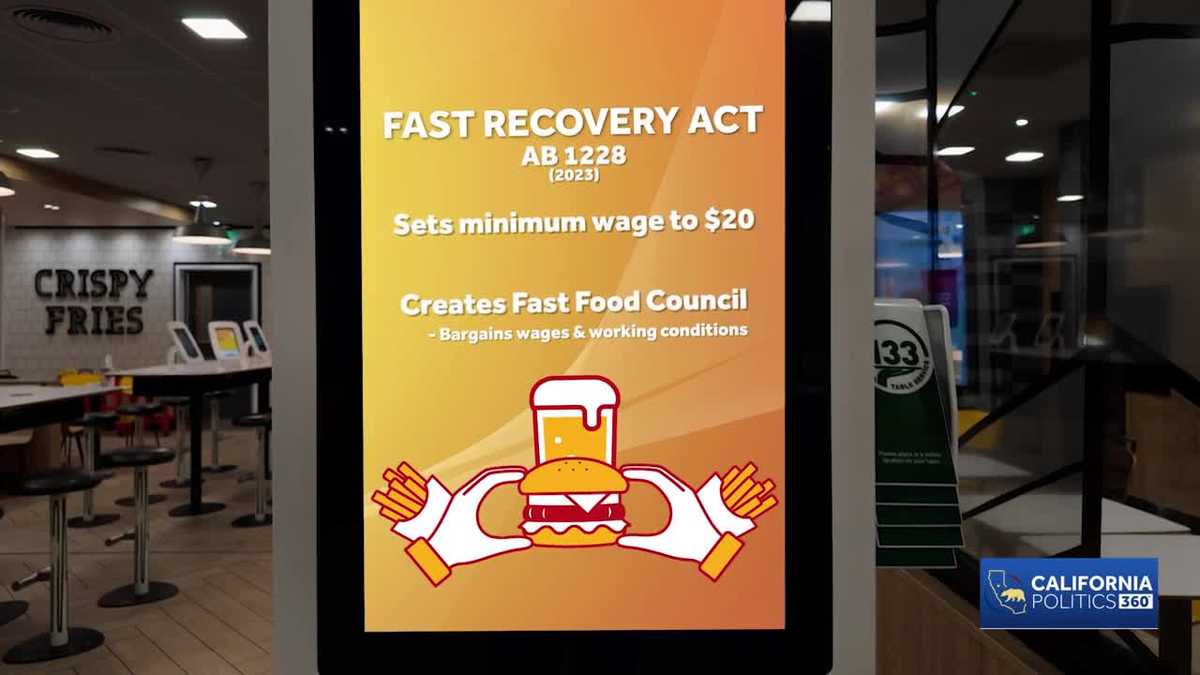
California’s first in the nation fast food council has not met as a full group in nearly two years and has been without a leader for more than a year, raising questions about its future. The council, made up of fast-food workers, union leaders, and franchisees, was created under a 2023 state law that set a $20 minimum wage for employees of large fast-food corporations. The council was meant to bargain the wages and working conditions for California’s fast-food workers. The council’s action has been anything but fast. Despite calls for help from workers and business owners, three years after its creation, the council has made zero decisions. The council’s last full meeting was in September of 2024.The California Department of industrial Relations oversees the council. A spokeswoman for the department, MariCarmen Estudillo, noted a smaller subcommittee of the council met twice in early 2025 but said the council will not meet again until a new chairperson is appointed by the governor.Governor Gavin Newsom, who is responsible for appointing the council’s next leader, addressed the delay during a press conference. The governor denied the council is going defunct. “That appointment will be made,” Newsom said during a press conference earlier this week. “We have 4,000, I think, appointments that I make, so there are hundreds, and hundreds and hundreds—quite literally—that have been vetted and they are just waiting for my final decision, and I am hopeful that’s in there as well.”Last year’s budget included $1.1 million for the council to hire four staff people. Estudillo confirmed all four positions have been filled. “Staff members continue their day-to-day work supporting the Council’s mission, which continues without meetings,” Estudillo said. “This includes tasks that help the Council stay organized, meet legal requirements, and prepare for future convenings. On a regular basis, staff researches policy options, drafts materials and public outreach documents, reviews public feedback, and coordinates with agencies and stakeholders to ensure the Council has accurate and up-to-date information.”When asked for more specifics, Estudillo declined to comment further. California lawmakers created the council under AB 1228, which requires the council to meet no less than every six months.When asked if they intend to hold the Newsom administration accountable or enforce the law, California’s legislative leaders Assembly Speaker Robert Rivas and Senate Pro Tem Monique Limón declined to comment.Business owners still need clarity on the lawGaby Campbell, a Handel’s Ice Cream franchisee, has been asking for years if the fast-food minimum wage law applies to her business. She was told it was up to the council to figure out. “It’s day by day, we operate the best to our abilities, lots of young first-timers and provide the best place to learn,” Campbell said. “I just wish it was a little easier for us to know we were covered and not part of this fast-food craziness.” While franchisees like Campbell seek clarity on the law, fast food workers have been advocating for hearings on worker abuses, and another pay raise. Representatives from SEIU, the labor group that pushed for the law, were unavailable for an interview. “Either way, there’s no decision made, for us, against us,” Campbell said. “No decision made on whether the minimum wage can be raised again. I think everyone is at a standstill on this one.” KCRA 3 Political Director Ashley Zavala reports in-depth coverage of top California politics and policy issues. She is also the host of “California Politics 360.” Get informed each Sunday at 8:30 a.m. on KCRA 3.
California’s first in the nation fast food council has not met as a full group in nearly two years and has been without a leader for more than a year, raising questions about its future.
The council, made up of fast-food workers, union leaders, and franchisees, was created under a 2023 state law that set a $20 minimum wage for employees of large fast-food corporations. The council was meant to bargain the wages and working conditions for California’s fast-food workers. The council’s action has been anything but fast.
Despite calls for help from workers and business owners, three years after its creation, the council has made zero decisions. The council’s last full meeting was in September of 2024.
The California Department of industrial Relations oversees the council. A spokeswoman for the department, MariCarmen Estudillo, noted a smaller subcommittee of the council met twice in early 2025 but said the council will not meet again until a new chairperson is appointed by the governor.
Governor Gavin Newsom, who is responsible for appointing the council’s next leader, addressed the delay during a press conference. The governor denied the council is going defunct.
“That appointment will be made,” Newsom said during a press conference earlier this week. “We have 4,000, I think, appointments that I make, so there are hundreds, and hundreds and hundreds—quite literally—that have been vetted and they are just waiting for my final decision, and I am hopeful that’s in there as well.”
Last year’s budget included $1.1 million for the council to hire four staff people. Estudillo confirmed all four positions have been filled.
“Staff members continue their day-to-day work supporting the Council’s mission, which continues without meetings,” Estudillo said. “This includes tasks that help the Council stay organized, meet legal requirements, and prepare for future convenings. On a regular basis, staff researches policy options, drafts materials and public outreach documents, reviews public feedback, and coordinates with agencies and stakeholders to ensure the Council has accurate and up-to-date information.”
When asked for more specifics, Estudillo declined to comment further.
California lawmakers created the council under AB 1228, which requires the council to meet no less than every six months.
When asked if they intend to hold the Newsom administration accountable or enforce the law, California’s legislative leaders Assembly Speaker Robert Rivas and Senate Pro Tem Monique Limón declined to comment.
Business owners still need clarity on the law
Gaby Campbell, a Handel’s Ice Cream franchisee, has been asking for years if the fast-food minimum wage law applies to her business. She was told it was up to the council to figure out.
“It’s day by day, we operate the best to our abilities, lots of young first-timers and provide the best place to learn,” Campbell said. “I just wish it was a little easier for us to know we were covered and not part of this fast-food craziness.”
While franchisees like Campbell seek clarity on the law, fast food workers have been advocating for hearings on worker abuses, and another pay raise.
Representatives from SEIU, the labor group that pushed for the law, were unavailable for an interview.
“Either way, there’s no decision made, for us, against us,” Campbell said. “No decision made on whether the minimum wage can be raised again. I think everyone is at a standstill on this one.”
KCRA 3 Political Director Ashley Zavala reports in-depth coverage of top California politics and policy issues. She is also the host of “California Politics 360.” Get informed each Sunday at 8:30 a.m. on KCRA 3.