
If you’ve driven in Berkeley recently, your car’s license plate number has almost certainly been recorded and stored in a database used by the police to investigate crimes.
Strictly speaking, Berkeley owns the data, but the tools used to gather and store it are made by Flock Safety, a company that provides surveillance technologies — including automated license plate readers, drones, and gunshot detectors — to thousands of law enforcement agencies and communities across the U.S. Here in Berkeley, there are 52 Flock plate-reading cameras, and it’s still possible the city could contract with Flock for a separate network of fixed-surveillance cameras in the future.
But what exactly are these Flock plate reader cameras, how do they work, and why have they generated so much debate? We’ve sought to answer these and other frequently asked questions below. If you have a question we didn’t answer, please email editors@berkeleyside.org, and we’ll consider updating this post.
What is a license plate reader camera?
License plate reader cameras are surveillance tools that automatically record the license plate number of every vehicle that passes within their sight. They can be fixed to a pole or another stationary location, or a vehicle.
All these license plate scans become data that police use to investigate crimes. Officers can get real-time alerts when a camera spots a license plate that’s on a stolen or wanted car. Or, the police can search the database to trace a specific vehicle’s movements.
Berkeley has used Flock’s plate readers for nearly two years already.
What is Flock Safety?
Flock Safety is a law enforcement technology company that operates what it calls a “nationwide public-private safety network” of surveillance cameras, drones, license plate readers, and other devices. It has contracts with over 5,000 communities, 4,500 law enforcement agencies, and 1,000 businesses nationwide.
The company, based in Georgia, is valued at $7.5 billion and receives nearly $700 million in venture capital funding, according to its website.
One of Flock’s products is a line of license plate reader cameras.
How do Flock’s license plate reader cameras work?
Flock plate readers aren’t traffic cameras; they don’t measure a car’s speed or issue traffic tickets.
They do, however, continuously monitor vehicles and store the data in the Flock operating system, a portal where users can look up a vehicle’s plate number and see where that vehicle was spotted in the last 30 days without obtaining a warrant.
The plate-reading cameras also record what Flock calls a “vehicle fingerprint,” which includes the make, model, and color of the car, the state the license plate is registered in, whether the license plate is covered or missing, and unique features of the car — such as roof racks and bumper stickers — that would help law enforcement identify it in an investigation.
And Berkeley is also considering contracting with Flock on fixed-surveillance cameras?
The Berkeley Police Department has long sought to expand its surveillance partnership with Flock by adding fixed-surveillance video cameras, as well as drones, software and networks that can access private surveillance feeds. But in May, after pushback from privacy advocates, the City Council opted to hold off on the expansion until other tech firms have a chance to bid for the contract. And in June it signed off on bid solicitations for up to $2.4 million of upgrades across six areas of tech — plate readers, video cameras, community video feeds, software and two kinds of drones. Flock or another firm could end up getting all or some of those six contracts (vendors have until Aug. 20 to bid).
While both pieces of hardware are, in the most basic sense, cameras, the function of the plate readers is to grab data about what’s moving where and present it to officers in real time, while fixed surveillance cameras would capture more traditional video footage and store temporarily, the idea being that BPD officers could review camera footage if and when they determine a crime has occurred near one.
Berkeley has already had other networks of fixed security cameras for years, at San Pablo Park and the Berkeley Marina, and has more recently installed a single new camera at Sixth Street and University Avenue. Those cameras were not built by Flock, but by Pleasanton-based Edgeworth Integration LLC.
Berkeley had initially planned on buying a new cache of Edgeworth cameras but has since said they are not compatible with the city’s existing contract with PG&E. The more recently proposed Flock cameras are solar-powered, which would get around the power issue.
How did Flock’s plate-reading cameras end up in Berkeley?
Berkeley first started using ALPRs almost a decade ago, outfitting parking enforcement vehicles with readers built by a Canadian company, Genetec, in 2016.
Seven years later, facing spikes in auto theft and other crimes, BPD had hammered out use policy and more than 50 proposed locations for fixed ALPRs for criminal investigations, with Flock as the presumptive vendor.
The City Council approved up to $425,000 for a two-year contract with Flock later that year over the objections of the ACLU of Northern California and other privacy advocates.
Berkeley began installing the readers in 2024 and, by that October, had 32 up and running on city streets, while waiting on approvals for others in Caltrans rights-of-way, mostly along Ashby and San Pablo avenues.
Officers can access the network by mobile devices or computers installed in police cars, and must review images captured by the network to ensure the system did not misread a license plate or misinterpret a physical characteristic of the car in question in order to avoid any false hits.
How many Flock cameras are there in Berkeley, and where are they?
Berkeley currently has 52 Flock plate-reading cameras installed throughout the city. Flock manages “transparency portals” for many of the jurisdictions with which it contracts, Berkeley included, which list some limited statistics of the numbers of searches made on and vehicles detected by local ALPR networks.
A full list of Berkeley’s ALPR locations is available on the city’s website. Whether Berkeley will keep using Flock’s ALPRs after its contract runs out next year is an open question; the bid solicitation green-lit in June includes plate readers.
BPD’s network isn’t the only Flock system in town. The Uplands Claremont Area Neighbors group and another organization nearby at Hillcrest and Eucalyptus roads have installed a total of 11 other, privately monitored Flock plate readers that can feed information to BPD in real time if the system administrators choose to allow it.
The University of California Police Department uses Flock readers — installed under a pilot program ending in 2027 — at university housing projects in Albany and Emeryville. So far, UCPD has not brought any readers to UC Berkeley’s main campus, according to a university spokesperson.
Why does BPD want to keep Flock?
Berkeley police are perpetually understaffed and, according to Chief Jen Louis, have about 20% fewer sworn officers than they should. They have looked to surveillance technology like ALPRs, fixed surveillance cameras and, possibly, drones, not only as sources of new leads, but also as force multipliers for a department so hard-up for officers it had to re-draw its patrol map two years ago.
The readers can help BPD track stolen cars or cars tied to other crimes in real time. So far in 2025, Berkeley police have made “at least 52 arrests, including for commercial burglaries, robberies, sexual assault, homicide,” thanks directly to the readers, and used the network to help in another 29 cases, according to police.
With BPD long struggling to recruit new officers to keep pace with retirements and other departures, some council members have said more high-tech solutions are a sensible stopgap.
What do Flock cameras look like?
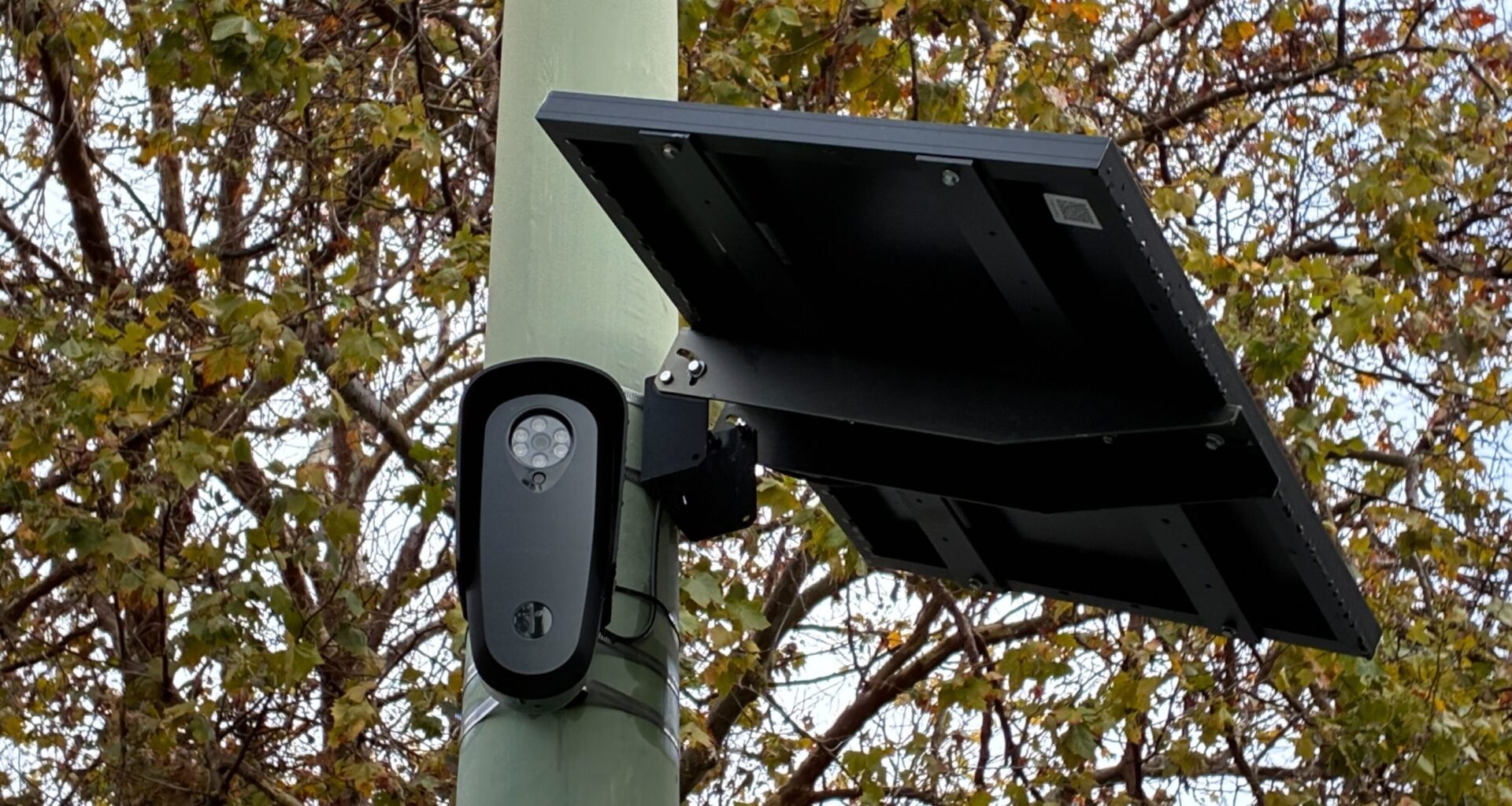
Flock sells different surveillance products, but the ALPR cameras in Berkeley are small black oval devices with a camera lens usually pointed directly at a busy lane of traffic. They have black square solar panels attached to power them. They’re typically mounted on poles near major intersections and freeway entrances and exits.
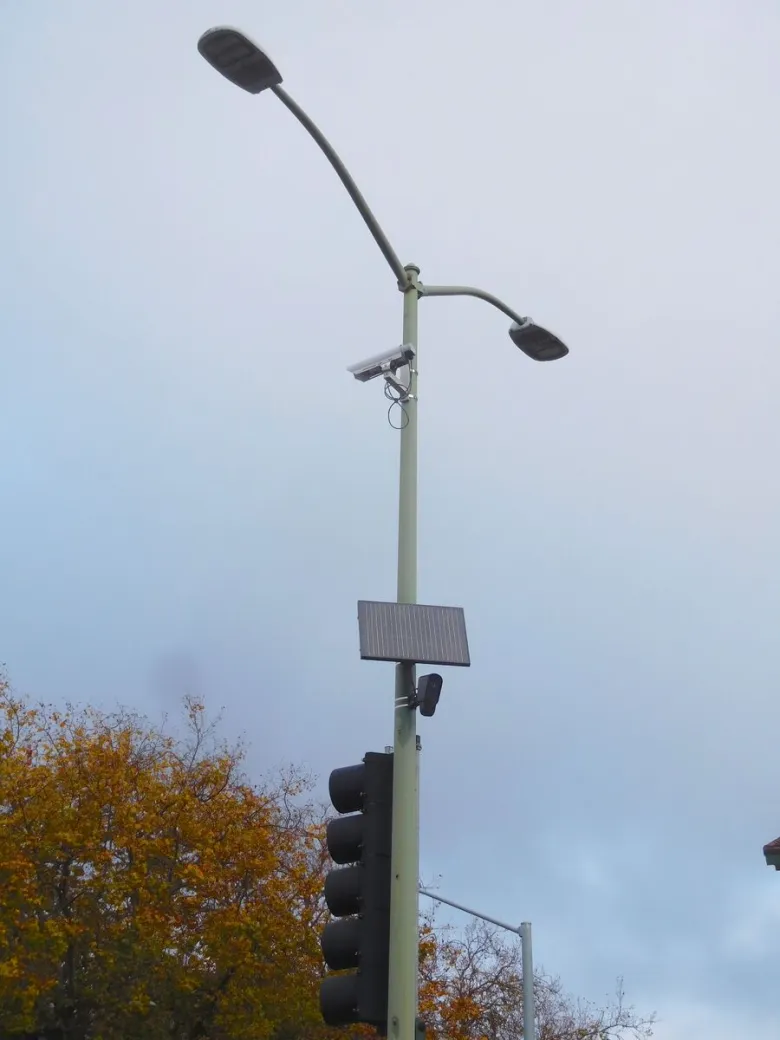 A Flock Safety automated license plate reader camera attached to a light pole, between a traffic camera (top) and a traffic light array. Credit: Darwin BondGraham/The Oaklandside
What are the arguments against Flock?
Civil libertarians and privacy advocates say that Flock is building a mass surveillance network that can track the movements of all Berkeley residents, not just those suspected of committing crimes. The 52 Flock readers in Berkeley currently identify roughly 700,000 vehicles each month.
Many have called into question the constitutionality of Flock devices, with civil liberties groups like the ACLU and the Electronic Frontier Foundation arguing that the technology infringes on Americans’ right to privacy under the Fourth Amendment.
“Automatic license plate readers have the potential to create permanent records of virtually everywhere any of us has driven, radically transforming the consequences of leaving home to pursue private life, and opening up many opportunities for abuse,” the ACLU has argued.
Flock says it doesn’t sell or share data to or with third parties. But concerns remain over how secure Flock’s data is and the loopholes users can take to access it.
Berkeley’s attorneys warned city leaders in a confidential memo, which leaked to the press in May, that a proposed contract with Flock could lay the city open to lawsuits based on federal and state laws and Berkeley’s own ordinances. The memo also cautioned that while Flock would likely agree to any security measures Berkeley could demand, “we cannot ensure Flock will abide by its contractual obligations,” and may not even be capable of doing so if they wanted.
TechCrunch reports that some lawmakers have called on the Federal Trade Commission to investigate Flock for allegedly failing to protect its system from hackers and foreign spies.
While Flock cameras don’t use facial recognition software or record people’s racial or ethnic identity, the Electronic Frontier Foundation, a nonprofit that advocates for digital privacy rights, found that over 80 law enforcement agencies nationwide have used racist language when searching Flock’s ALPR network.
Multiple cities nationwide have terminated their contracts with Flock, limited data sharing and access, or imposed hefty fines for contract violations, due to privacy and security concerns. Those cities include Austin, Texas; Eugene, Oregon; Denver; Sedona, Arizona; and more.
Have Flock cameras been used to prosecute people seeking reproductive health care?
Yes, there is evidence of this. Earlier this year, 404 Media reported that Texas law enforcement agencies searched Flock’s license plate data to identify a woman seeking an abortion.
Over a monthlong period, an officer with the Johnson County Sheriff’s Office accessed over 80,000 license plate records from Texas, Washington, and Illinois to try to locate a woman whom authorities said had a “self-administered abortion.” While the sheriff said the woman’s family was concerned about her health and safety, privacy experts expressed concerns that law enforcement in a state where abortion is a crime can access cameras in other states where it is legal.
The Electronic Frontier Foundation later published court records that showed Texas deputies had used Flock surveillance data as part of an abortion investigation.
Have Flock cameras been used to enforce immigration laws?
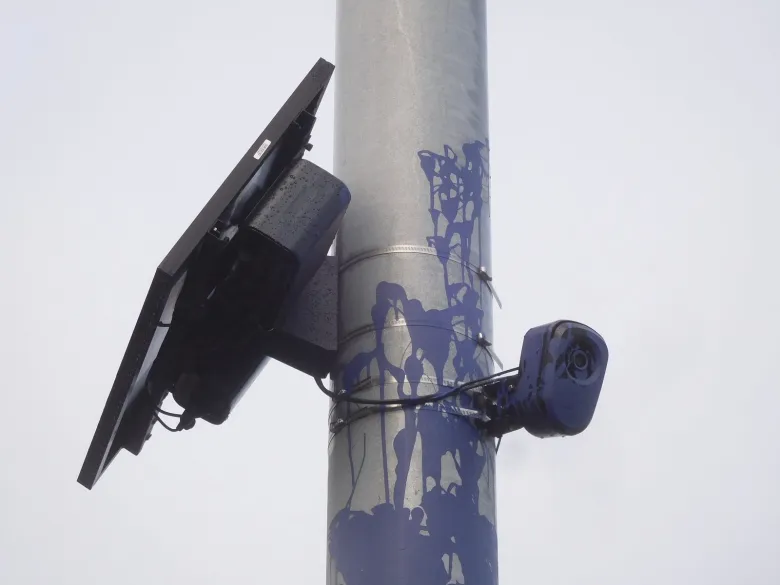 A Flock Safety automated license plate reader camera that has been covered in paint. Credit: Darwin BondGraham/The Oaklandside
Berkeley is a sanctuary city in a sanctuary state, and city laws prohibit BPD and other city workers from assisting federal agents in enforcing immigration laws. While ICE doesn’t have direct access to Flock cameras, local law enforcement agencies outside of California have knowingly and purposefully shared data from their own systems with that agency, according to 404Media. And the Associated Press has reported that U.S. Border Patrol officials have used Flock data to surveil and detain individuals with “suspicious” driving histories.
In Evanston, Illinois, Flock was found to have illegally reinstalled its ALPR cameras after the city had ordered them removed because the system violated Illinois’ privacy laws by allowing U.S. Customs and Border Protection agents to access the data.
Do Flock cameras reduce crime?
The research is mixed on whether Flock cameras, or any other form of surveillance technology, improve public safety.
One review of the use of surveillance cameras in three cities found that the cameras did not consistently reduce crime. Another study from Dallas, Texas, revealed that security cameras may improve clearance rates — the proportion of crimes that result in an arrest — but mostly for thefts and for crimes committed near the cameras.
Experts generally say it’s difficult to establish a causal relationship between Flock cameras and changing crime rates.
A previous version of this story was first published on Nov. 24, 2025. It was updated in July 2026. Darwin BondGraham and Eli Wolfe contributed reporting.
“*” indicates required fields