
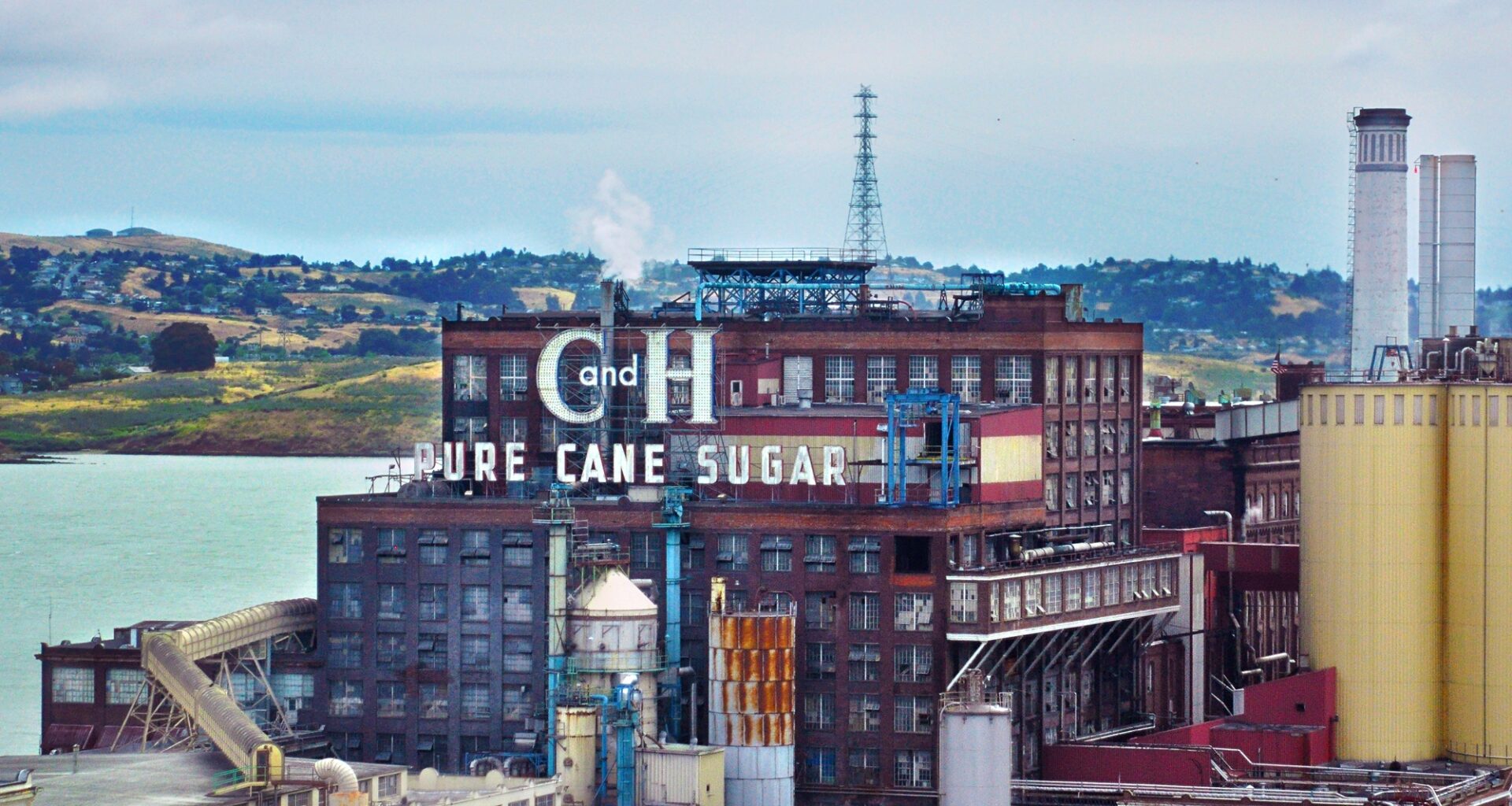
The sugar company wants to cut benefits and increase pay, but workers say the compromise isn’t worth it.
Jul 12, 2026
Updated Jul 13, 2026
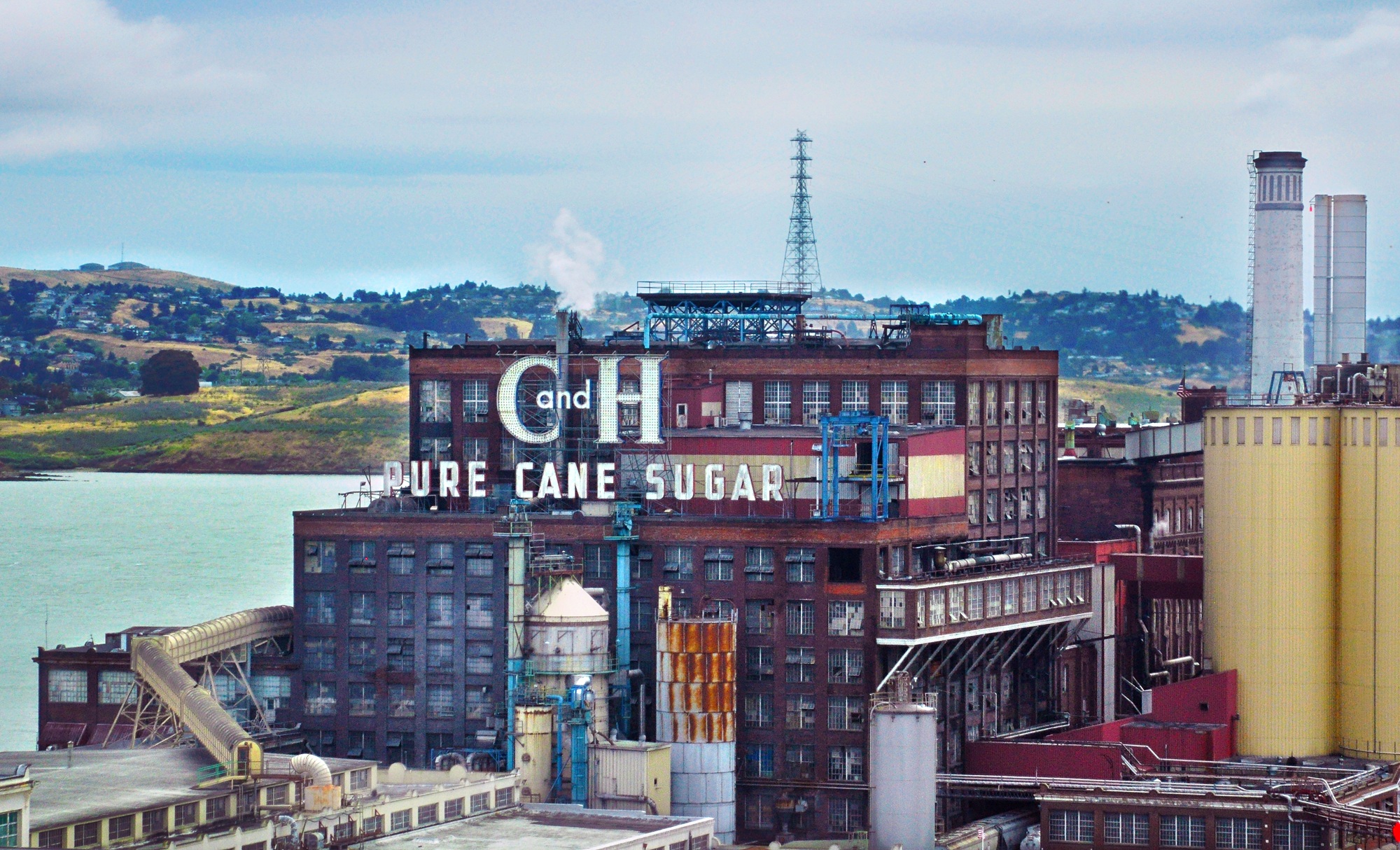
The California and Hawaiian Sugar Company (C&H Sugar) refinery on May 18, 2013, in Crockett, California, refines, packages and markets cane sugar from Hawaii. The sugar company wants to cut benefits and increase pay, but workers say the compromise isn’t worth it. (Robert Alexander/Archive Photos/Getty Images)
“During negotiations, we offered them some compromise to some of the language they wanted,” Garibay said. “The frustrating part is that everybody on the company side of the table was clueless on how the warehouse operates, so we had to explain to them how it works and how they can accomplish what they want without tearing our contract apart.”
Workers say that C&H wants to cut half of their sick days – five of the 10 days – and get rid of benefits for those who’ve retired. That’s as the company offers a 20% cumulative raise over the five-year term, which union members say isn’t worth the trade-off.
Workers say the company has engaged in bad faith bargaining in the process. Kendra Sparks, an ILWU Local 6 worker for almost 30 years, said the union met with the company on the day the strike started, but wasn’t able to come to a last-minute deal.
“They just basically slapped down like, ‘This is what we’re proposing and take it or leave it,’ basically,” Sparks said.
Though the move toward more negotiation talks this week is a good sign, she added.
“I know it’s not business as usual for them, so hopefully the pressure of increased attention on the situation will help,” Sparks said.
Dockworkers are also claiming foul over the company taking some of its operations over to the Levin Richmond Terminal at the beginning of this month, unloading raw sugar in the same area that things like coal and oil are unloaded. C&H workers from ILWU Local 10 who usually unload the sugar are not crossing the picket line, so the company shifted operations to a different terminal.
The move raised health concerns among union members and, for Contra Costa County District 1 Supervisor John Gioia, it diminished “the power of the workers” during negotiations.
“Instead of focusing on alternate ways to deliver the sugar, [the company should] focus on reaching an agreement with the workers so that the sugar ships from the Philippines go to Crockett and not to a coal facility in Richmond,” Gioia said.
Gioia said that the county health department reached out to state and federal officials about the company unloading at the Richmond terminal.
The Bay Area Air District inspected the location on Thursday, and said in a statement that it found no visible emissions from sugar or coal handling operations and documented no violations.
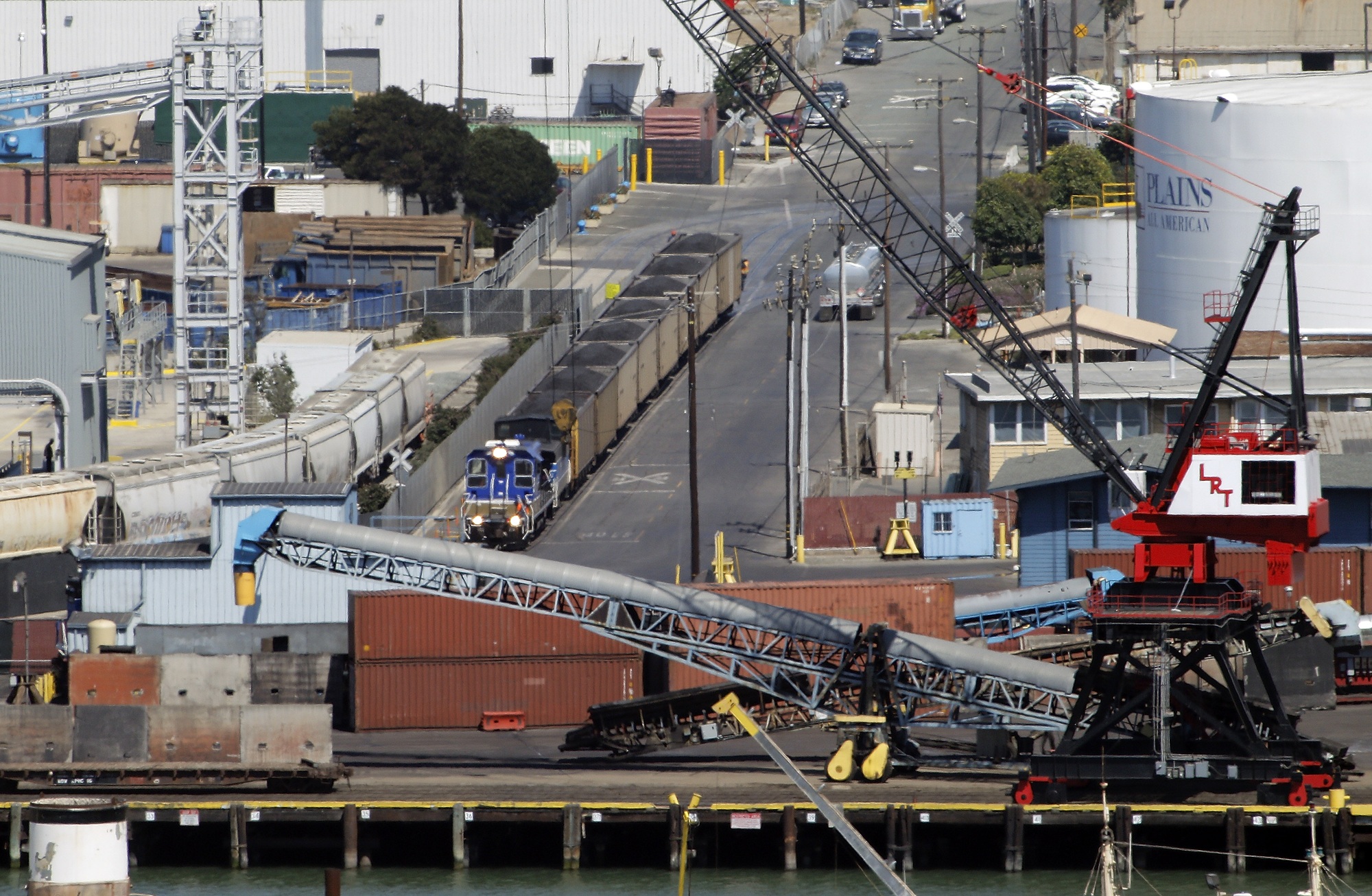 A train loaded with coal approaches the Levin-Richmond Terminal in Richmond, California, on July 23, 2015. (Carlos Avila Gonzalez/The San Francisco Chronicle via Getty Images)
A C&H spokesperson said that it’s “common practice for raw sugar logistics globally to be handled via bulk ships and bulk terminals similar to how it is being handled at the Levin Terminal.”
“Once it has been processed in our refinery, we assure the quality of our finished sugar,” C&H said in a statement.
“Even though C&H says that raw sugar is not a food product, well, you could’ve fooled me because it is,” said Michael Villeggiante, president of Local 10. “It’s being mixed with a lot of toxic materials.”
Records show the ship carrying the sugar, known as the Tai Herald, was in Richmond for about eight and a half days. The ship moved on to Crockett late Friday night and has been docked ever since, according to vessel traffic records.
KQED’s Juan Carlos Lara contributed to this report.