
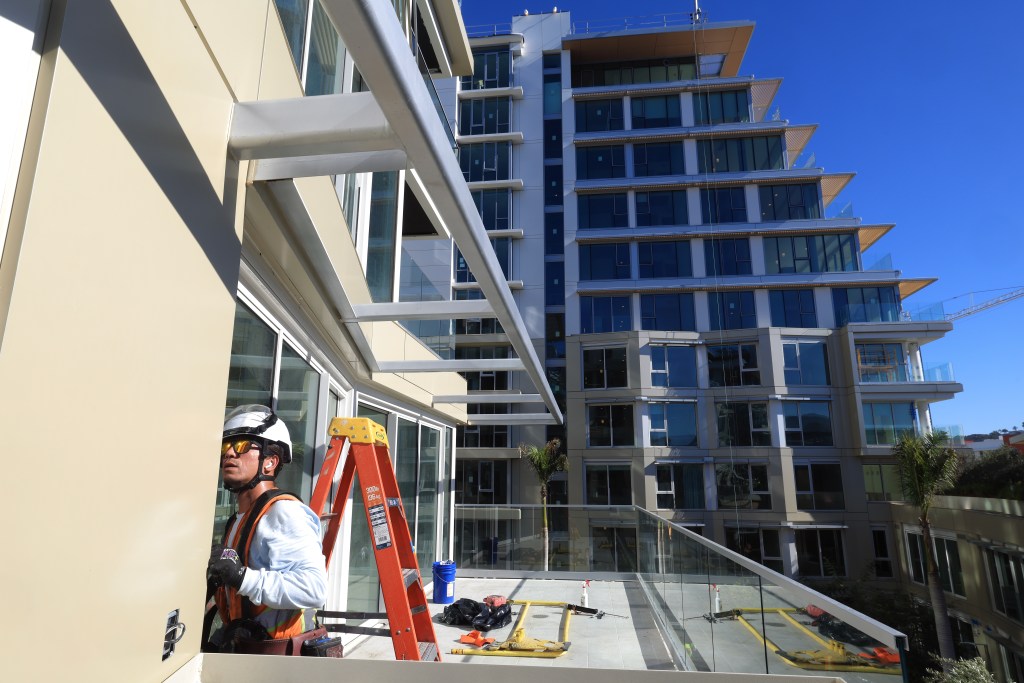
San Diego County apartment vacancies hit a record 6.2% at the end of June, its highest this century, and kicked off a debate about building in the region.
The vacancy rate was largely tied to the region building a record number of new apartments in 2025. However, some critics took the news as a sign San Diego officials were disingenuous, often saying the region is in a “housing crisis.”
One letter to the Union-Tribune argued that the issue in San Diego County was not that we weren’t building enough housing, but that landlords are charging too much.
Question: Are apartment vacancies a sign San Diego County can slow down on construction?
Economists
Caroline Freund, UC San Diego School of Global Policy and Strategy
YES: Rising vacancies mean supply is finally outpacing demand, which should push rents down — good news for affordability. But it’s too soon to declare victory. Vacancies always rise when new construction comes online, because new buildings take time to fill. And San Diego’s vacancy rates remain low by national standards. So yes, we can slow down. But San Diego still has a housing shortage, and we are not done building.
Kelly Cunningham, San Diego Institute for Economic Research
YES: San Diego population increased by 4,930 in 2025, according to the California Department of Finance, while nearly 14,200 new housing units were added. Of course new construction costs more built farther away in somewhat less accessible areas or needing to remove whatever existed before with newly constructed units. In both cases, housing costs more to produce using more expensive materials and labor. The time required for adding housing is lengthy to plan, approve and build.
Alan Gin, University of San Diego
NO: The current glut of apartments is good because renters now have more options and also more leverage in terms of negotiating rents. But rents are still high, which puts a strain on many low-income households. Continued construction will increase competition between landlords and will bring rents down further. There has been some out-migration from San Diego, but that is largely due to high housing costs and would slow or even reverse if rents came down.
James Hamilton, UC San Diego
NO: The key to controlling housing costs in San Diego has always been to increase the number of available units. We’re finally seeing that happen, and it’s already making a huge difference. Although advertised rents are flat, some landlords are offering concessions like weeks of free rent or waived parking fees. These reduce the real cost to renters. We need to stick with the policy of increasing the number of available housing units because it’s clearly working.
Norm Miller, University of San Diego
YES: Out-migration, in part because of housing affordability, is offsetting our natural and slower population growth trends (i.e. later marriage, fewer kids) so this is showing up in the Class B and C rental units, especially in South County and inland markets where it has been easier to add new supply. Rents should soften in these markets, and yet there is plenty of “undoubling” demand from adult kids moving out of their parents’ homes.
David Ely, San Diego State University
NO: While the San Diego vacancy rate has increased, it is still below the national average. The 6.2% vacancy rate may be a new record, but that is because the local rental market has been tight for years. San Diego is still among the most expensive cities to live in. The vacancy rate may fall from its peak once enough time passes to find occupants for all of the units in the new apartment buildings.
Ray Major, economist
YES: A healthy vacancy rate for the housing market is around 5%. So with the current 6.2% vacancy rate, developers and the city should see this as a leading economic indicator and start slowing down the construction of new units. San Diego is not a growing region. We need enough housing to reduce the latent demand that exists in the market without overbuilding. In the past, annual population growth would absorb vacant units over time. This is no longer the case.
Executives
Phil Blair, Manpower
NO: The housing deficit is far too high to slow down now. We do need to focus more on condo development so that young people can buy into the market and not rent. Proposed legislation will be a big help in fighting litigation issues.
Gary London, London Group Realty Advisors
NO: A 6.2% vacancy rate is not a crisis, and vacancies are highest in the newest housing stock. So, newly built projects are offering rent discounts. Construction costs have been rising faster than revenues, which will limit new construction. This would normally shift development to condo construction, targeting first-time and move-down buyers. But delivering those hasn’t yet been legislatively resolved. Bottom line: we still have a severe housing shortage. But maybe not so much for apartments.
Bob Rauch, R.A. Rauch & Associates
NO: San Diego’s apartment vacancies are not a sign that the county can slow construction. Vacancy has tightened in popular coastal markets and remains far under national norms. Rents continue to rise, albeit modestly, and demand remains strong across most segments. Only luxury units show elevated vacancy rates, reflecting affordability rather than oversupply. Overall, the region remains structurally short on housing, and slowing production would worsen shortages rather than stabilize the market.
Austin Neudecker, Weave Growth
NO: A 6.2% vacancy rate suggests recent construction is finally giving renters options, not that the housing shortage is solved. Apartments take years to plan and build, so slowing now could recreate scarcity when demand recovers. High rents also reflect land, financing, and construction costs, not simply landlord greed. San Diego should continue adding housing while allowing the market to absorb recent supply. Greater vacancy is evidence that building works.
Chris Van Gorder, Scripps Health
NO: A 6.2% apartment vacancy rate is a meaningful shift, but it is not evidence that San Diego’s housing shortage has been solved. San Diego County built nearly 7,000 apartments in 2025 — the most in at least 25 years. When supply increases faster than demand for a period, vacancies rise. This is not evidence of an issue with the increasing cost of rent.
Jamie Moraga, Franklin Revere
NO: Vacancies reflect a lack of affordability rather than a surplus of housing. Many households can’t afford current rents, and builders are delivering units priced beyond what many renters can pay. Vacancies are signaling a mismatch between prices and incomes and underscoring how few homes are truly affordable. High costs, restrictive regulations, taxes and an unfriendly business climate make California less attractive and drive population decline, like expensive event tickets leaving seats empty as consumers opt out.
Mark Kersey, San Diego County Taxpayers Assoc.
NO: However, we need to build more for-sale units, which is why construction defect litigation reform in the state Legislature is absolutely critical. Most developers build apartments rather than condos due to the imminent threat of litigation as condo properties reach 10 years old. If that process were reformed in a reasonable way, more entry-level for-sale housing would be available for first-time homebuyers, which would also free up more apartment units at all price points.
Have an idea for an Econometer question? Email me at phillip.molnar@sduniontribune.com. Follow me on Threads: @phillip020