
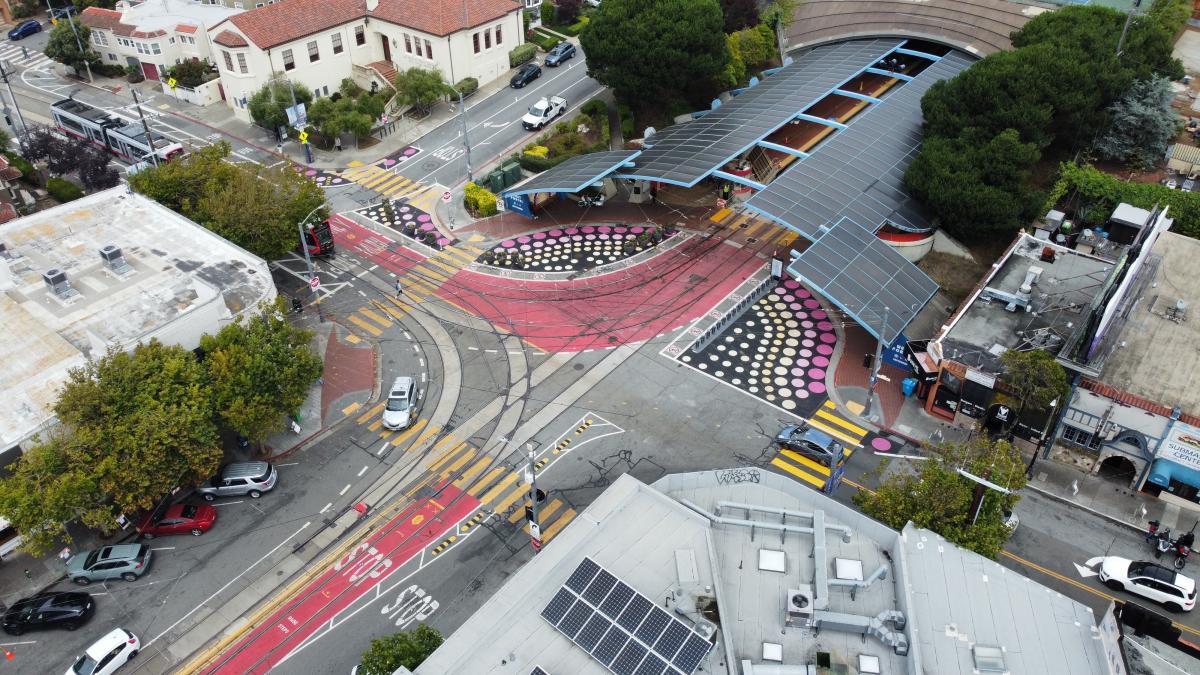
Early data suggests that the traffic-safety measures made after a driver killed a family of four waiting for a bus outside the West Portal branch library in March 2024 have been effective at making the streets around the intersection safer.
Since changes were completed in September last year, according to a new report from the San Francisco Municipal Transportation Agency, speeding is down, traffic collisions are down, and injuries are down — and sales tax revenue is up.
Traffic collision rates in the half-square-mile area around the crash site — which was located on a major transit corridor, within a block of the West Portal Muni station — went down 60 percent from October 2024 to March 2026 compared to a similar window of time before the project went through (October 2022 to March 2024).
The number of traffic collisions resulting in serious injury in the area dropped from 6.7 per year to 2.7 per year after the changes, SFMTA added.
The first proposal, however, diverged from the initial plan. Following the deadly crash in March 2024, District 7 Supervisor Myrna Melgar said that another family had been hit by a car nearby a year earlier; in that case, the father had lost his legs.
“I want metal, concrete bollards on the side of bus shelters, intersections that are known to be dangerous like this,” Melgar said at the time.
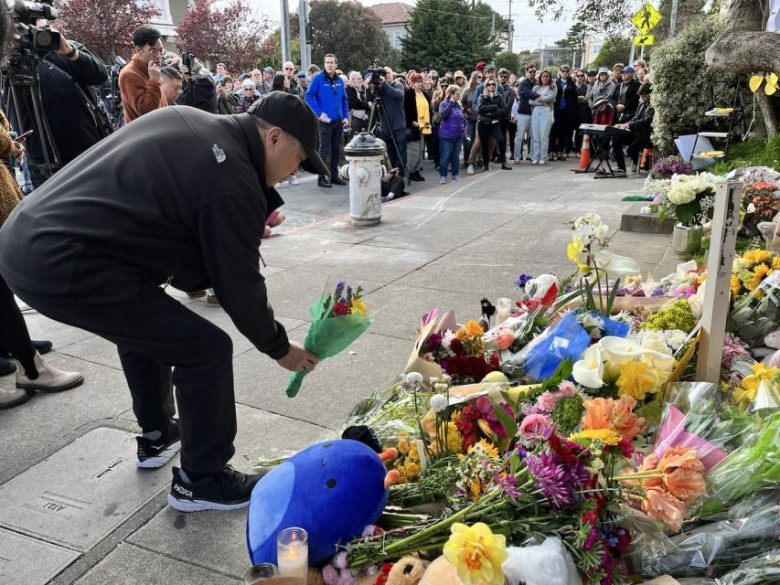 A vigil for the family struck by a driver in West Portal in March 2024. Photo by Eleni Balakrishnan.
A month later, Melgar and then-Mayor London Breed put forward a plan to do exactly that. The city it added bollards protecting the bus stop and proposed converting the section of Ulloa Street, where the crash had occurred, and the section of West Portal that connected with it, to transit-only.
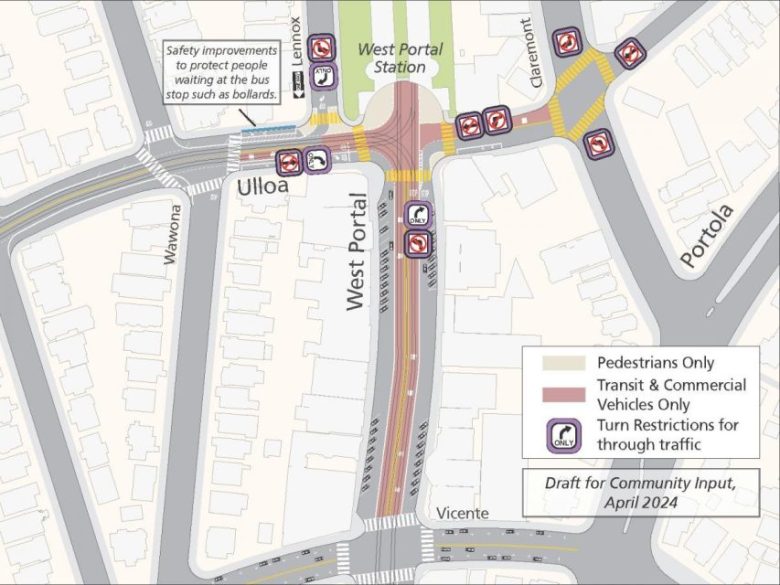 Proposed pedestrian safety changes near the intersection of West Portal and Ulloa, circa April 2024. Image courtesy of SFMTA.
Those changes were, ultimately, not implemented after pushback from some residents, including the West Portal Merchants Association, which was concerned that the proposed changes would be bad for business.
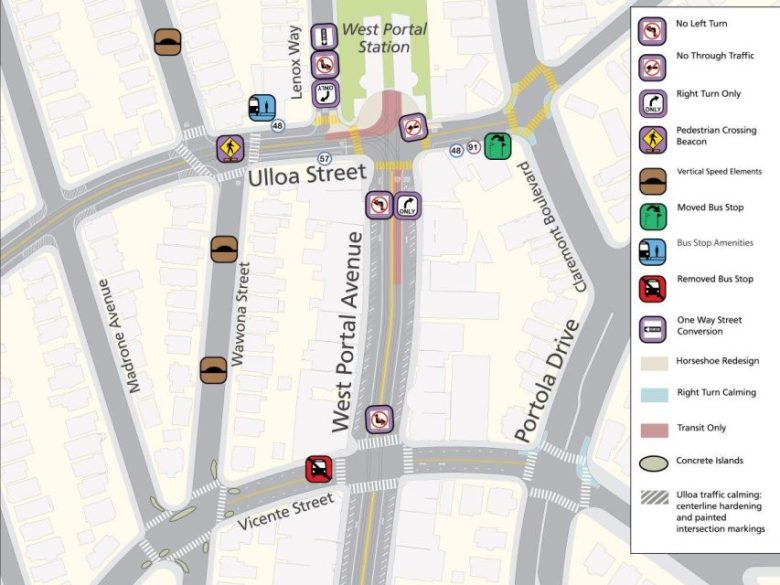 Pedestrian safety changes ultimately made near the intersection of West Portal and Ulloa, circa 2025. Image courtesy of SFMTA.
The bench where the family was sitting was removed immediately after the crash and never replaced. The bus stop, and the sidewalk around it, remain much the same.
The deaths of Matilde Ramos Pinto, Diego Cardoso de Oliveira, and their two children spurred the redesign, and the report says as much. But Melgar said that asking how the modifications would have protected them specifically is asking the wrong questions.
“The report is not ‘Did we do the improvements that would have prevented this family from getting killed?’” Melgar said. “The report is: Do the improvements that we did have made this intersection safer for people going through the intersection? Have they made it better?”
The crash that killed the family of four, said Melgar, was “bad luck.” The driver swerved onto the sidewalk in a large SUV while going 70 mph.
“Nothing would have prevented this family from being killed, short of this person not doing the reckless driving that she was doing,” Melgar added.
Post-redesign, Melgar said the area around the West Portal Muni station is “clearly safer.” Fewer cars are moving through the transit corridor, and the ones that do go more slowly.
By SFMTA’s observations, fewer than 1 percent of the drivers on Ulloa and Vicente streets are going five miles per hour or more over the speed limit.
On Wawona southbound on weekdays, only 7 percent of drivers were speeding, compared to 19 percent before the changes were made. At West Portal station, 75 percent fewer drivers made illegal U-turns.
Also according to the report, 70 percent of the people surveyed in the area after the changes said they felt safe at Ulloa Street and Lenox Way, compared to 50 percent earlier. And there are concrete bollards and bike-share docks protecting pedestrians walking to and from the station itself.
“There’s a lot of different things that are helping to slow vehicle speeds and make pedestrians more visible,” SFMTA deputy spokesperson Michael Roccaforte said. Roccaforte said that SFMTA will continue speaking with the community near West Portal Station to see how they are adapting to the changes.
“It’s a great start,” Roccaforte continued. “But, of course, there’s always room for further improvement.”