
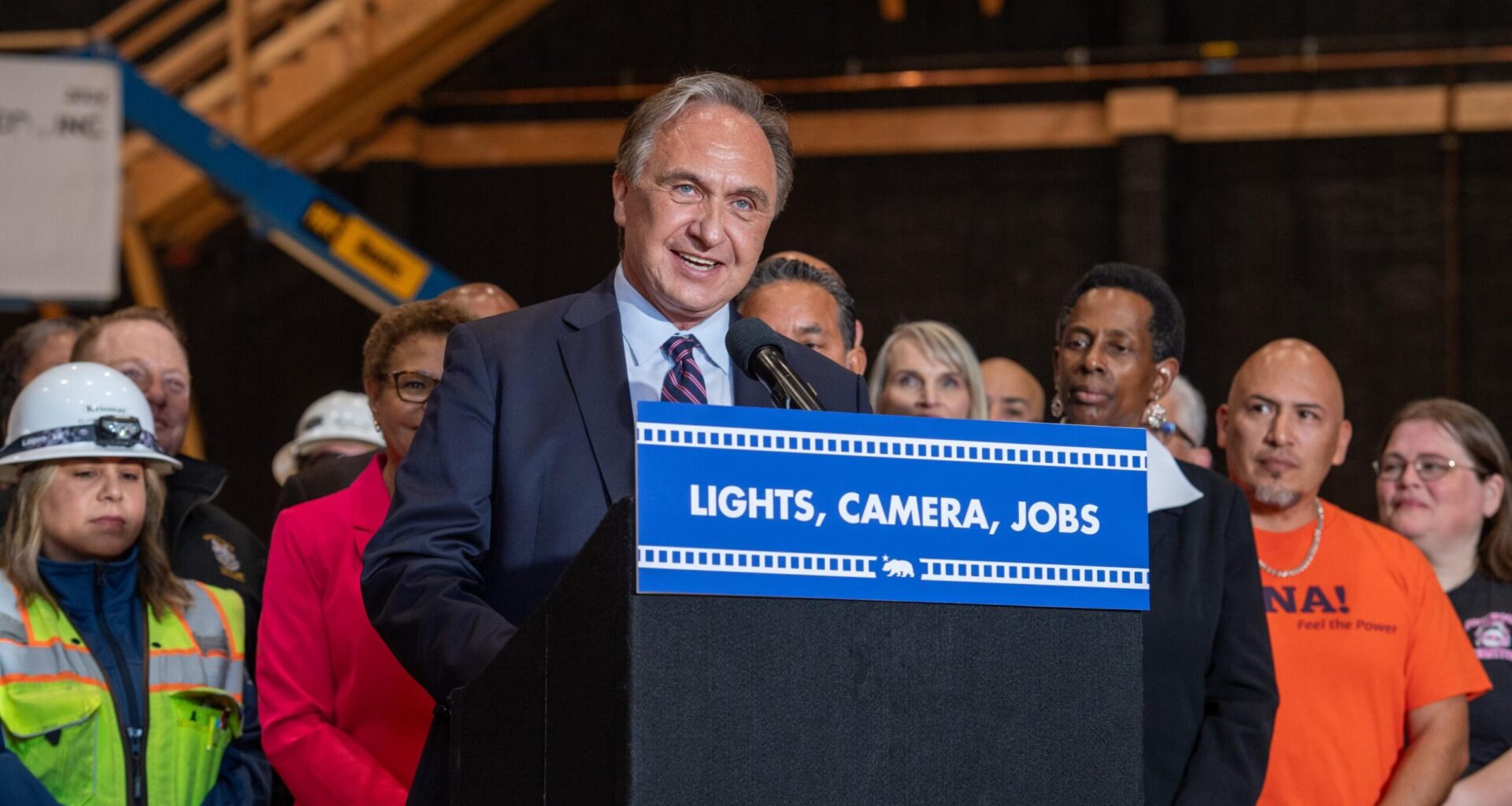
The state legislator authored a letter signed by nearly 40 California lawmakers calling for an exemption of film and TV tax credits from the corporate tax credit cap
Assemblymember Rick Chavez Zbur authored a letter to Governor Gavin Newsom signed by nearly 40 state legislators on July 10 calling for an exemption of film and television incentives from a new cap on corporate tax credits, which he said jeopardizes efforts to bring production back to California.
California lawmakers have been working to revitalize the film and TV industry in the state for years. Though progress has been made, legislators say the film and TV tax credit program must be exempted from Senate Bill 122. The provision in the state budget caps the tax credit companies can claim in a year at $5 million or 70% of their tax liability, whichever is greater, and could undermine the economic impact of the program.
Zbur represents the 51st district of Los Angeles County, including long-standing film and television production hubs Hollywood and Universal City. SB 122 extends an existing $5 million cap, but the language of the exemptions does not apply to the film and TV tax credit program, which Zbur said was initially unclear.
“There is some exemption language that applies only to the refundability aspects of the program, and I think that was misread to apply more broadly to the program,” Zbur said in an interview.
However, Zbur said he does not think the corporate cap was intended to apply to the film and TV program because, in practice, it aims to create jobs. Zbur explained that unlike other kinds of corporate tax credits, film and TV tax credits are awarded based on the number of jobs that are created by the production and its expenditures in small businesses.
Smaller productions will be unlikely to be affected by the $5 million cap, but larger productions will feel the impact — the larger the production, the less competitive the tax program would be, according to Zbur.
Before the 2025 modernization of the film and TV tax credit program, which Zbur spearheaded, he said unemployment in the entertainment industry in California was reaching unprecedented levels. According to the U.S. Bureau of Labor Statistics, recent employment levels have been about 100,000 lower than the industry’s post-pandemic October 2022 high.
Scroll to continue reading
“The unemployment rate during the Great Depression was 25%,” Zbur said. “We were facing unemployment rates which were double that of what people faced from the Great Depression in this industry.”
Last year’s expansion of the film and TV tax credit program to $750 million annually had an almost immediate effect in bringing jobs back, according to Zbur. According to the letter, from August 2025 through April 2026, the program kept 133 productions in California, generating $5.5 billion in economic activity, creating over 38,000 cast and crew jobs, and producing nearly 250,00 days of work for background actors.
With this recent uptick in jobs, Zbur said lawmakers do not want to undo the progress. If filming in California is significantly more expensive than filming in other states or countries, Zbur warns, even though the state has a larger skilled workforce than in any other, production companies will take their business elsewhere.
“We’re almost going back to where we were before we modernized the program to increase the size of the credits. Before, remember we had a 20% tax credit, and we had all this runaway production,” Zbur said. “We were losing jobs in production to places like Georgia and Canada, New Mexico, and Nevada and New Jersey. And it’s because they all had much more lucrative tax credit programs.”
Other states with more generous tax credit programs have also started to develop more trained workforces, according to Zbur, creating more competition for California. Tennessee, for example, has been advertising itself as a potential new home for Paramount Skydance.
“They’ve invested in workforce development specifically for the television and movie industry, because these are jobs that people want to have. They’re well paid jobs. They generally are union jobs with union wages,” Zbur said. “They’re family sustaining, and these are the kinds of jobs that we have sustained thousands and thousands and thousands of families in California, and we’re risking allowing that to be lured away to other states.”
To prevent this, lawmakers have urged Newsom to exempt the film and television tax credit program from the cap on corporate tax credits, which Zbur said needs to happen by the end of this year.
“Long story short, unless we fix this, we end up with a program that’s not competitive and we are going to lose many of the productions,” Zbur said. “And frankly, the productions that have the higher expenditures are the ones that create the most jobs. They put the most economic benefit to the state and to the public.”
Zbur said in addition to exempting the tax credits, California can continue to cement its position as the leader of the film and television industries by considering uncapping the program entirely. He said he would also like to see the program extend to post-production work and commercials.
Although there are no updates to share on the possibility of an exemption, conversations are ongoing, Zbur said, and he is grateful for the Governor’s understanding of the importance of the film and television industry in California and his history of championing it.
According to a statement from a spokesperson for the Governor’s office, in response to concerns regarding SB 122’s possible impact, Newsom, “remains committed to making California the best place in the world to create film and television.”
“The tax credit limitation is part of a broader fiscal proposal to ensure the state can continue making strategic investments while maintaining long-term fiscal stability,” the spokesperson said in a statement. “We remain confident in the strength of the recently expanded film and television tax credit program.”