
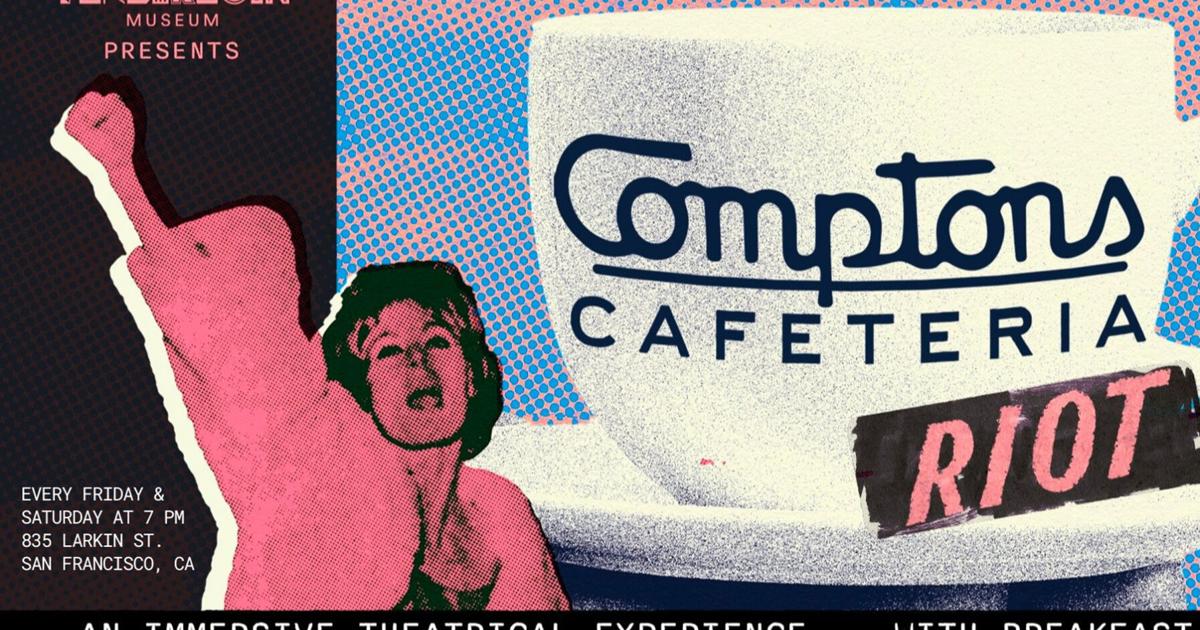
Three years prior to the infamous Stonewall riots in New York City, San Francisco’s Tenderloin district saw its own queer uprising. While San Francisco was making strides in becoming a more queer-friendly city, the day-to-day experience of queer people in 1966 still remained dangerous at best, with police aggression and limited job opportunities. This pushed many into the Tenderloin, which became a hub for sex work, drugs and gambling, but most of all, a safe community for queer people.
As one of the only establishments in the area that would serve drag queens, trans people and gender-nonconforming patrons, Compton’s Cafeteria became a space for the Tenderloin community to gather and dine as their true selves. However, it also became a target for police harassment and raids, typically under the pretenses of “female impersonation.”
Presented by the Tenderloin Museum, “Compton’s Cafeteria Riot” offers an innovative and wholly immersive perspective on the tensions leading up to the fateful night in 1966 when the community fought back against this harassment.
Upon entry, attendees are seated in a venue decorated to emulate the original diner. Decked out with jukeboxes, tiled windows and hand-drawn menus, the space transports the senses back in time. While the doors opened at 7 p.m., the first half hour after entry gave audience members the time to enjoy the Compton’s Cafeteria special — blueberry pancakes, two sausages and a cup of decaf coffee. It was practically instinctive to relax into one’s seat and enjoy the meal. Amid the enjoyment of the breakfast-for-dinner, breaths were held as a sense of impending doom loomed overhead, waiting to crash into the diner.
After the first series of characters walked in — a pair of lovebirds and a handful of other Compton’s Cafeteria regulars — the lights dimmed, and in came two versions of Vicki, older and younger (played by Wendy [Last name] and Ida [Last Name]). The two strut in, dressed to the nines, performing a rendition of “You Don’t Have to Say You Love Me” by Dusty Springfield. The present-day Vicki made her way behind the counter as the narrator. An impassioned speaker, she looked back upon the night with righteous indignation and a burning sensation of melancholy.
“This story has drag queens,” she prefaced, “but it ain’t no drag show.”
As the night progresses, we meet a few other Compton’s regulars. Throughout the show, they converse with one another, often including the audience in their chats about life in the Tenderloin district.
Yet any high spirits across the joint are quickly extinguished by the entrance of Officer Johnson (Tony Cardoza), stalking in from the street with a hardened glare, a baton swinging from his belt.
Immersing audience members into each scene, “Compton’s Cafeteria Riot” ensures that the anxiety and ensuing hatred felt by the characters is a simultaneous experience for every person in the room. Each hateful remark and threat of violence spewed from the cop’s mouth pierces the skin, a reminder that any safe space can so easily be ruptured.
The appearance of the cop only fires up the cast, as two activists from Vanguard, a community activist group formed by unhoused queer youth, address the whole room in search of support. As they stand atop their soapbox, their speech feels vaguely reminiscent of talking points from today; it only goes to question if we’ve truly made significant societal strides in the past 60 years.
As the night came to a close and tensions came to a head, we were faced head-on with the violent injustice facing the Tenderloin’s LGBTQ+ community as Officer Johnson returned with antipathy in his veins. As the patrons chased after the cop in choreographed chaos, one could help but feel compelled to join.
Sixty-two bills have passed in 2026 that negatively impact the rights of transgender and gender-nonconforming people in the United States, whether it be access to gender affirming care, forcible outings or bathroom bans. While the Compton’s Cafeteria Riot occurred in 1966, the chilling similarity to today’s anti-trans rhetoric and legislation only emphasizes the importance of preserving the history, communities and legacies of women like Vicki and of the Tenderloin itself. “Compton’s Cafeteria Riot” not only brings these stories to life but reminds us that this history isn’t so bygone — it’s happening all around us.