
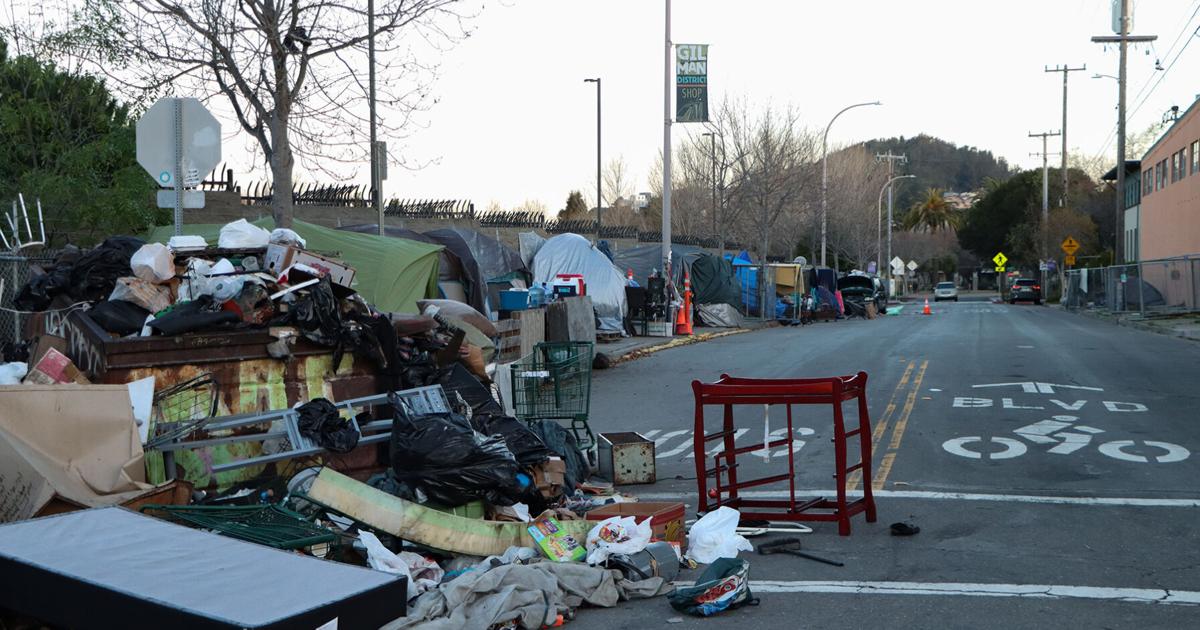
Last week, United States District Judge Edward Chen approved a motion for class certification of a 2023 lawsuit, filed by the Disability Rights Advocates and the East Bay Community Law Center, against the city of Berkeley.
The plaintiffs allege the city violated the U.S. and the state constitutions by allowing for the “seizure and destruction” of private property owned by unhoused people with disabilities, “without adequate notice or procedural safeguards,” according to the court order regarding the motion.
Chen granted both of the plaintiffs’ class certification requests, which are used to classify lawsuits as class action suits and thus create classes representing an entire group within the lawsuit. He certified a class consisting of all unhoused people with disabilities that live in public areas, shelters or vehicles in Berkeley.
Furthermore, he certified a subclass consisting of all individuals who are unhoused with disabilities living in vehicles and are unable to comply with the city’s 72-hour parking restriction due to their disability.
“Class certification is an incredibly positive development,” said Andrea Henson, an adviser for the non-profit unhoused advocacy group Where Do We Go, in a press release by the Disability Rights Advocates. “By certifying the class, the Court recognized that the City of Berkeley’s policies affect unhoused individuals throughout the City, rather than only the named plaintiffs.”
The plaintiffs’ allegations within the lawsuit largely revolve around Administrative Regulation 10.1, or AR 10.1, which allows the city to remove private property from public spaces. Under the law, city staff is to provide at least a day’s notice, photograph the property to be removed and provide a certain deadline by which the property must be retrieved from storage.
Αccording to the order, there are a series of exemptions to storage of removed property, but over the course of about three years, the city only filed about 34 notices for the retrieval of stored property despite disposing of about “959,800 pounds of material over 52 encampment closures.”
Meanwhile, the city’s 72-hour parking restriction is governed by Berkeley Municipal Code § 14.36.050, which prohibits the parking of a vehicle in one location for more than 72 hours. Although the city is required to provide notice before removing the vehicles in question, several unhoused individuals, including plaintiff Amber Whitson, alleged that their vehicles were towed without prior or sufficient notice.
“Many unhoused disabled people have been harmed by the City of Berkeley’s encampment sweeps,” alleged East Bay Community Center Staff Attorney Brigitte Nicoletti, in the press release. “The Court’s certification of the class and sub-class provides us with the crucial opportunity to seek relief for the City’s most vulnerable residents and sends a clear message to cities that they will be held accountable for violating the rights of unhoused people.”
According to the press release by Disability Rights Advocates, plaintiffs believe the approval of the class certification, and by extension the entire lawsuit, will result in the end of such practices by the city and that compliance with federal and state laws regarding encampment closure policy will finally be achieved.