
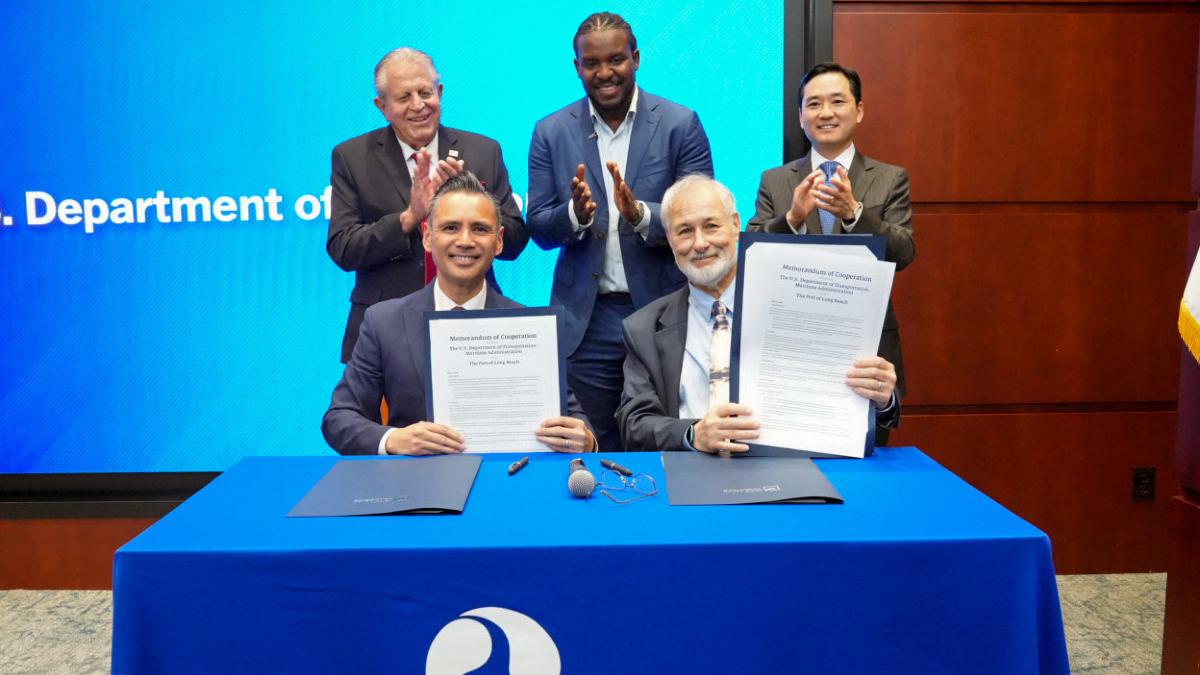
The Port of Long Beach signed a memorandum of cooperation (MOC) with the US Maritime Administration on 22 July to advance work on the use and testing of small modular reactors (SMRs) in commercial vessels, ports and other marine facilities.
A signing ceremony was held at MARAD’s offices in Washington, DC, with Maritime Administrator Stephen M. Carmel, Port of Long Beach CEO and California Association of Port Authorities president, Noel Hacegaba, and Long Beach Harbor Commission president Frank Colonna in attendance.
The MOC makes Long Beach the first U.S. seaport to formalise a partnership with MARAD to establish nuclear-powered vessels for commercial service.
Port of Long Beach chief executive Noel Hacegaba said the MOC “allows us to leverage strong federal leadership and private sector innovation to catalyze SMR technology as we safely and securely support the next generation of shipping.”
Maritime Administrator Carmel said, “This milestone agreement with the Port of Long Beach brings cutting-edge Small Modular Reactor technology into active testing. It ensures our maritime supply chains stay operational under any contingency while training the next generation of high-skilled American mariners.”
Added Mr Colonna: “This Memorandum of Cooperation with MARAD positions the Port of Long Beach to help develop energy sources for the goods movement industry while maintaining our role as the premier gateway for trans-Pacific trade.”
The MARAD agreement dovetails with port tenant Bluecore Energy’s work on floating power plants. The maritime-focused nuclear technology startup is developing SMRs built on floating barges. Its lease agreement allows the company to assemble, test, and store maritime power modules at its facility.
Demand for reliable electricity sources is forecast to grow substantially as the port pursues a goal to double container volume by 2050. Under the agreement, the port and MARAD will collaborate with the US Coast Guard, the Department of Energy and the Nuclear Regulatory Commission to shape the operational protocols, safety standards and inspection processes needed to support the safe arrival and servicing of SMR-powered vessels at US ports, as well as to develop and share other best practices. The agreement is non-binding and does not commit either party to funding, procurement decisions or the adoption of any specific technology.
The agreement follows MARAD’s launch of a formal initiative gauging the potential of integrating SMRs into commercial shipping and port infrastructure earlier this year. The Request for Information (RFI) seeks to gather industry input on reactor designs that could power cargo vessels or support port grid development.
The RFI, published by MARAD in the Federal Register on 7 May, requests that public comments be submitted no later than 5 August 2026 through this link on the Federal Register portal.
The agreement and RFI build on President Trump’s executive orders early calling for “Restoring America’s Maritime Dominance” and “Unleashing American Energy”. The notice also follows the release of the Trump Administration’s Maritime Action Plan on 13 February 2026, and the SHIPS Act for America, which aim to revitalise the US merchant marine and American shipbuilding industrial base.
The second largest container port in the United States, the Port of Long Beach, is in the middle of one of its busiest years on record. As of mid-year, it had moved 4.8M containers, up 1.7% from the same period last year – the busiest on record.