
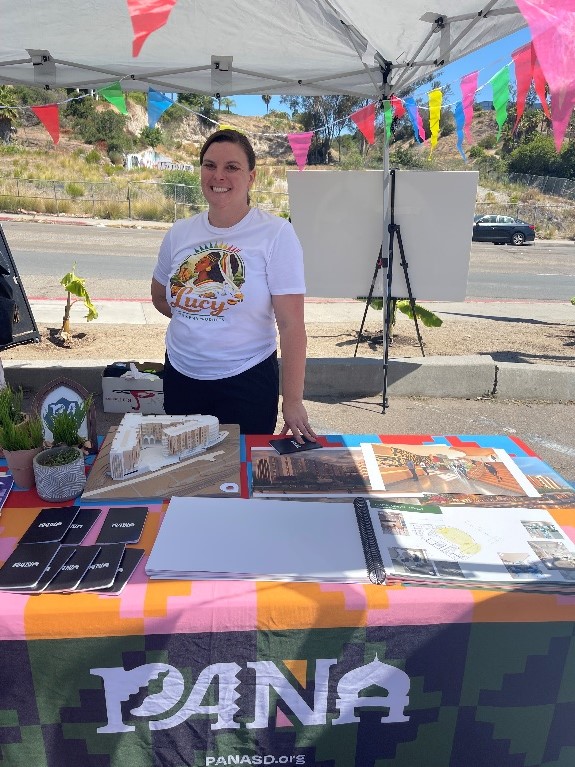
Photo: Rachel Lozano Castro represented PANA at the celebration
By Heidi Hope
July 23, 2026 (San Diego) — World Refugee Day was celebrated for the first time on June 20 at the Global Marketplace on University Avenue in City Heights.
The event aimed to honor refugees, immigrants and newcomers in America with many exciting programs, such as small business vendors solely created and operated by refugees and immigrants, a cooking class, gardening activities and cultural performances.
There were many organizations partnering together to celebrate and recognize the beauty of ethnicity and cultural diversity, while dealing with many negativities from the government.
Some of the participating organizations were Karen Organization of San Diego, Kind Hearts San Diego, PANA, The AJA Project, Berry Good Food, The Global Arc, The Teaching & Learning INC and UWEAST.
 Rachel Lozano Castro, Director of PANA Strategic Partnership, shared her vision for PANA and hope for today’s event.
“PANA stands for the partnership for the advancement of New Americans. We are one of the organizations here today for World Refugee Day, which is always celebrated on June 20,” Castro said. “It’s an international celebration and here we are celebrating at the global market and the future site of the global village, which is a collaborative project between PANA and 15 other organizations.”
Castro hopes to continue on with this legacy founded by refugees and New Americans in solidarity moving forward.
“We’ve already secured the land and money for predevelopment. We’ve been working with the city of San Diego, the county of San Diego and many other partners in philanthropy and community work to make sure that this global village comes online for the community. It will be a refugee and immigrant cultural hub and housing campus.” Castro said.
PANA pushes to incorporate refugees in new American businesses so that they can move into the new global village when it’s built, while advocating for the market to support these business ventures.
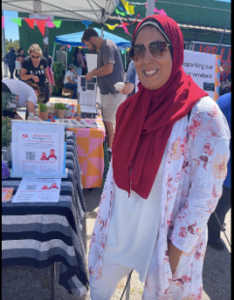 Furthermore, Hajar Rochdi, Executive Director of La Mesa-based Kind Hearts San Diego (photo, left), demonstrated all the services offered by Kind Hearts to support the community of refugees and newcomers along with her hope for the celebration and future of immigrants.
“We support newcomers with settlement services and long-term skill building, such as education, driving practices, citizenship classes, sewing… what we find is that they struggle a lot in learning things when English is their first, second or third language sometimes,” Rochdi said. “We’re mainly serving the Afghan populations and pretty much any Arab speaking newcomers.”
Rochdi shared Kind Hearts’s goal in this event, which was to spread the words about the talented clients they serve and all of their ventures.
“Our purpose was to bring our own clients that we serve, who are launching small businesses mainly from home, just to support them and help put the word about them out in the community,” Rochdi said. “They’re very skilled, many of their products are handmade, handcrafted food.”
Nao Kabashima, Executive Director of Karen Organization of San Diego, described the services they offer mainly for the Burmese community, along with sharing her desire to make a change in the immigrant community moving forward.
“This corporation started to come to San Diego in 2007, 2008, and in those days the San Diegans didn’t know about this preparation, and they didn’t have enough support for them to be included in the community. That’s why we started this organization in 2009 with the leaders, also one of the founders,” Kabashima said. “Since then, we are providing any kind of support that they need to survive, thrive and start a new life in this beautiful community. That’s what we do.”
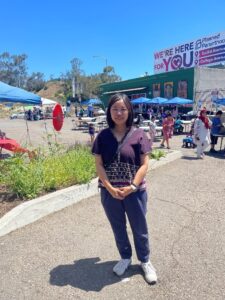 Photo: Nao Kabashima shared how the Karen Organization of San Diego advocates for the Burmese community and all immigrants.
Kabashima explained her vision for the event, which was to acknowledge togetherness with newcomers gathering in the same community and aiming for the same goal to support each other.
“This kind of event, working together with refugees and immigrants, and newcomer groups together, to showcase how beautiful this community is and what we can do when we get together,” Kabashima said. “We also offer a lot of different types of case management, behavioral house, and mental health support groups to support our community.”
Challenges now facing refugees
Castro recognized the negativity towards the community of refugees, newcomers and immigrants.
“It’s definitely a harder time now and we absolutely reject the hate that is coming from the President as well as the negative energy and the harmful language and actions against refugees and new Americans. And it has not been an easy time or place to be a new American in this country for a long time,” Castro said.
Rochdi demonstrated the ongoing obstacle with accessing food that many are experiencing now and how her program is working hard to support everyone in this community.
“It’s been pretty challenging the last couple of years. The challenges keep on increasing. The most recent changes in benefits have put a lot of people out of food stamps benefit. Now we have to increase our support for our food distribution that we do,” Rochdi said. “We need all that, so we’re trying to juggle a lot with very little. But we’re hopeful that the larger community will come together to support everybody here.”
Kabashima acknowledged the hatred becoming normalized under this presidency through multiple forms of negative actions and what Kabashima views as harassment. The Trump administration has shut off refugee admissions from most nations, also targeting many legal immigrants with formerly protected status who now face potential deportation.
“There’s a lot of harassment, discrimination becoming normalized because of this administration. I see a lot of negative and dehumanizing kinds of languages from the federal government.” Kabashima said. For example, Trump falsely claimed Haitian immigrants were eating cats and dogs, also characterizing some African nations as “sh*thole countries.”
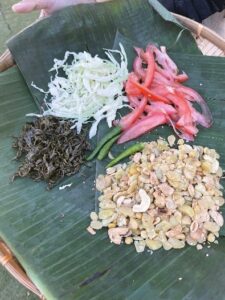 The event continued on with a cooking class where participants got to learn how to make a Burmese dish. The name of this dish is Lahpet Thoke in Burmese and La Pa Gyi Hka in Karen.
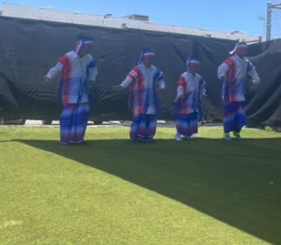
Then everyone gathered for Burmese dance performances to celebrate the Burma culture, along with enjoying many delicious Burmese desserts and raffle drawings for prizes.