
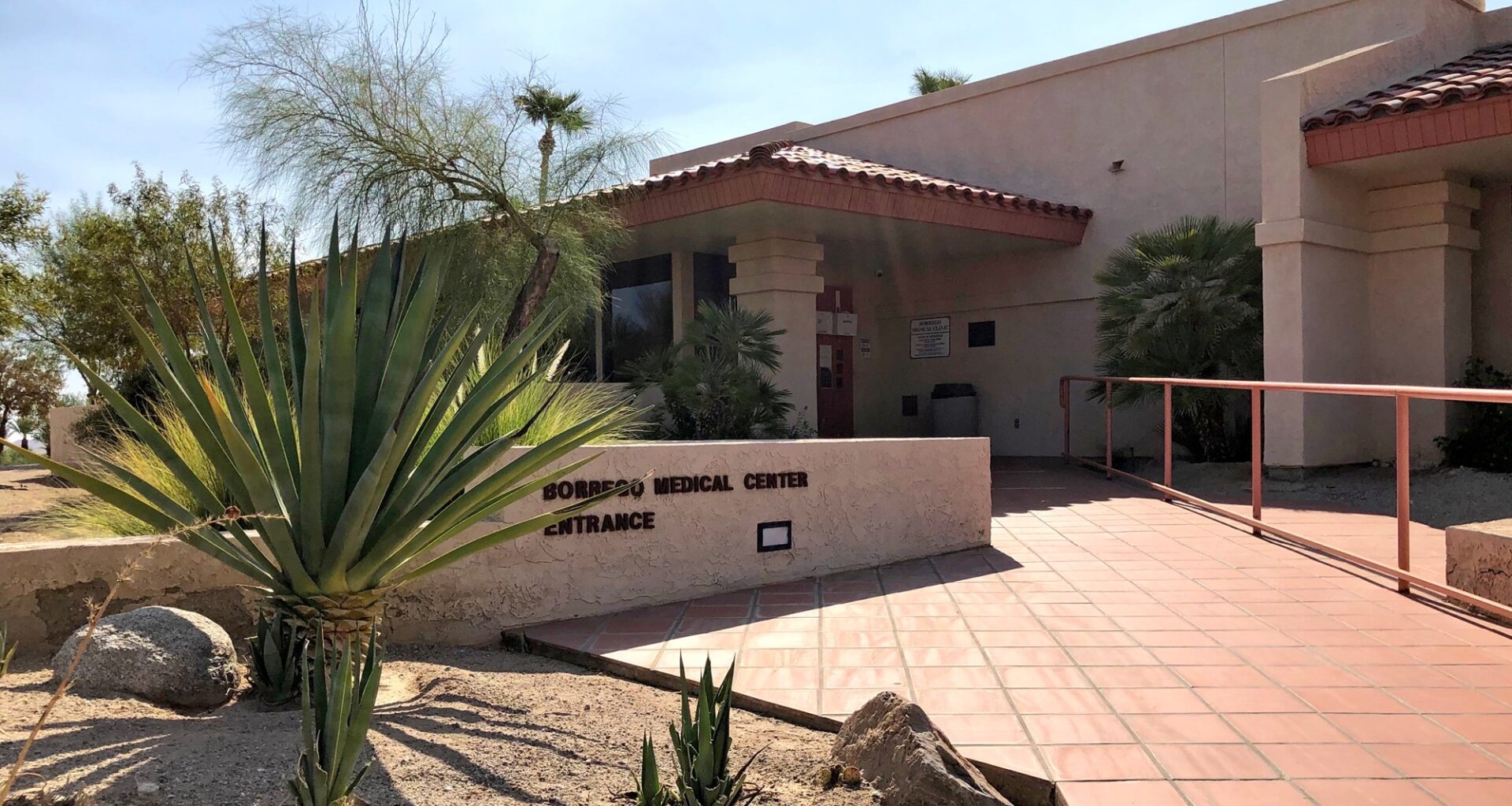
In the years since the Borrego Community Healthcare Foundation declared bankruptcy amid a sweeping criminal fraud investigation, the trust overseeing the defunct medical provider’s leftover assets has spent more than $15 million on lawyers, consultants and other experts.
U.S. Bankruptcy Court records show that the once-high-flying healthcare provider known as Borrego Health retained at least $50 million in assets after seeking protection from creditors who said they were owed more than $100 million.
Much of that money is being paid to outside professionals — as well as some of the people and entities named in a civil racketeering lawsuit brought by Borrego Health in 2022.
San Diego Superior Court records show that El Cajon businessman and philanthropist Daryl Priest, who was accused of fraud and whose office was raided by the FBI and state agents in 2020, collected almost $440,000 from Borrego Health in an out-of-court settlement.
The money was for back rent and maintenance costs that Borrego Health owed to Priest and his companies, which leased properties to the healthcare provider.
The settlement filed in April also included an additional unspecified payment to resolve “all disputes among the parties” in the racketeering lawsuit, the bankruptcy case and other related litigation.
A lawyer for Priest said his client could not discuss the agreement that ended the civil lawsuit.
“Mr. Priest is unable to respond to any request for comment due to mutual confidentiality requirements contained in the settlement agreement,” lawyer Stephen J. Fitch said by email.
The spending down of the Borrego Health trust’s assets come as the criminal case announced by California Attorney General Rob Bonta two years ago has all but fizzled.
Charges against five of the six initial defendants have been dismissed, and the remaining case against El Cajon dentist Husam Aldairi has been sharply curtailed, court records show. Aldairi pleaded not guilty, and his case is pending in the East County court.
The Attorney General’s Office declined to discuss its legal strategy — or explain why none of the Borrego Health officials or major contractors accused in the civil lawsuit were charged with any crimes.
“We cannot provide legal advice or analysis,” Bonta spokesperson Alexandra Duquet said by email.
Taken together, the trail of public records show that much of the Borrego Health empire, which once topped $300 million a year in federal healthcare revenue, has been steered to white-collar professionals rather than to the needy patients the taxpayer funds were meant to help.
In the most recent bankruptcy filing, the trust managing the remaining assets said it paid out more than $30 million so far, roughly half of which went to law firms, financial professionals and others for services related to the restructuring.
The liquidators reported paying nearly $2 million to other lawyers and experts for services unrelated to the bankruptcy.
No fewer than 10 different law firms and a host of consultants and communications firms have been paid by the trust, records show. All of the administrative and priority claims also were paid in full.
But unsecured creditors such as vendors, service providers and small businesses have yet to be made whole. Many of the creditors — which numbered between 5,000 and 10,000 separate entities — included casinos, resorts, upscale restaurants and a company owned by El Cajon Mayor Bill Wells, the initial filing said.
The latest filing shows that unsecured creditors received less than 20 cents for every dollar they said they were owed — just over $20 million of the $104 million in debt Borrego Health reported in its Chapter 11 bankruptcy filings.
According to the report, which covers the first three months of 2026 and was filed with the bankruptcy court in late May, the proceeding is not nearly completed.
Restructuring expert Scott Rinaldi of Ankuru Consulting LLC told the court the case remains active, but he did not answer a question on the filing asking when he expects the proceeding to be closed. Rinaldi did not respond to questions from The San Diego Union-Tribune.
It remains unclear if the payments to Priest and other defendants in the civil case will be disclosed to the bankruptcy court. The settlement was announced in April, meaning payment terms could be reported to the court when Rinaldi files the second-quarter update.
In the meantime, the trust has yet to outline how much more money it holds — or will pay out.
“The trust is unable to provide total anticipated payments for the relevant classes at this time due primarily to potential objections to claims and uncertain outcome of pending litigation,” the May 28 filing states.
Borrego Health was founded in the early 1980s as a medical clinic serving underprivileged residents of Borrego Springs, an unincorporated desert community in the northeastern corner of San Diego County.
The healthcare provider later was designated a federally qualified health center, a special entity that collects higher Medicare and Medi-Cal reimbursements to provide health services to people who might not otherwise have access to doctors and dentists.
Borrego Health grew exponentially through the early past of this century, and by the late 2010s it was one of the biggest-funded FQHCs in the nation.
But by 2020, community residents and healthcare advocates began scrutinizing Borrego Health spending, which according to the racketeering lawsuit the healthcare provider later filed included nepotism, inflated salaries, excessive rent payments, fraudulent billing and other questionable practices.
In October 2020, dozens of state and federal agents descended on Borrego Health offices in Borrego Springs and San Diego to execute a spate of search warrants.
Investigators also confiscated computers and records at the El Cajon offices of Premier Healthcare Management, the medical billing firm owned by Priest that had been collecting millions of dollars a month for processing Borrego Health invoices.
The Union-Tribune later reported that two clinics — one in El Cajon and one in Desert Hot Springs — had filed more than 600,000 dental claims in a single year.
The U.S. Attorney’s Office never pursued a criminal case against any of the Borrego Health officials or its major contractors, but state prosecutors charged one dentist and five associates four years after the raids.
State health regulators later wrote off $90 million they said Borrego Health owed.
Priest has remained a prominent figure in East County.
In 2018, El Cajon Valley High School named its football stadium Daryl R. Priest Field in honor of the 1977 graduate. Just last week, Grossmont Union High School District officials christened the El Capitan High School agriculture department the Daryl R. Priest Agricultural Center.
The Borrego Health bankruptcy declaration led to its dozens of clinics and contracts being assumed in 2023 by DAP Health, a sprawling healthcare system based in Riverside County.
The Borrego Community Healthcare Foundation Liquidating Trust, the formal name of the successor entity to the former healthcare provider, continues to pay former board members thousands of dollars a month.
Martha Deichler joined the Borrego Health board in the midst of the civil and criminal allegations. She said she was asked to remain throughout the liquidation but has not been kept informed of bankruptcy proceedings — or spending.
“We serve in a monitoring role, and we are paid $2,500 a month,” she said. “We have received updates once, maybe twice.”
Deichler said she was surprised that none of the Borrego Health executives and major contractors were ever charged with crimes. She also said she was aghast at the millions of dollars the trust is spending on lawyers and consultants.
“It is hard for someone like me to comprehend such large amounts of money being spent,” she said. “Sometimes I feel that we are all waiting for big news about this case, and that we will soon know that justice has been served. Anything less would be a disgrace.”