
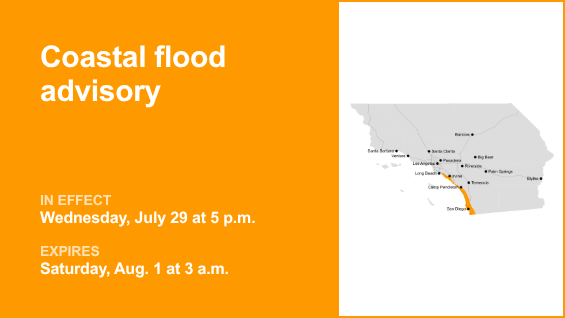
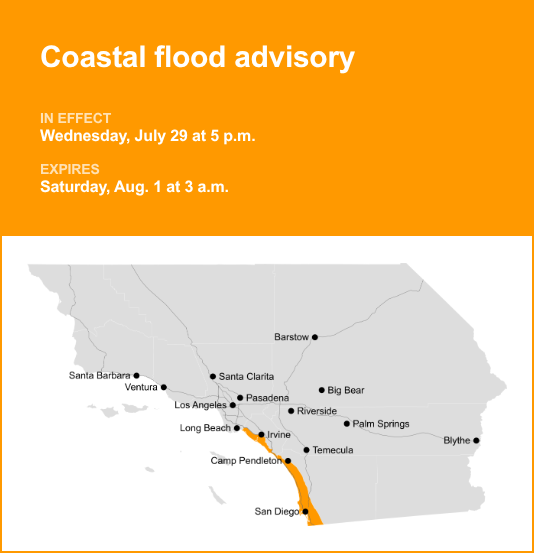
Orange County Coast and San Diego County Coastal Areas are under a coastal flood advisory which was issued by the National Weather Service on Monday at 1:36 p.m. The advisory is valid from Wednesday 5 p.m. until Saturday Aug. 1, at 3 a.m.
“Minor coastal flooding expected,” the NWS San Diego CA said. “A long period southerly swell of 3 feet at 17 seconds continues through Wednesday. A higher amplitude swell associated with Hurricane Genevieve of around 5 feet at 14 seconds builds late Wednesday into Thursday. Swell and associated surf look to subside late Saturday into Sunday Also, the following are the evening high tides for La Jolla: Wednesday: 6.11 ft at 9:36 p.m. Thursday: 5.96 ft at 10:08 p.m. Friday: 5.65 ft at 10:41 p.m. Note, tides have been chronically underpredicted this summer, with observed tides at La Jolla generally 0.3-0.4 ft higher than these predictions.”
“Flooding of lots, parks, and roads with only isolated road closures expected. Dangerous swimming and surfing conditions and localized beach erosion. Breaking waves can sweep people off jetties and docks, and into dangerous seas,” according to the NWS. “Inexperienced swimmers should remain out of the water due to dangerous surf conditions.”
Breaking down weather alerts: advisories, watches, and warnings
Flash flood warning: Take action.
A flash flood warning is issued when a flash flood is imminent or occurring. If you are in a flood-prone area, move immediately to high ground. A flash flood is a sudden violent flood that can take from minutes to hours to develop. It is even possible to experience a flash flood in areas not immediately receiving rain.
Flood warning: Take action.
A flood warning is issued when flooding is imminent or occurring.
Flood advisory: Be aware.
A flood advisory is released when flooding is not expected to reach a severity level necessitating a warning. Nonetheless, it can still cause considerable inconvenience and, without exercising caution, potentially lead to situations that threaten life and/or property.
Flood watch: Be prepared.
A flood watch is issued when conditions are favorable for flooding. It doesn’t guarantee that flooding will occur, but it signifies that the possibility exists.
Keeping safe during floods: Expert advice from the NWS
In flood-prone regions or while camping in low-lying areas, understanding and following the NWS flood safety guidelines can be a lifesaver:
Seek higher ground:
If you reside in a flood-prone region or are camping in low-lying terrain, the first step to safety is relocating to higher ground.
Follow evacuation orders:
When local authorities issue an evacuation order, promptly comply. Before leaving, secure your home by locking it.
Disconnect utilities and appliances:
If time allows, disconnect your utilities and appliances. This reduces the risk of electrical hazards during flooding.
Steer clear of flooded basements and submerged areas:
Steer clear of basements or rooms where water has submerged electrical outlets or cords. This helps prevent electrical accidents.
Evacuate promptly for safety:
If you notice sparks or hear buzzing, crackling, snapping, or popping noises, evacuate immediately. Avoid any water that may be charged with electricity.
Stay away from floodwaters:
Never attempt to walk through floodwaters, even if they appear shallow. Just 6 inches of fast-moving water can forcefully sweep you off your feet.
Seek higher ground when trapped:
Should you become trapped by moving water, reach the highest point possible and dial 911 to contact emergency services.
During heavy rainfall, there is a risk of flooding, especially in low-lying and flood-prone areas. Remember to never drive through water on the road, even if it seems shallow. According to the NWS, as little as 12 inches of rapidly flowing water can carry away most cars. Prioritize your safety by staying informed and prepared.
For more local weather alerts, visit our Weather Advisory page