
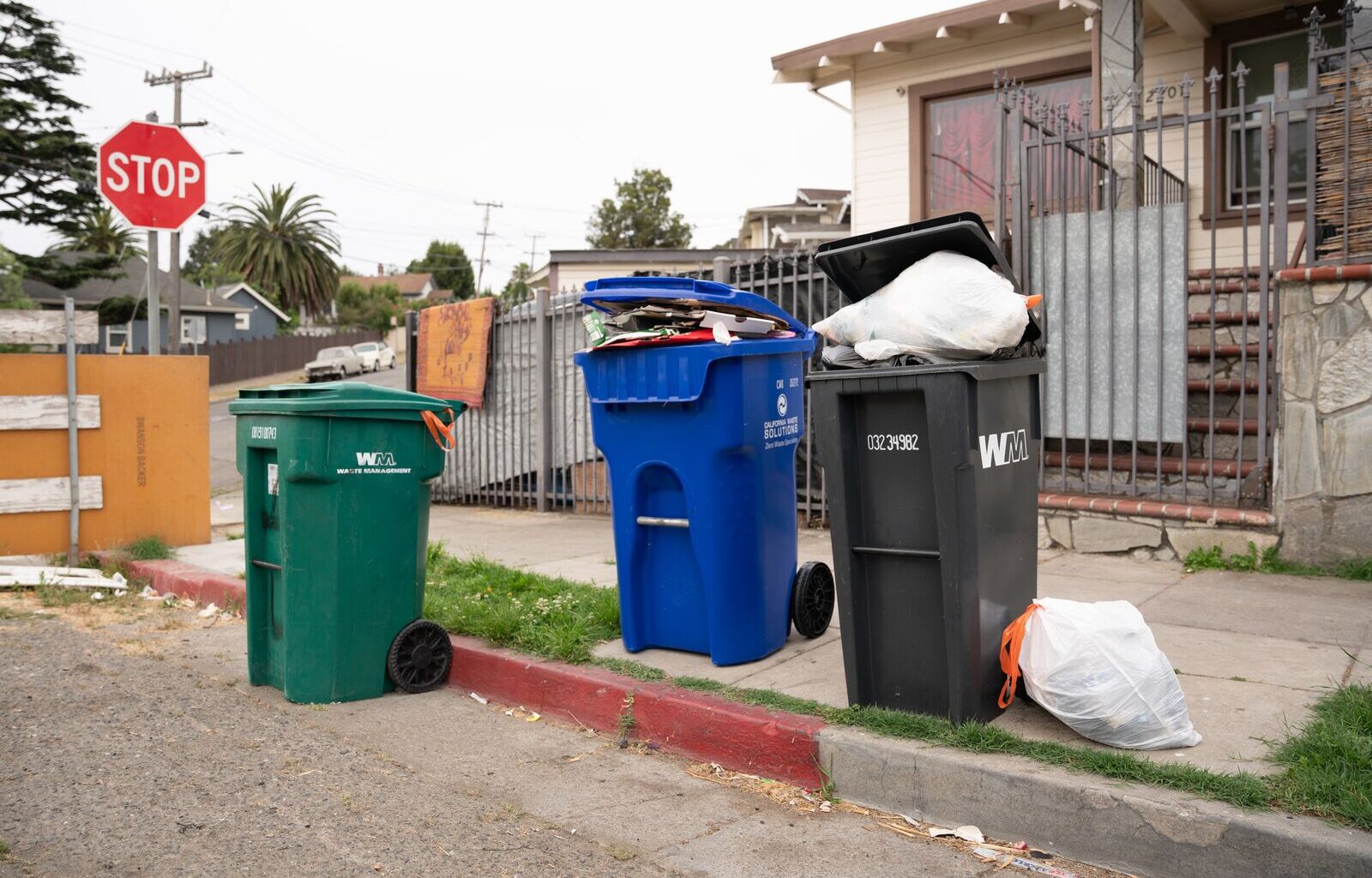
As Oakland celebrated Halloween last Friday, the city received an unpleasant treat: a lawsuit from its garbage collector.
Waste Management of Alameda County is suing Oakland in Alameda County Superior Court over a complex contractual dispute with millions at stake.
Oakland has used Waste Management to collect trash for many years. In 2015, the city inked a deal with the company to collect and process trash and compost from residences and businesses. The City Council selected a different firm, California Waste Solutions, to handle recycling.
In the lawsuit filed Friday, Waste Management claims Oakland has breached the agreement by unfairly penalizing the company for failing to meet waste disposal targets and by refusing to negotiate contract modifications in good faith.
According to the lawsuit, Oakland officials wrongfully tried to assess nearly $24 million in “liquidated damages” against the company. Waste Management also accused the city of applying lower rates on the company, failing to implement a “special assessment program” to collect money from customers who aren’t paying for trash service, and generally failing to address illegal dumping.
It’s unclear how the lawsuit might affect Oakland residents and businesses. Officials from Waste Management and the Oakland City Attorney’s Office did not immediately respond to interview requests. The city has not yet filed a response to the lawsuit.
These allegations aren’t actually new: Waste Management first brought legal claims against the city in 2020 to address these issues. But the parties wanted to negotiate an extension and modifications of Waste Management’s contract, so they agreed to set aside their differences while trying to find a compromise. The city agreed to toll, or hit pause, on the statute of limitations for Waste Management’s legal claims. This meant that Waste Management wouldn’t lose the right to file a lawsuit in court if the talks went south.
Closed-door negotiations about the contract have been going on since June, which Waste Management characterized as “productive” in the new court filing. But the company wrote that Oakland recently refused to continue tolling the deadline for Waste Management to file its complaint. The company doesn’t say why in its filing.
“As such, although WMAC still desires to reach a negotiated resolution with the City, it has been forced to institute this action to preserve its claims,” the complaint stated.
Waste Management accuses Oakland of imposing unfair penalties
As part of Oakland’s 10-year agreement with Waste Management, the city wanted to achieve its “Zero Waste” goal, which aimed to divert as much as 75% of solid waste away from landfills and into recycling and composting. To do this, Waste Management agreed to build a plant to process solid waste. The city also demanded that Waste Management enter into a subcontract with East Bay Municipal Utility District, or EBMUD, which would construct its own facility for processing commercial organic materials. Waste Management objected to this subcontract but went ahead with it, according to the complaint.
EBMUD failed to build the facility, which forced Waste Management to look elsewhere. Some facilities said they were unable to help, citing the “highly contaminated nature of the materials” and high processing costs. The city also shot down one of the firms that Waste Management was prepared to work with.
As a result of these delays, Waste Management said it missed its targets for diverting waste from landfills. Instead of taking into account the disruption caused by EBMUD, the city penalized Waste Management by trying to impose nearly $24 million in “liquidated damages” for failing to deliver organic scraps to city-approved facilities, and for failing to collect all mixed materials from Oakland households. Waste Management argued that these penalties are not authorized in their agreement and also unfair, given the unanticipated delays and costs.
According to the company, its contract gives it the right to renegotiate terms with Oakland in the event of a big external change. But Oakland officials refused to adjust the contract to compensate Waste Management “for the massive cost” caused by EBMUD’s exit. Waste Management also suffered financial losses during the COVID-19 pandemic, including “drastically reduced” commercial business during shutdowns, and expenses on special COVID-19 pay and protective equipment for workers.
Oakland’s failure to address illegal dumping is also cited as an issue in the lawsuit. Waste Management claims Oakland “refuses to enforce existing ordinances or to enact additional ordinances to abate illegal dumping” or to “hold private and public property owners accountable for failing to secure and safeguard their property,” which results in more dumping.
“*” indicates required fields