
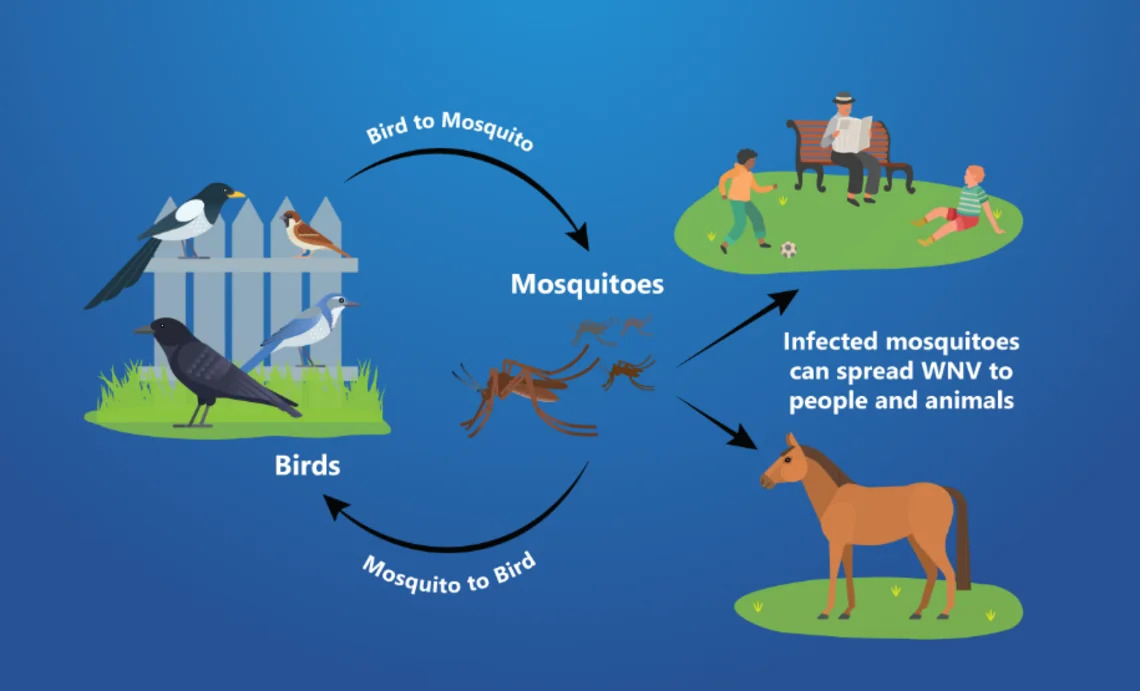
Fresno, Kings, Tulare and Madera counties all have confirmed their first human cases of the West Nile virus. Health officials ask the public to stay vigilant as WNV cases are expected to increase during the peak mosquito season in the Valley.
The Fresno County Department of Public Health confirmed Friday that its first human West Nile virus infection was identified through routine testing of a blood donor who lives in Fresno County.
The West Nile virus is a mosquito-borne virus that causes disease in humans, horses and birds. It spreads to people through the bite of an infected mosquito and can make people sick and even cause death.
“We need to stay vigilant, as mosquitoes may continue to cause many severe illnesses, including West Nile virus infection, which can require hospitalization and intensive care,” Fresno County Health Officer Dr. Trinidad Solis said in a statement.
Solis asks the public to “take every precaution to protect themselves and their families from mosquito bites.”
Kings County Department of Public Health officials said the KCDPH received confirmation from the state on July 20 that the first human case of the West Nile virus has been detected in the county. The case came almost two weeks later than the first confirmed case of 2025.
Tulare and Madera counties confirmed their first WNV human cases Monday.
Tulare County Public Health Officer Dr. Asma Tariq said residents are encouraged to use “safeguards to reduce their risk of contracting both West Nile virus and (St. Louis encephalitis virus) through mosquito bites” to prevent the spread of the viruses in the county. The St. Louis encephalitis virus is in the same virus family as West Nile. Both are transmitted to humans when bitten by an infected mosquito.

The Culex mosquito has tested positive for St. Louis encephalitis in Fresno, county health officials reported on July 5, 2018. The mosquito also can carry and West Nile virus.
According to the Centers for Disease Control and Prevention, there is no vaccine or medication to treat the virus. Most people infected with West Nile will have no symptoms; however, about 1 in 5 people will develop a fever with other symptoms from two to 14 days after being infected. Severe cases of West Nile virus can affect the central nervous system, resulting in meningitis and/or encephalitis, and can result in death or long-term disability.
According to the California Department of Public Health, as of July 24, there have been five human WNV cases in California: in San Diego, Los Angeles, Sacramento, Kings and Tulare. The number of cases does not include Fresno and Madera cases. Last year, there were a total of 128 reported human WNV cases in California, including 11 deaths.
Since WNV was first introduced into California in 2003, there have been more than 8,000 human cases and more than 400 WNV-related deaths across the state.
How to reduce risk
Use EPA-registered insect repellent.
Wear long sleeves and pants outdoors, especially at dawn and dust.
Remove standing water around your home.
Keep doors and windows screened.
Contact your local Mosquito Abatement District to report poorly maintained swimming pools or water features that appear green.
Delta Mosquito and Vector Control District (Mosquito Abatement District): Covering the northern portion of Tulare County. Contact the Visalia Office at 559-732-8606 or visit online at www.deltamvcd.org.
Tulare Mosquito Abatement District: Covering the western portion of Tulare County. Contact the Tulare Office at 559-686-6628 or visit online at www.tularemosquito.com.
Delano Mosquito Abatement District: Covering the southern portion of Tulare County. Contact the Delano Office at 661- 725-3114 or visit online at delanomosquito.com.
Kings Mosquito Abatement District: Call 559-584-3326 or request services through the website www.kingsmosquito.gov.