
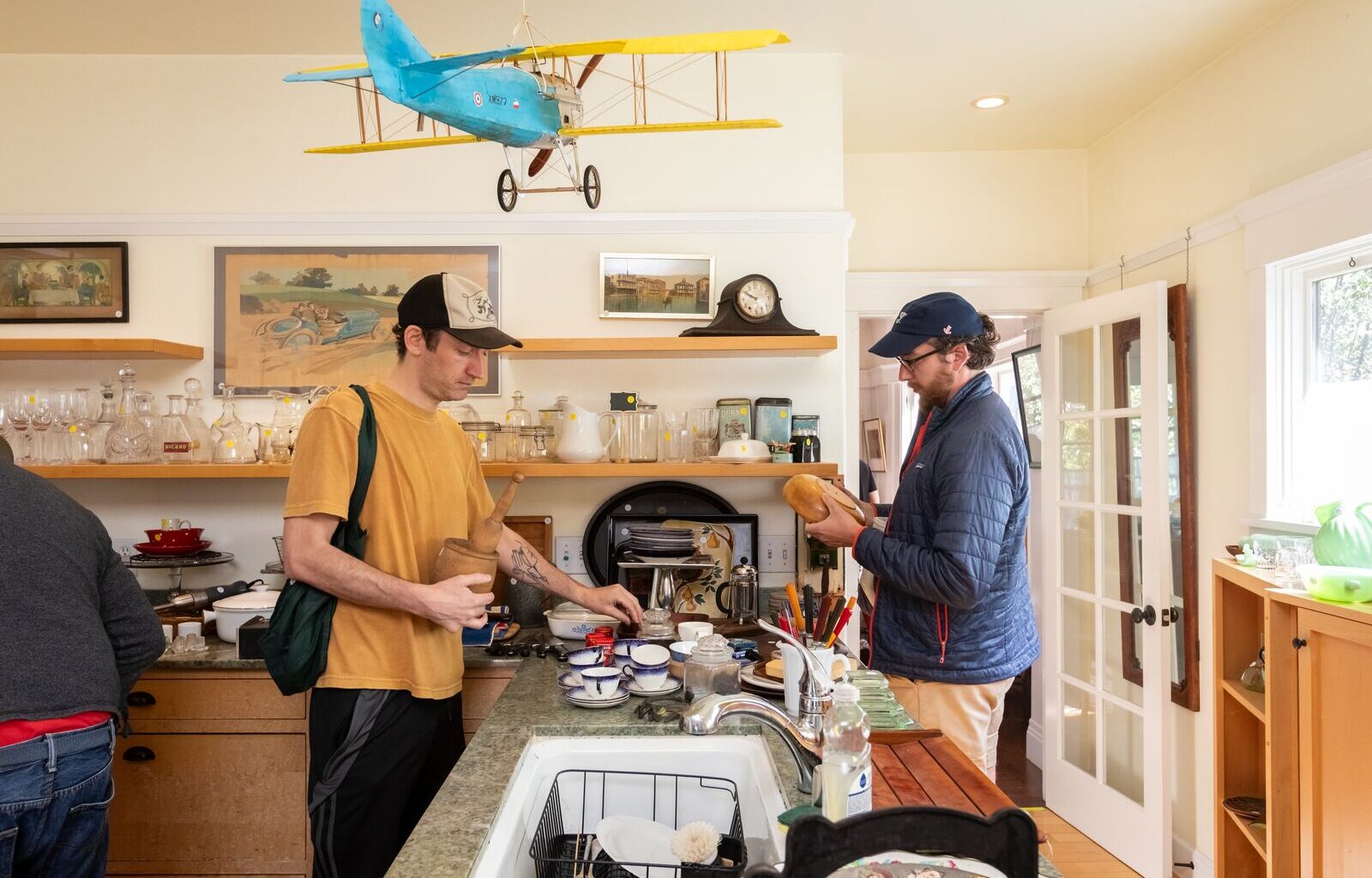
The first to arrive, at 7:45 a.m. — more than two hours before the doors opened at 10 — was Harry Bower, 72, an antiques dealer for 30 years who sells at the Alameda Point Antiques Faire. Bower had driven the 40 miles from his home in Suisun City to arrive early for what promised to be a spectacular estate sale. The 1906 brown-shingle house at 2730 Webster St. in the Elmwood neighborhood had been the home of a former artist and collector.
“Beads and silver are my thing,” said Bower, who wore a necklace of handmade silver beads called Navajo Pearls and a felt hat festooned with whimsical silver pins.
Bower was drawn to the many online images he had seen of the home’s contents that would be up for grabs: elaborate collections of jewelry, ceramics, silver plated flatware, tools and art supplies, furniture and Depression glass, along with ceramics, cast glass and enamelware made by the late artist herself.
Within minutes Bower was joined by a handful of other resellers who all knew each other. Nate S., 29, who wouldn’t reveal his last name, was interested in “everything and everything,” but specializes in art. Berkeley resident John Mullen, 55, an emergency room nurse at Alta Bates Summit Medical Center, collects — and occasionally sells — records and music ephemera. “I mainly hoard,” he said.
A few of the early birds were opportunistic. Maggie Lai and her boyfriend, Edgar Mendoza, both from Oakland, saw the sandwich-board signs for the sale in the neighborhood and pulled over. The couple was in the market for bookcases, bicycles and “garden stuff,” Mendoza said.
At 10 a.m., by which time the line was snaking along the sidewalk, Dan May of the Oakland-based Dan May Estate Sales, who organized the sale, stood at the entrance to the backyard, which includes a former artist’s studio, and made an announcement. “Tools and art supplies and records and some art work in the back; upstairs, all the fineries,” he said.
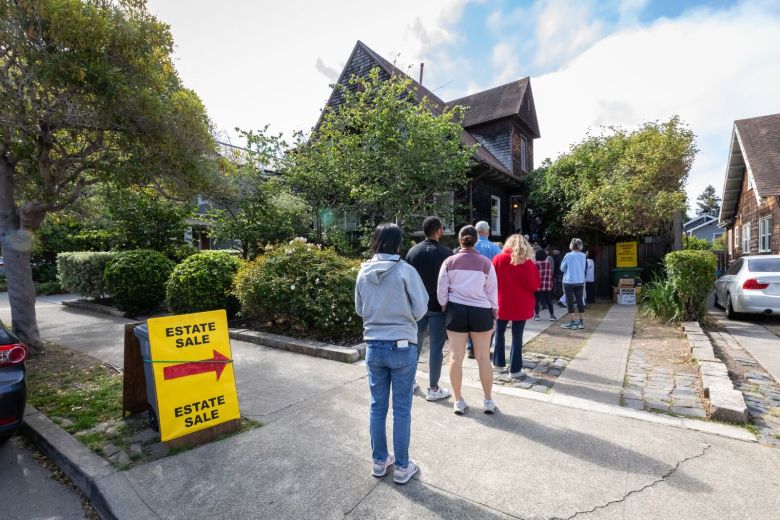 The line started early at this May 22 estate sale on Webster Street in the Elmwood. Credit: Kelly Sullivan for Berkeleyside
May’s business partner, Rachel Ericsen, opened the front door — and they were off.
The first 30 customers strode into the house, silently scanning the carefully arranged goods, organized by category. Bower headed to the glass-enclosed jewelry case. Nate S. plucked a small aqua vase from a pottery display and quickly moved on.
Welcome to a typical scene at a Berkeley estate sale, a Saturday morning amusement for some, and provider of a living or a side hustle for others, including brick-and-mortar stores that often resell what they find at estate sales. Unlike garage or yard sales, estate sales are public sales of a person’s belongings, often held after a death or major life change like downsizing, and typically include the entire contents of a home and take place at the home. Both shoppers and estate sale companies dream of finding hidden gems — and sometimes they do — but more often they simply add to their collections or hunt for bargains priced low enough so they can, as Bower put it, “buy on Sunday and sell on Monday.”
Such sales help families with what can be the Herculean task of clearing out a lifetime’s worth of possessions. From an ecological standpoint, they also reduce carbon emissions by bypassing buying new, and by keeping stuff out of landfills.
UC Berkeley sociologist Ann Swidler and her husband recently hired Dan May to sell off the items in their Elmwood home of 38 years so they could downsize into Piedmont Gardens in Oakland, a senior residence. It is part of a long-term plan “to spare our children from worrying about us,” she said. “You’re saving things from the landfill, but they also have intrinsic value,” she said. “Your discarded things can be used by someone and valued by someone. “We made a fair amount of money.”
A Picasso bowl, and a diamond ring in a coffee can
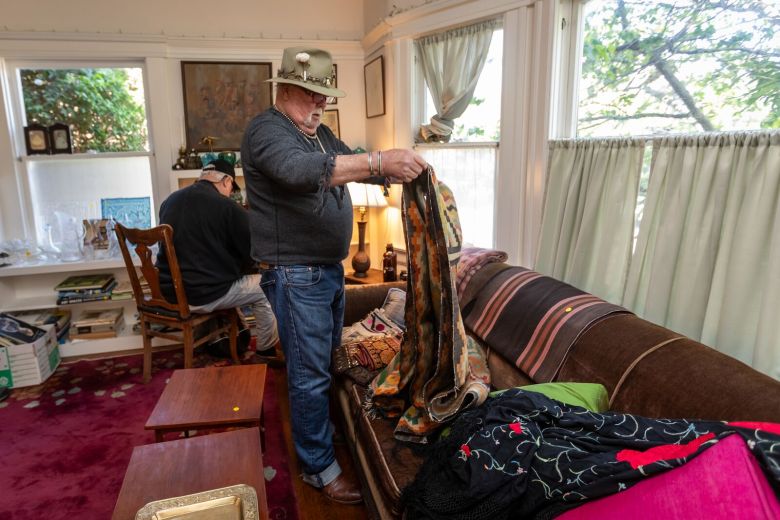 Harry Bower, who was first in line for the Webster Street estate sale on May 22, checks out rugs for sale. Credit: Kelly Sullivan for Berkeleyside
By far, the biggest attraction of such sales is the possibility of finding the proverbial masterpiece hidden away in an attic for decades that a savvy buyer recognizes as the work of a great artist. A slew of TV programs — from “Antiques Roadshow” to “American Pickers” — promote this fantasy, which sometimes does come true.
“That’s what we kind of live for,” May said. “The whole industry is based on people finding treasure and things slipping through the cracks and getting a bargain. That’s the reason it’s so exciting.
Over the 20-plus years he’s been in the business, May has found a Picasso bowl and a Chinese silk robe from the 1880s, both equally valuable, although he does not want to reveal their worth. Estate sale companies typically take a percentage of sales, and since they get first dibs at the contents of a house, if they are collectors, like May, they might pluck a few items for themselves, which they might part with later.
Kathy Pimpan, the owner of Total Estate Liquidation, a 24-year-old Oakland-based company that holds many Berkeley sales, once found more than $20,000 in cash wrapped up in tin foil in garbage bags in a “hoarder house” in South San Francisco. She and her crew have also unearthed diamond rings under a kitchen sink in a coffee can filled with greasy screws and another diamond ring in a sugar bowl in a kitchen cabinet.
“We always give all these treasures/cash back to the family,” Pimpan said.
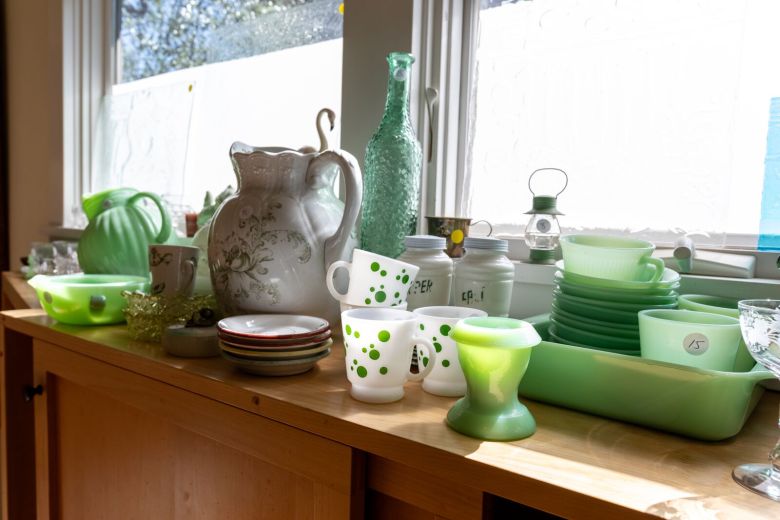 Jadeite and vintage serving ware at the Elmwood estate sale on May 22. Credit: Kelly Sullivan for Berkeleyside
Geneva Addison, a veteran antique dealer who for the past 30 years has operated Addison Studio Sale, which typically operates on a slightly different business model, culling items from estates and selling them in her 3052 Telegraph Ave. storefront, once found a telegram signed by Martin Luther King Jr. when he was jailed in Selma. She sold it to a collector for $5,000.
“If there’s something that needs to be found, we find it before the [buyers] come in,” said Addison. “We search for gold jewelry. We search for money. We search for valuables.”
“I’m looking for what they don’t know they have,” said Bower, the antiques dealer, who once bought a painting for $5 at a rummage sale that he sold the next day for $4,500. “Ignorance is a big part of our business,” although that’s gotten harder to combat with prices of most anything available on the internet, he said.
Mullen once found an obscure LP called “Reachin” by Ron Arcesia, which he bought for $1 and sold for $1,300. He joked that it is the one record he sold so he “could take my family on summer vacation to Cape Cod.”
Because of the risk involved in such speculative purchases, May said estate sales are a bit like gambling, with windfalls likely to be offset by the occasional loss. He said he perpetually loses money on Oriental rugs because the market is “soft.” But he just loves them and is happy if he just breaks even.
Mullen once bought three jam-packed carloads of 45s for $1,000 at the estate sale of a hoarder. After going through them, he learned they were worth half as much. “Sometimes you eat the bear and sometimes the bear eats you,” he said. “It’s all part of the game.”
What’s hot, and what’s not, reflects the culture
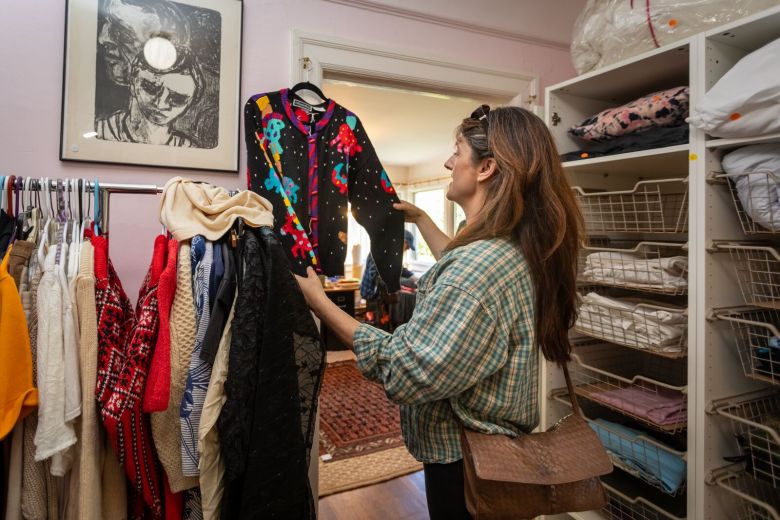 Vintage clothing is enjoying a revival of interest. Less popular: Victorian furniture, which is collectively and dismissively referred to as “brown furniture” in the trade. Credit: Kelly Sullivan for Berkeleyside
Like fashion, the best-selling items at estate sales reflect larger trends. Mid-century modern, a style that started to see a revival in the ’90s, continues to be in high demand and the best examples across all categories are snapped up quickly.
Julian Goldklang, owner of Mid Century Møbler, a West Berkeley emporium of mid-century furniture, said Berkeley is a hotbed for such furnishings because that’s when a lot of homes were built here, especially in the hills.
Arts and crafts, meanwhile, continues to be popular “because it is simple and has good lines,” Bower said. The 19th century style is also popular regionally, especially in Berkeley, where it has a long architectural history.
Both May and Bear Sawtelle of Golden Bear Estate Liquidation, a Berkeley-based company he’s owned for the last 10 years, noted that vintage clothing is currently wildly popular among 20- and 30-somethings. Addison added that art has also been, “I hate to use the term, ‘trending’” in that age group.
The antiques market bottomed out after the 2008 recession, so much so that nowadays Sawtelle “can’t even give away” Victorian furniture. Most wooden tables and chairs are now known simply as “brown furniture,” which “doesn’t sell at all,” May said.
Fine china, crystal and silverplate have also fallen out of fashion, especially in casual California.
“Go to a dinner party and if someone puts fine china in front of you, it feels too formal,” May said. “It’s a different world. Today, nobody touches such pieces. We end up donating a lot of that.”
Clear glass, office desks and filing cabinets, less needed in the so-called paperless economy, are also among the items that will not sell, May said. Giant TVs from the 1990s are not likely to find a buyer, Pimpan of Total Estate Liquidation added, with a 50% chance beds and sofas will.
The appeal of certain Berkeley neighborhoods
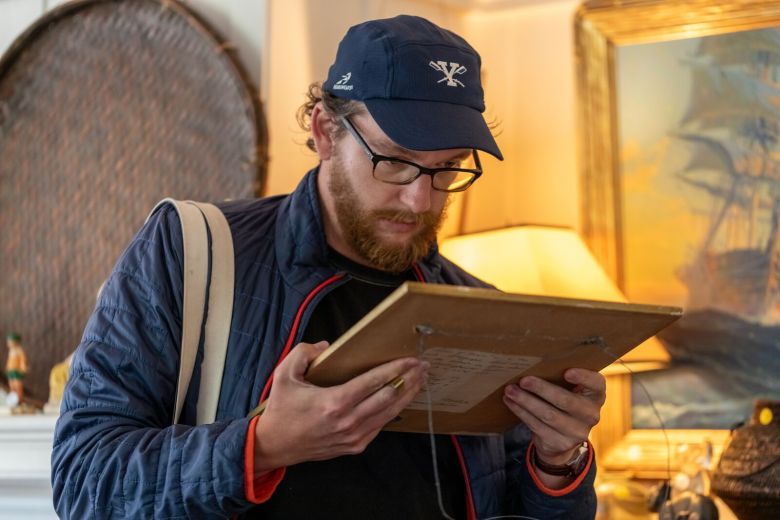 Salegoer Erik examines the information on the back of a framed piece of art at the May 22, 2026 estate sale in the Elmwood. Credit: Kelly Sullivan
Berkeley, in particular, is a favorite shopping ground for dealers, due to a large aging, well-educated and well-traveled segment of the population whose homes are filled with books, ephemera and collections from all over the globe that they have accumulated over decades. Such sales in the Elmwood, the Berkeley Hills and Thousand Oaks can cause traffic jams and generate tremendous foot traffic.
“What makes a good estate sale is when the people who lived there were passionate about several things,” said May. “They knew what they were collecting.”
According to May, Berkeley may be home to a disproportionate number of sales because it’s affluent and “nobody wants to leave their beautiful houses.” Proposition 13, he said, is also a factor since it encourages homeowners to stay put. As a result, May said, you’ll find dozens of houses in the Berkeley Hills that are occupied by one elderly woman. “They’re trying to hold out as long as they can.” Berkeley’s aging demographic may have something to do with it. Because boomers make up from 17% to 22% of Berkeley’s population, some of them are downsizing, aging out of their homes or dying, their homes make up the majority of those that are now being opened up for sales.
Pimpan disagreed, however, saying that Berkeley does not have more sales than surrounding communities where she also sells, such as Kensington and the Oakland Hills.
How estate sale companies work
You don’t need to hire an estate sale company to hold an estate sale, but it’s often the choice families make when the homeowner dies, is headed to assisted living, or is downsizing.
The homeowner, their heirs, realtors or fiduciaries usually reach out to the estate sale company, who then visit the home.
“The first thing we ask is, ‘have you gotten rid of anything?’” said May. “They’re always trying to clean up so it doesn’t look like a mess. There’s usually a lot of linens and a lot of nice clothes. A lot of it gets donated before we even get there and that is one of the mistakes people make when they’re inviting an estate sale company in — they prejudge. They think the furniture is where they’re going to make money.”
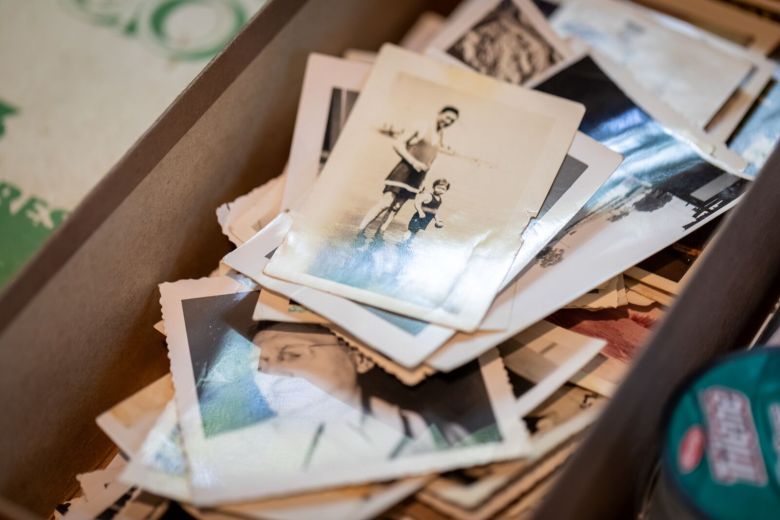 Old photographs up for grabs at the May 22 estate sale on Webster Street. Credit: Kelly Sullivan for Berkeleyside
 Hand-embroidered items at the Elmwood estate sale on May 22. Credit: Kelly Sullivan for Berkeleyside
Estate sale companies are bonded and insured to cover potential accidents or losses. In addition to auction house referrals, some companies also help homeowners or heirs with eBay listings and consignments services.
Different estate sale companies have different pricing policies that likely vary per house.
Estate sale companies typically take 40%-50% of sales, depending on the condition of the items and the home. For example, if the homeowner had been a hoarder and the home is filled with boxes stacked to the ceiling, “that would take a lot more time to go through,” Sawtelle said, and therefore raise the company’s cut.
He estimated that a large Craftsman home filled with items like paintings, art pottery and high-value copper would probably create $15,000 in sales.
For a recent sale, May paid the homeowners $6,000 for select items; then the homeowners agreed to pay May $5,000 to haul away debris, mattresses and other unsalable items. “Basically I wrote them a check for $1,000 and we cleaned out their house.”
From estate to retail store
 A salegoer checks out a beaver skull for sale at the May 22 estate sale in the Elmwood. Credit: Kelly Sullivan for Berkeleyside
Some homeowners eschew an estate sale and invite companies in to scour their homes for valuables — and possibly buy its entire contents. Mid Century Mobler’s Goldklang has, for the past 20 to 25 years, supplemented his European imports with pieces he has culled from Bay Area estates. But, since the Trump administration’s 15% tariff on European imports went into effect last year, he has relied more on local estates. Before the tariffs, Goldklang gleaned maybe 2% of the store’s inventory from estates; now it’s more like 10-15%.
In March Goldklang acquired furniture from a Berkeley Hills home, half of which was filled with midcentury pieces, “almost untouched,” that the husband had bought new in the late 1960s. “We took all the Danish pieces and they’re finding new homes,” Goldklang said.
Addison and her mother, Julie, a letterpress printer whose by-appointment shop, Addison Endpapers, is also on Telegraph Avenue, have done some of Berkeley’s most legendary sales, among them the estates of Alan Cohen in 2019, a prolific collector across several vintage categories, and Eli Leon in 2017. Leon’s African-American quilt collection was donated to BAMPFA. But typically, she and her mother select items from estates to sell out of the Telegraph Avenue storefront.
“We’re less mainstream and more niche,” Julie Addison said. “We’re really picky about the sales we take. A lot of things we get are weird.”
Some companies, like the Berkeley-based Simple Estate Liquidation, act solely as liquidators, clearing out a house without holding a public sale. The company pays one lump sum for the home’s contents.
“Customers are not trying to make money on the possessions,” said owner Dennis Jenkins. “We come in and in one or two days it’s done.”
The pain of giving away
Estate sales can reveal a lot about a person’s life through their possessions. At the Webster Street sale, the homeowner clearly had a refined aesthetic and collections galore.
Sometimes such voyeurism can feel icky, such as when the doors and drawers of the previous homeowners are opened to reveal personal items like undergarments and pajamas. Sales can also take on a sad undertone if homeowners had been hoarders.
Other homes can reveal that the elderly had lived alone and in unkempt conditions for years. Plus, there’s the occasional seller who might not be ready to let things go. That’s why estate sale companies will tell family members not to be on site during the sale. It can be painful for them to see customers sifting through possessions loaded with meaning and memories.
How to find estate sales
Local estate sales are posted on Craigslist, estatesales.com, estatesales.net and estatesales.org, which is Sawtelle’s favorite because it’s the best source of Bay Area sales. Shoppers can also get on the mailing lists of individual estate sale companies. Estate sale company websites also advertise the sales, sometimes showing up to 1,000 photos.
The low-tech method of placing sandwich board signs at strategic intersections with arrows pointing the way can also be highly effective. May, who typically puts up 20 signs in a neighborhood, said they draw about half the customers who end up at a sale.
“Nobody drives more than 10 or 15 miles for an estate sale unless there’s something special they’re shooting for,” he said.
The finds at an Elmwood estate sale
 Edgar Mendoza holds items for his partner Maggie Lai at the May 22 estate sale in the Elmwood. Credit: Kelly Sullivan for Sullivan
By 10:45 a.m., the line at the Webster Street house went as far as the neighboring property. Lai and Mendoza didn’t find what they were looking for, but snapped up two armloads of items for $170, including watercolor paper, clothing, three cameras, a portable radio and a whole set of knitting needles.
For $5, Mullen walked away with a 45 titled “Chairman Mao’s 4 Minute Physical Fitness Plan” that came with a booklet. He said it’s so weird that he plans to keep it.
Nate S. was last seen headed to his car with a framed artwork in each hand.
Bower didn’t buy any beads or silver, but did snag an arts-and-crafts vase for $60. He sold it to a collector a few days later for $100.
“This is a kind of a cut-throat business,” he said, “but it’s a wonderful way to earn extra money.”
We know that most readers don’t get to the end of the article. But you did! To support our in-depth, rock-solid reporting, please consider making a donation to our nonprofit newsroom today. We rely on our readers — particularly the ones who read the whole story!
“*” indicates required fields